.png)
 English
 Español
A buyer sits in a fabric selection meeting with two navy swatches under the same lamp. Both measure 150 gsm on the scale. Both feel soft against the thumb. Both are quoted for the same dress program. One lands at 1.85 dollars a meter, the other at 2.40. The gap is not sales talk. It comes down to the fiber inside the yarn, the way the cloth was built, and what happens to it after twenty home washes.
Here is the short version before the details. The twelve fabric types below fall into two overlapping families. Eight are defined mainly by fiber: cotton, linen, rayon, silk, wool, polyester, nylon and elastane. Four are defined mainly by how the cloth is constructed: crepe, satin, single jersey and fleece. A construction can be made from almost any fiber, which is exactly why "what type of fabric is this" is a harder question than it sounds. Knowing which family you are buying tells you more about performance, price and risk than the name printed on the sample tag ever will.
What "Type of Fabric" Really Means Before You Count to Twelve
Ask ten people in a fabric market what a fabric type is and you will get three different answers, all of them technically correct. The first answer describes fiber: cotton, polyester, rayon, wool. The second describes construction: woven, knitted, and then the specific weave or knit structure such as plain weave, twill, satin, single jersey or rib. The third describes finish: brushed, peach, crinkled, foiled, bonded, embroidered.
Most confusion in sourcing comes from mixing these three layers in one conversation. "Jersey" is a knit structure, not a fiber, so a cotton jersey and a polyester spandex jersey can carry the same name and behave like different products. "Satin" is a weave, so silk satin and polyester satin share a surface but not a price point or a care label. "Crepe" is a family of high-twist constructions, so a rayon crepe and a polyester crepe may look similar on a hanger and age very differently after three washes.
A useful habit is to describe every fabric on three lines before you negotiate: fiber content, construction, and finish. A specification written as "95 percent rayon, 5 percent spandex, single jersey, 180 gsm, enzyme washed, pre-shrunk" removes most of the arguments that follow a bulk shipment. If you want to understand why this matters, the difference between how knitted and woven fabrics are produced explains why two cloths made from the same yarn can stretch in completely different ways.
Three numbers decide more than any marketing claim. Yarn count tells you how fine the yarn is: a 30S cotton is coarser and heavier than a 50S cotton, and the same 180 gsm fabric made from a finer yarn will usually feel smoother and cost more. Weight tolerance tells you how consistent a mill is: plus or minus 5 percent on a 200 gsm knit is a normal commercial tolerance, but a mill that repeatedly ships at minus 8 percent is quietly selling you 15 grams of missing fabric per meter. Shrinkage tells you whether the garment will still fit the customer after the first wash, and it is the single most common reason a buyer rejects an otherwise perfect roll.
Finishing is where two identical greige rolls become different products. The same polyester knit can be sold as a soft peach-hand fabric, a crisp crinkle, a brushed fleece, or a foil-stamped fashion item. The base cost may differ by 20 cents. The selling price can differ by a dollar. That is the entire logic of a modern fabric mill's product list, and it is why a product catalog with hundreds of SKUs often contains only a handful of base cloths behind the numbering.
The 12 Fabric Types at a Glance
The table below summarizes the twelve types covered in this guide. Read it as a map, not a verdict: within each row there is a wide range of quality, and two fabrics in the same row can differ more than two fabrics in different rows.
| Fabric type | Fiber base | How it is built | Hand and behavior | Typical end use |
|---|---|---|---|---|
| 1. Cotton | Natural cellulose | Spun yarn, woven or knitted | Breathable, absorbs moisture, creases, shrinks unless pre-shrunk | Shirts, dresses, childrenswear, poplin and double crepe programs |
| 2. Linen | Natural bast fiber | Spun yarn, woven | Cool, dry hand, natural slub, low elasticity, wrinkles easily | Summer dresses, shirts, trousers, structured jackets |
| 3. Rayon (viscose) | Regenerated cellulose | Spun yarn, woven or knitted | Soft drape, high moisture uptake, weaker when wet, variable shrinkage | Blouses, dresses, challis, poplin, moss crepe |
| 4. Silk | Natural protein filament | Filament yarn, woven | Lustrous, smooth, temperature responsive, sensitive to light and perspiration | Occasion wear, linings, scarves, bridal |
| 5. Wool | Natural protein staple | Spun yarn, woven or knitted | Warm, resilient, holds shape, felts and shrinks with heat and agitation | Suiting, knitwear, coating, winter accessories |
| 6. Polyester | Synthetic polymer | Filament or spun, woven or knitted | Strong, quick drying, hydrophobic, heat-settable, low cost | Fashion wovens, activewear, linings, printed styles |
| 7. Nylon | Synthetic polyamide | Filament or spun, woven or knitted | High abrasion resistance, more elastic than polyester, soft luster | Swimwear, outerwear, lace, technical knits |
| 8. Elastane blends | Synthetic elastomer plus a carrier fiber | Knitted or woven with 2 to 10 percent elastane | Two-way or four-way stretch, recovery depends on heat history | Yoga, swim, ponti roma, bodycon dresses, rib trims |
| 9. Crepe | Any fiber, usually rayon or polyester | High-twist yarns, woven or knitted | Pebbled or grainy surface, hides wrinkles, can snag | Dresses, blouses, wide-leg trousers, occasion wear |
| 10. Satin | Any fiber, often polyester or silk | Woven with long floats | Smooth lustrous face, dull back, snags and abrades easily | Evening wear, linings, digital print programs |
| 11. Single jersey and rib | Any fiber, cotton or rayon common | Weft knitted loops or alternating knit and purl wales | Stretch, soft drape, edges curl, spirality after washing | T-shirts, dresses, bodysuits, cuffs and collars |
| 12. Fleece and French terry | Any fiber, polyester and cotton blends common | Knitted with a brushed or looped back | Warm, bulky, air-trapping, pills if fiber and finish are poor | Hoodies, joggers, outerwear, loungewear, bonded shells |
Natural Cellulosic Fabrics: Types 1 to 3
These three share a family resemblance: they come from plants, they breathe, and they all absorb water well. Their differences show up in drape, wrinkle behavior and how much they move when they get wet.
1. Cotton
Cotton is the seed hair of the cotton plant, spun into yarn and then woven or knitted. It is the reference point for comfort: it absorbs perspiration, feels cool in humid weather, and takes dyes and prints reliably when the yarn has been properly scoured and mercerized. Common apparel weights run from a light 90 gsm lawn to a heavy 300 gsm canvas, with shirting poplins usually sitting between 110 and 140 gsm and dresses between 130 and 180 gsm.
The sourcing details matter more than the fiber name. Combed and carded cotton are different products: combed yarn has short fibers removed, giving a smoother, stronger cloth with less pilling, and it costs more. A 40S cotton poplin and a 40S cotton double crepe may carry the same yarn number and behave nothing alike, because one uses a plain weave and the other a crepe construction. Enzyme washing softens the surface and removes loose fiber, which improves hand feel but also removes a little weight and strength, so a mill that lists an enzyme-washed fabric at 150 gsm may be starting from a 160 gsm greige.
Two practical tests decide whether a cotton will survive a garment program. The first is residual shrinkage after three home washes, not one. The second is whether the fabric has been compacted or pre-shrunk, because a 5 to 7 percent length shrinkage on a dress that has already been cut to a graded pattern is the difference between a sellable size run and a claim. Ask for test reports on dimensional stability and pilling before you place a bulk order, and specify the tolerance in the purchase contract, not in an email.
2. Linen
Linen comes from the bast fiber of the flax plant. It is stronger than cotton, especially when wet, and it has almost no natural elasticity, which is why pure linen garments are cut slightly looser and often blended with rayon or cotton to improve drape and reduce creasing. The fiber's irregular thickness produces the characteristic slub and surface texture that consumers read as "natural."
Linen is also where the market's biggest naming trap lives. Many fabrics sold as linen look, gentle linen or linen airflow contain no linen at all. They are polyester or rayon constructions engineered to imitate the dry hand and subtle irregularity of flax, often with an air-jet or slub yarn and a washed finish. These imitations are not inferior products, but they should not be priced as flax. If the cost difference between two quotes is 40 percent and the swatches look identical, the first question is fiber content, and the second is whether the mill can supply a lab test confirming it.
Because linen wrinkles, buyers increasingly request blends: 55 percent linen with 45 percent rayon, or linen blended with a small percentage of elastane for a softer recovery. Each addition changes the hand. A linen and rayon blend feels smoother and hangs closer to the body; a linen and polyester blend holds a crisper shape and costs less. Specify which one you are buying, or you will approve one swatch and receive another.
3. Rayon (Viscose)
Rayon, also called viscose, is regenerated cellulose. Wood pulp is dissolved and extruded into filament, then cut into staple and spun like cotton. That production route gives rayon its defining combination: the comfort and moisture absorption of a natural fiber with the drape and sheen of a synthetic. It is one of the most widely used fibers in women's fashion for exactly this reason, and it is also one of the most demanding to source.
The weakness is strength when wet. A rayon garment loses roughly half its tensile strength in water, which is why rayon fabrics should be washed gently and never wrung hard. In production this matters too: a mill that handles wet processing carelessly can tear or distort a rayon roll during dyeing. Shrinkage is typically higher than cotton, often 4 to 8 percent, so pre-shrinking or compacting is close to mandatory for garments that will be machine washed by the consumer.
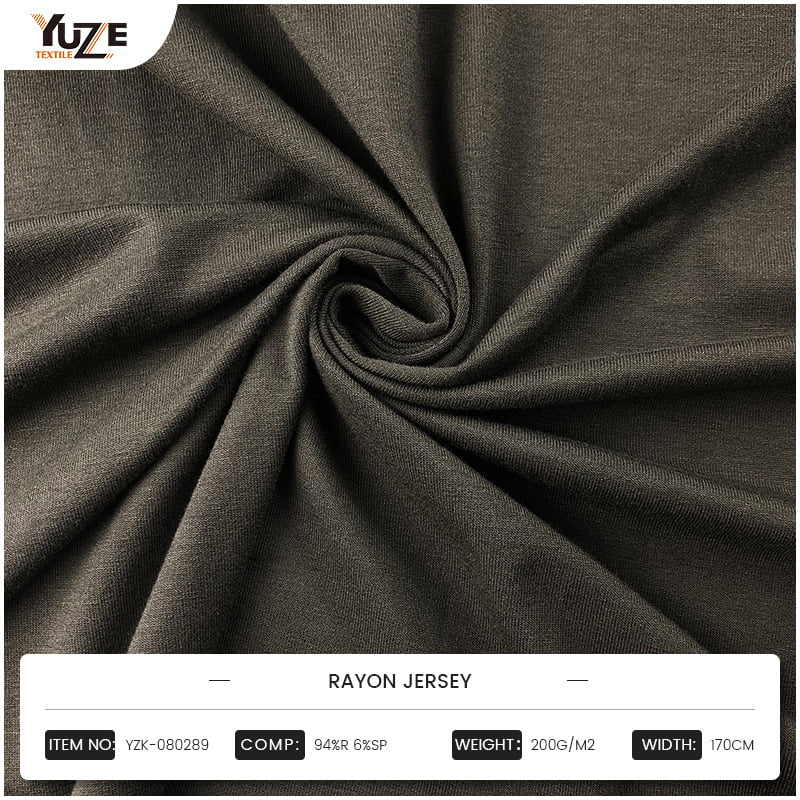
Rayon's variation is a feature as much as a risk. A rayon spandex single jersey feels soft, stretches comfortably and drapes over the body; a rayon challis is light, matte and slightly grainy; a rayon poplin has a smooth, crisp hand for shirting. Viscose from different pulp sources and different spinning conditions can also dye differently, so dye-lot consistency across a multi-shipment order is a real risk. The practical control is simple: keep a sealed bulk standard swatch at the mill and at your office, and approve each dye lot against the same light box, not against memory.
Protein Fabrics: Types 4 and 5
Silk and wool come from animal sources, which gives them properties no petrochemical fiber matches: natural crimp, temperature responsiveness, and a feel that is very difficult to imitate precisely. They are also the two most expensive fibers in this list, which makes fiber-content verification a commercial necessity rather than a formality.
4. Silk
Silk is a continuous protein filament produced by silkworms and reeled into yarn without the spinning process that cotton requires. Because the filament is long and smooth, silk can be woven into very thin, very strong fabrics with a high natural luster. Charmeuse and satin constructions put the shine on one face; crepe de chine uses twisted yarns to create a matte, grainy surface; habotai is light and plain.
For apparel sourcing, silk's constraints are cost and care. It responds to perspiration and deodorant, so underarm color change is a common customer complaint on silk blouses. It also yellows with prolonged light exposure, which is why display pieces in a shop window fade before the stock does. Dry cleaning is usually recommended, and water spotting is difficult to remove without leaving a ring.
This is why many commercial programs use polyester satin as a silk substitute. A good polyester satin printed digitally can deliver luster, drape and color at a fraction of the cost, with far easier care. The mistake is assuming the substitution is invisible. Silk has a warm, slightly irregular hand and a subtle depth of color; polyester satin is cooler, more uniform and more reflective. If the customer expects silk, name the fiber on the label. If the customer expects the look, choose the polyester deliberately and price it correctly.
5. Wool
Wool is the crimped staple fiber from sheep, and the crimp is the source of its best properties: it traps air, which makes it warm without weight, and it recovers from compression, which is why a wool suit hangs out creases overnight. Different breeds give different fibers. Merino is fine and soft enough to wear against the skin; lambswool is slightly coarser; coarser wools go into coating and carpets.
Wool's defining risk in production is felting. Under heat, moisture and mechanical agitation, the scales on the fiber surface interlock and the fabric shrinks permanently. A wool blend that is washed carelessly during dyeing or finishing can lose several percent of its dimensions and never recover. This is why wool garments carry dry-clean labels and why wool blends are usually tested for dimensional stability after a specified wash cycle rather than assumed safe.
The market is also full of wool-inspired fabrics. A polyester "wool peach" finish mimics the soft, slightly fuzzy hand of a wool blend at a much lower cost, and a wool-and-polyester blend at 30 percent wool can look very convincing in a swatch. The blend ratio drives warmth, price and care instructions. Ask for the ratio in writing, and if warmth is a selling point, test it rather than trusting the name. Pilling is the other variable: short, weak fibers work their way out of the yarn and form pills, so a low-grade wool knit can look tired after a few wears even though the fiber itself is durable.
Synthetic Fabrics: Types 6 to 8
Synthetic fibers are extruded rather than grown, which means the manufacturer controls thickness, cross-section, luster and elasticity during production. That control is why two polyester fabrics at the same weight can feel completely different, and why synthetic sourcing is more about specification than about fiber name.
6. Polyester
Polyester is a melt-spun polymer. It is strong, quick drying, resistant to most chemicals and inexpensive to produce. Because it is thermoplastic, it can be heat-set into permanent pleats, crinkles and embossed surfaces, and it takes sublimation printing extremely well. For a fashion mill, polyester is the most flexible base cloth available: filament yarns such as FDY, DTY and CEY produce different lusters and textures from the same polymer, and spun polyester produces a more matte, cotton-like surface.
The variation is the point. A flat filament polyester is smooth and shiny; a textured DTY polyester is matte with a slight stretch; a CEY yarn gives a crisp, dry hand often used in twill and satin; a cationic or slub yarn creates visual texture that survives dyeing. Add a finish, and the same base becomes a peach-hand fabric, a soft crinkle, an embossed surface or a brushed fleece. This is why the polyester shelf in any mill is the longest one.
Two things deserve attention in a purchase order. First, recycled polyester is increasingly requested, and while the performance can match virgin polymer, the supply chain documentation is the deliverable: ask for the transaction certificate, not a logo. Second, polyester is hydrophobic, so it does not absorb perspiration the way cotton does. For activewear this is managed with knit structure and moisture-wicking finishes, but for a summer dress it can mean a garment that feels clammy in humid weather. If comfort is the selling point, a blend is usually a better answer than pure polyester.
7. Nylon
Nylon, or polyamide, was the first fully synthetic fiber and remains the toughest of the common apparel fibers in abrasion terms. It is more elastic than polyester, has a softer luster, and absorbs a small amount of moisture, which gives it a slightly less plastic feel against the skin. It is the natural choice for swimwear, technical outerwear, fine lace and any application where repeated flexing and rubbing would wear out a weaker fiber.
The commercial trade-off is price. Nylon generally costs more than polyester, so it appears where performance justifies it and disappears where appearance is the only requirement. It also has a lower melting point and can yellow or develop shine under excessive heat during pressing or finishing, so process control at the mill matters. In swimwear, nylon is often combined with elastane for the four-way stretch and chlorine exposure that the category demands; in lace and mesh, its fine filaments allow very open, delicate structures that still hold their shape.
When comparing quotes, do not accept "synthetic" as a fiber answer. A polyester mesh and a nylon mesh can look identical on a swatch and differ by 25 percent in cost, with different abrasion performance and different dyeing behavior. Print clarity differs too, since nylon usually takes acid dyes while polyester takes disperse dyes, and the two require different print processes and different color-matching work.
8. Elastane and Stretch Blends
Elastane, widely called spandex, is never used alone in apparel. It is blended at roughly 2 to 10 percent with a carrier fiber such as cotton, rayon, polyester or nylon, and that small percentage changes the entire behavior of the cloth. A rayon jersey with 5 percent elastane recovers from stretching; the same jersey without it sags at the elbows and knees. A woven with 2 percent elastane gains comfort in a fitted shirt or trouser without looking like activewear.
Stretch is usually described in two directions. Two-way stretch moves along one axis, typically the width, which is common in woven bottom weights. Four-way stretch moves both lengthwise and crosswise, which is what yoga, swim and compression garments need. The number that matters most is not the stretch percentage but the recovery: how much of the original dimension returns after being held at extension for a set time. A fabric with 40 percent stretch and poor recovery makes a garment that bags out after an hour of wear, and that failure is invisible on a swatch card.
Elastane is also heat sensitive. Overheating during dyeing, drying or pressing damages the polymer and permanently reduces recovery, so a mill's process discipline shows up months later in the customer's fitting room. When you evaluate knit suppliers, ask how they control heat history and whether they test recovery after the specified wash cycle. For structured stretch fabrics such as ponti roma knits, the combination of a stable knit structure with a controlled elastane percentage is what allows a fabric to be both comfortable and tailored, which is why the construction has become a staple for dresses, trousers and jackets alike.
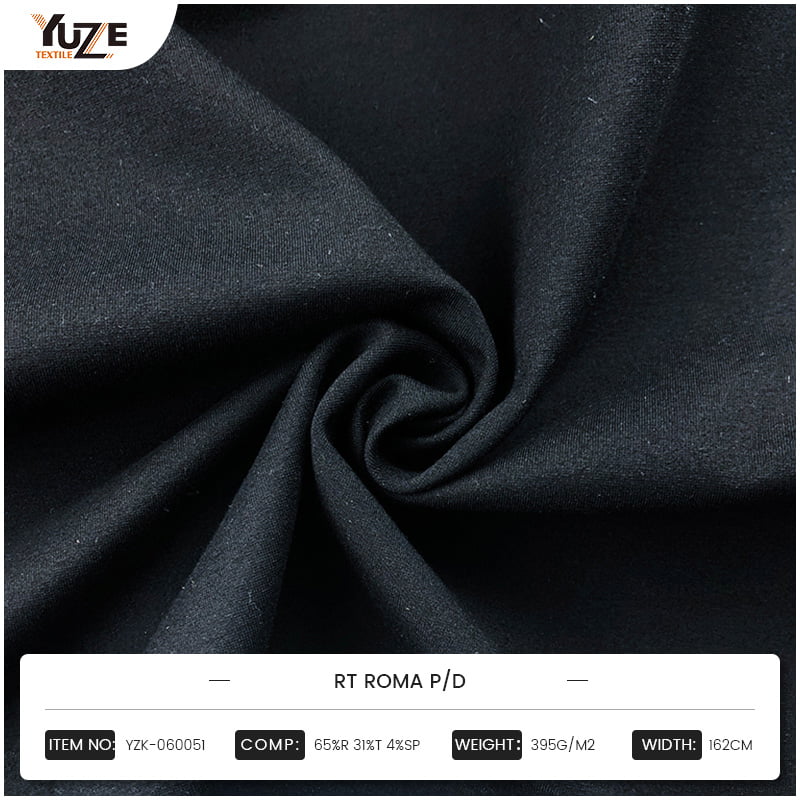
Construction-Based Fabrics: Types 9 to 12
The last four types are named for how the cloth is built rather than what it is made of. This is where most naming confusion occurs, because any fiber can pass through these constructions. When someone asks for "a crepe," the correct reply is a question: which fiber, which weight, and which end use.
9. Crepe
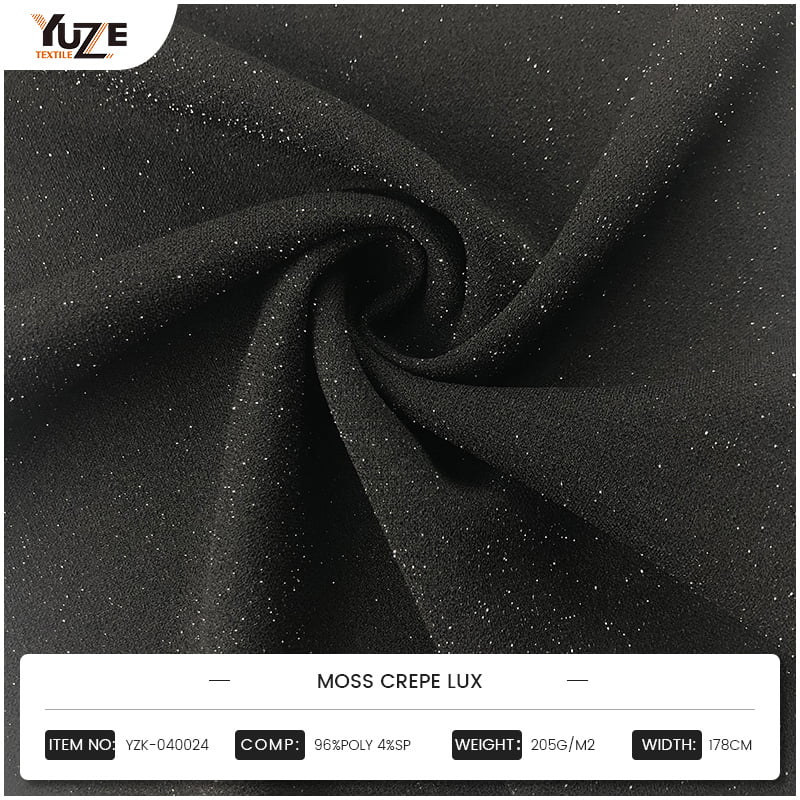
Crepe is a family of fabrics made with high-twist yarns. When tightly twisted yarns relax after weaving or knitting, they pull the surface into a fine pebble or grain. The result is a matte, textured cloth with excellent drape and, crucially, a surface that hides wrinkles. That is why crepe is a perennial choice for travel-friendly dresses, blouses and wide-leg trousers.
The fiber behind the crepe determines everything else. Rayon crepe drapes closely and feels soft; polyester crepe is crisper, more durable and cheaper; a T/R crepe blends the two. A cotton double crepe is heavier and more matte, suited to structured dresses. Beyond plain crepe, the family includes moss crepe, which has a more pronounced, slightly mossy surface; tree crepe, which uses a coarser twisted yarn for visible texture; and false-twist crepe, where the texture is created by texturing the yarn rather than by plying.
Two risks are worth writing into the specification. First, crepe surfaces can snag on rough jewelry and zipper teeth, so a light calendering or a tighter twist may be needed for high-contact garments. Second, the texture that makes crepe attractive also makes shade variation between dye lots more visible, because light scatters differently across the pebbled surface. If your program runs across multiple shipments, hold a bulk standard and check each lot against it.
10. Satin
Satin is a weave, not a fiber. It is built with long floats that let the yarn pass over several threads before interlacing, which produces a smooth, highly reflective face and a dull back. The longer the floats, the higher the shine and the greater the risk of snagging and abrasion, because there are fewer interlacing points to hold the surface together.
This structure explains all of satin's commercial behavior. It drapes heavily and reflects light beautifully, which suits evening wear, linings and bridal. It also shows every pulled thread, so a satin garment needs smooth interlinings, covered zippers and careful handling on the sewing floor. Polyester satin is now the volume product because it delivers the surface at a low cost and accepts digital printing very well, which has turned satin into a canvas for large-scale prints rather than only a solid-color evening fabric. Silk satin remains the premium version, with a warmer hand and deeper color, and its price premium is justified only when the customer is buying silk rather than shine.
11. Single Jersey and Rib
Single jersey is the simplest weft knit: one set of loops formed in one direction, producing a thin, flexible fabric with a smooth face and a slightly different back. It stretches comfortably, drapes softly and curls at the cut edges, which is why garments made from it need rib trims, binding or a hemming method that controls the roll. A 30S cotton single jersey at around 160 to 180 gsm is the classic T-shirt cloth; a finer 40S gives a smoother, lighter hand for premium basics.
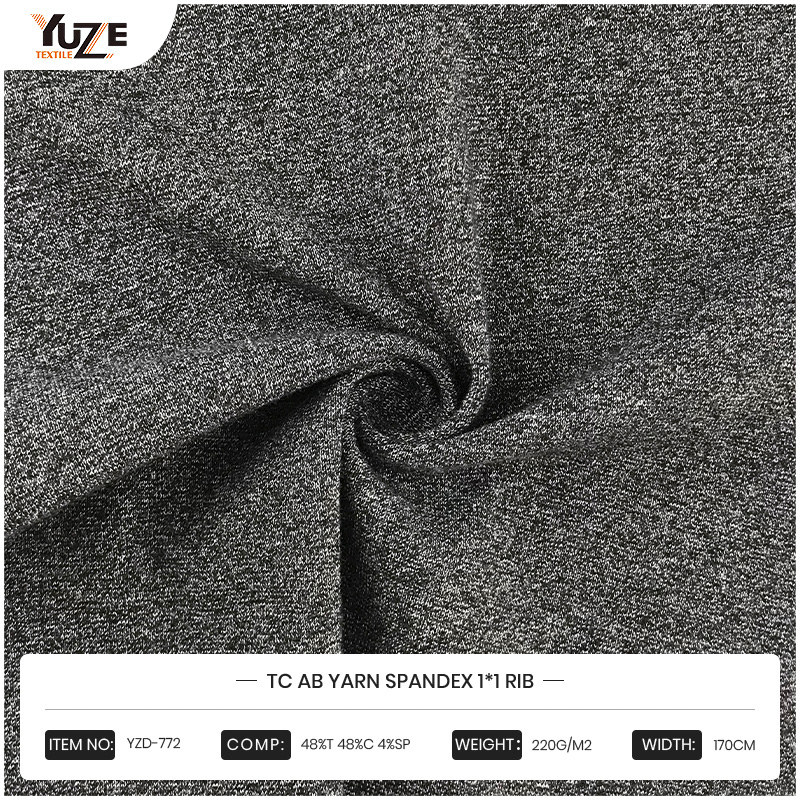
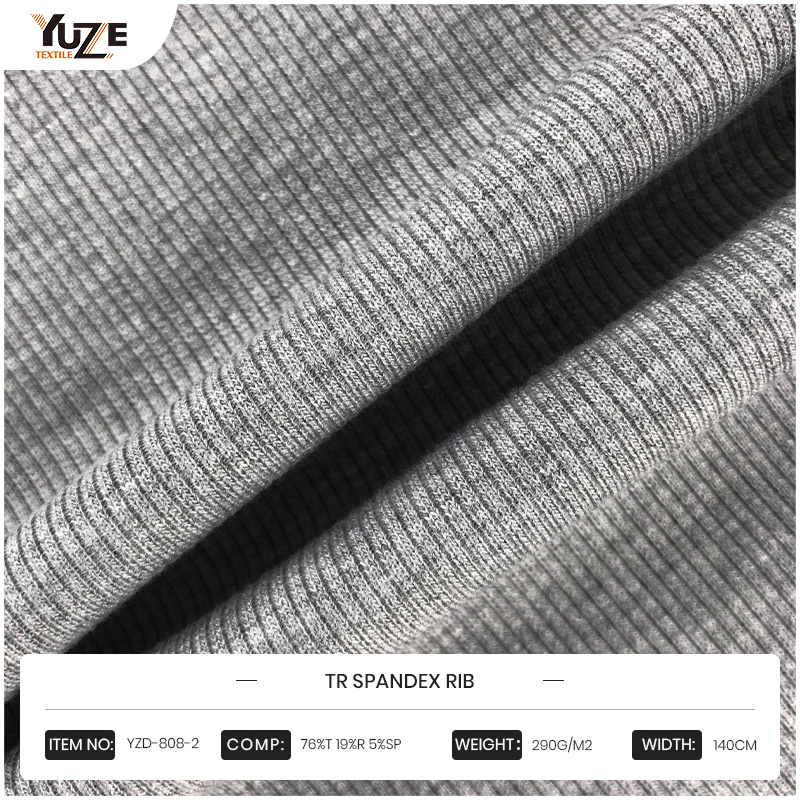
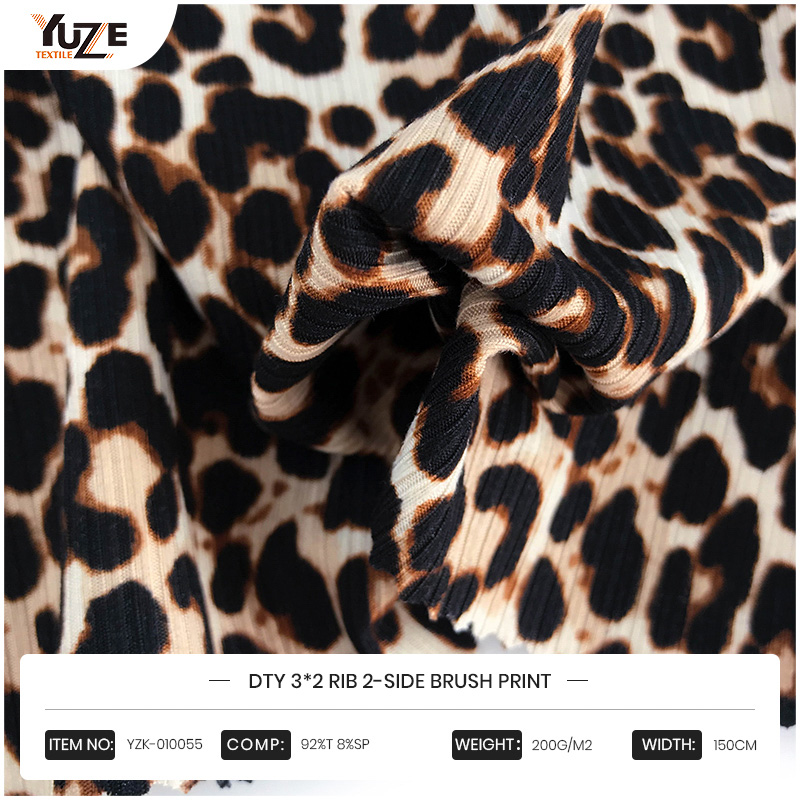
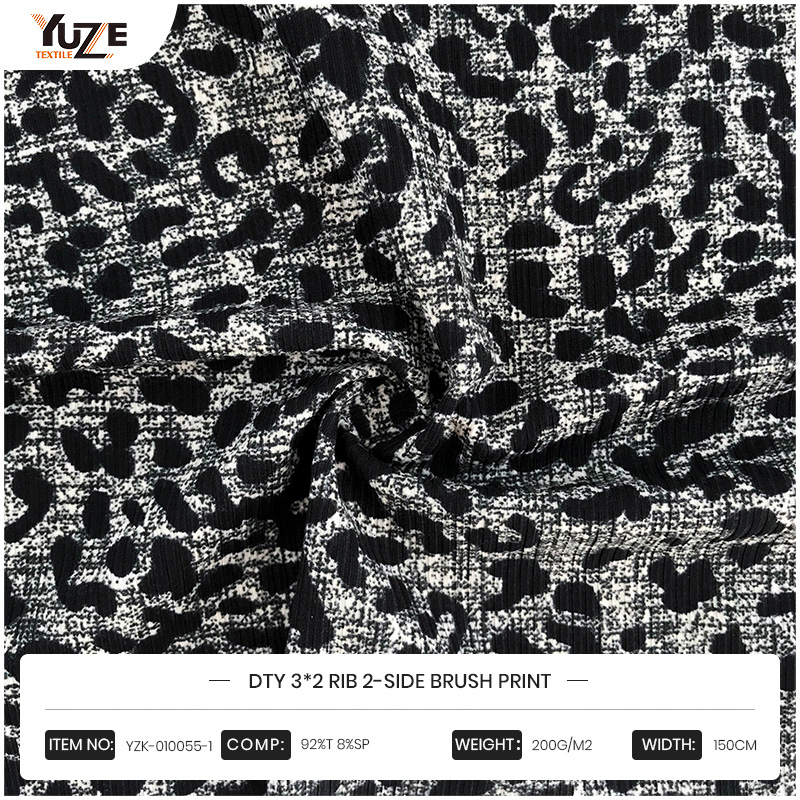
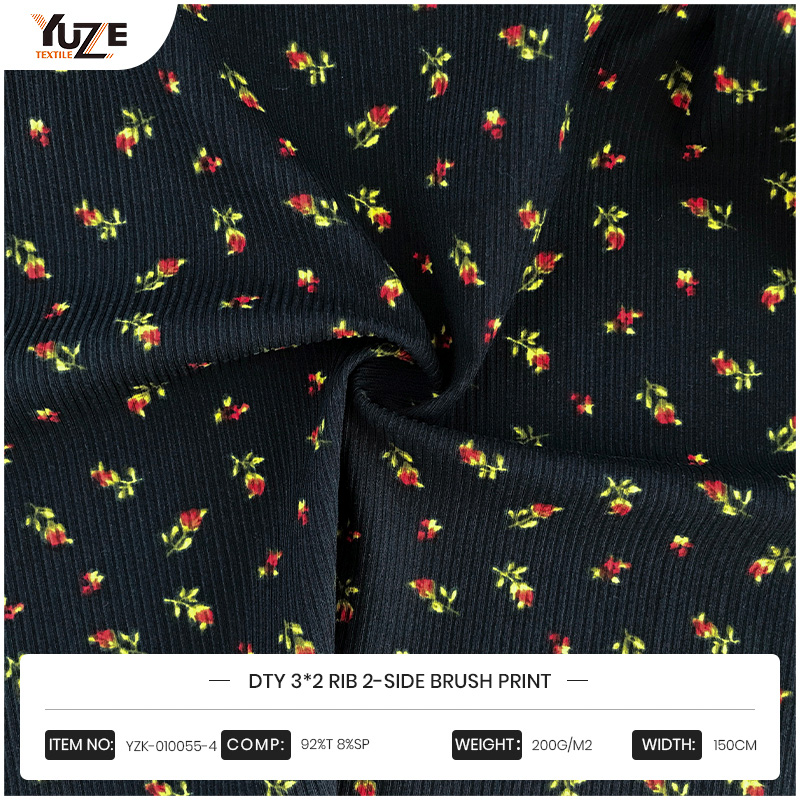
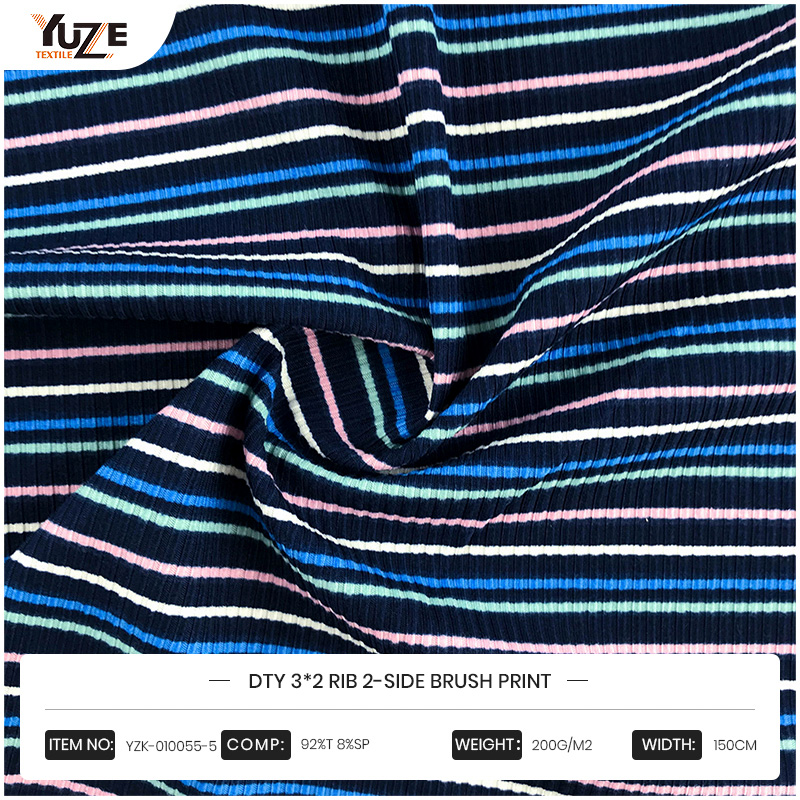
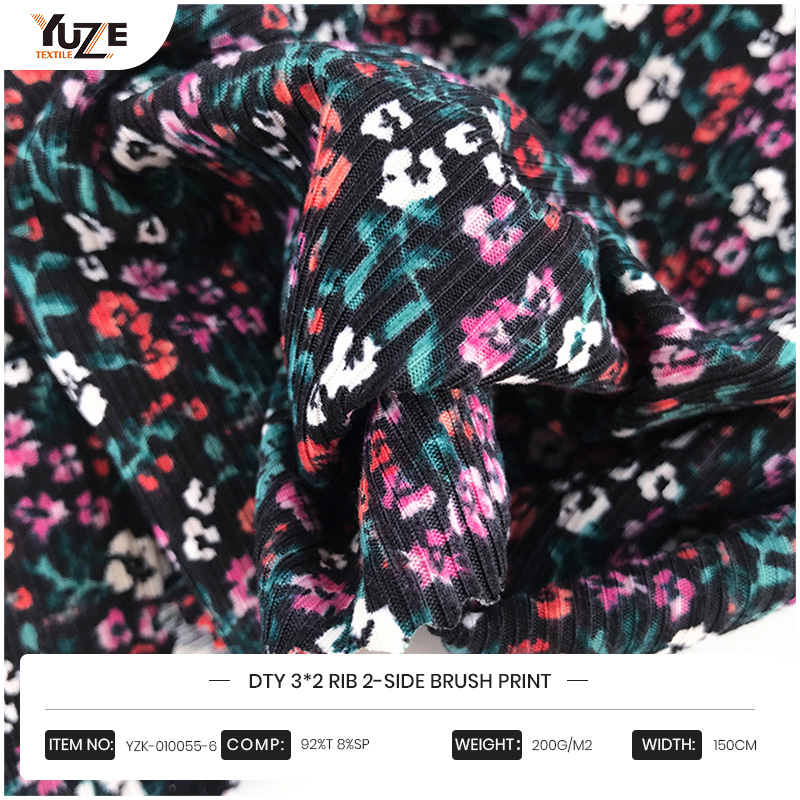
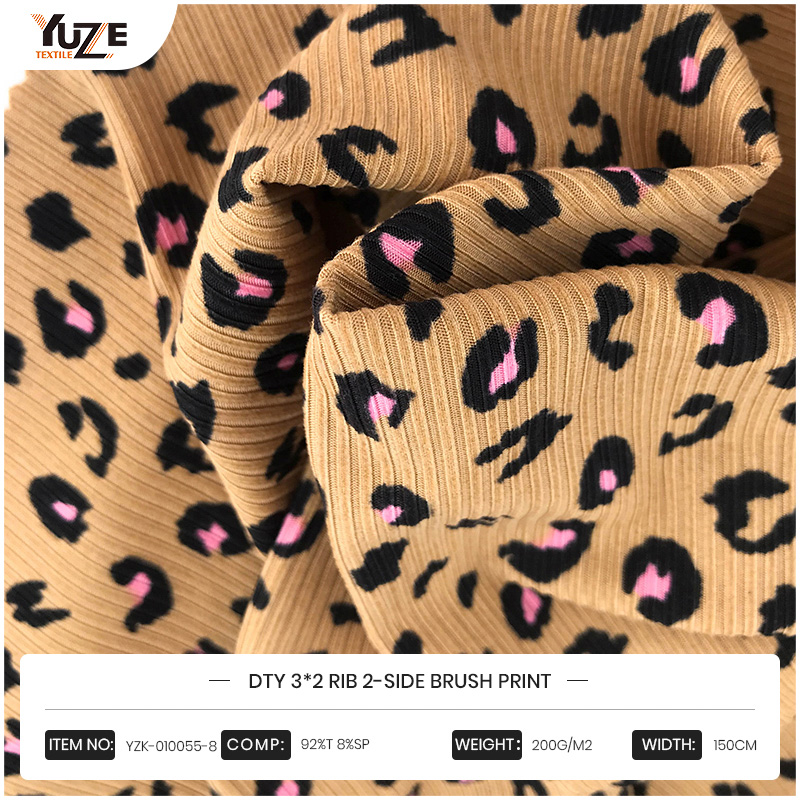
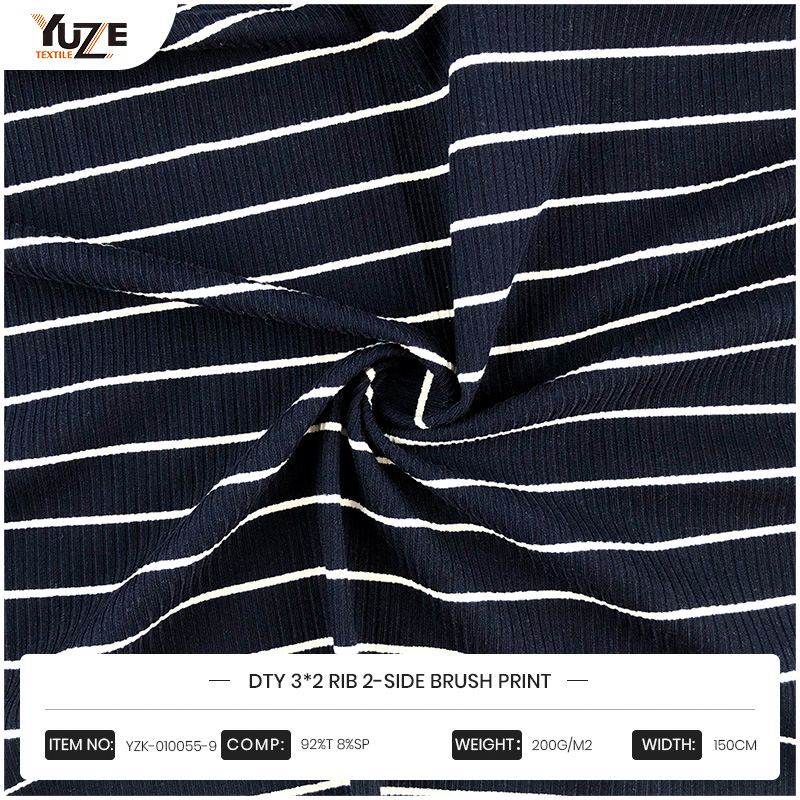
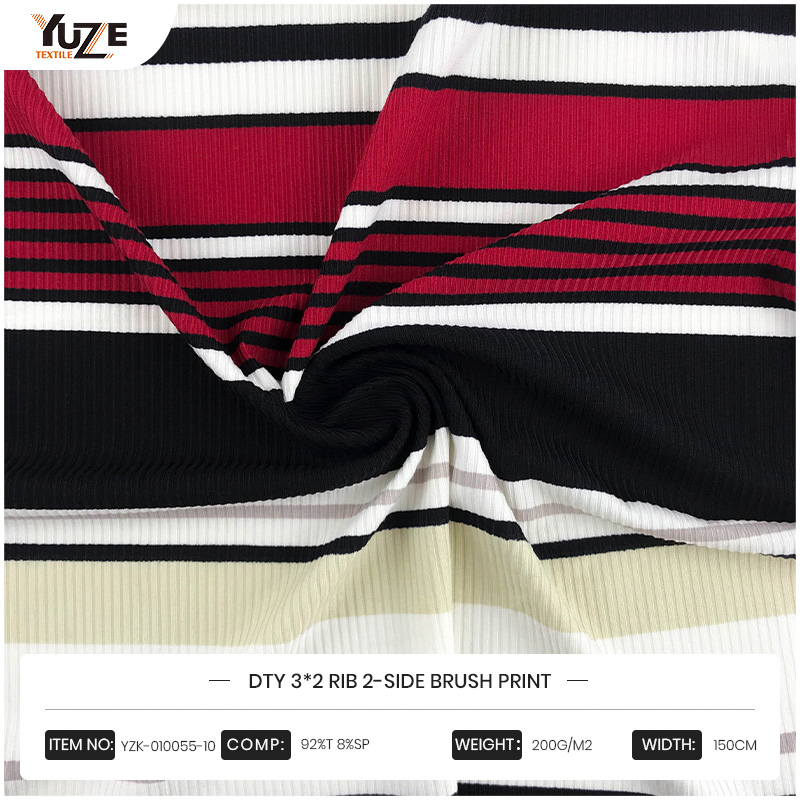
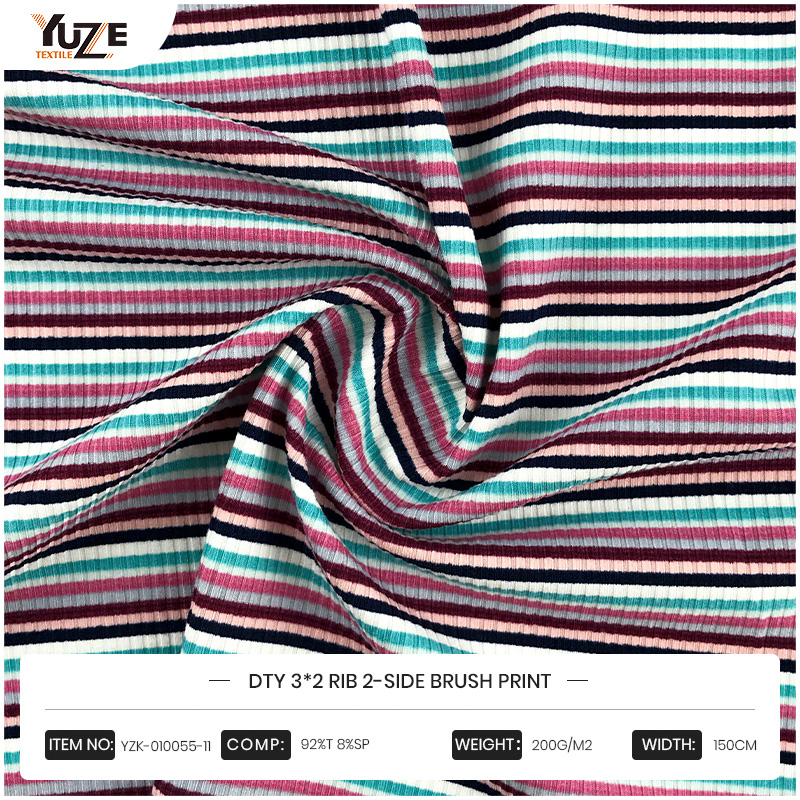
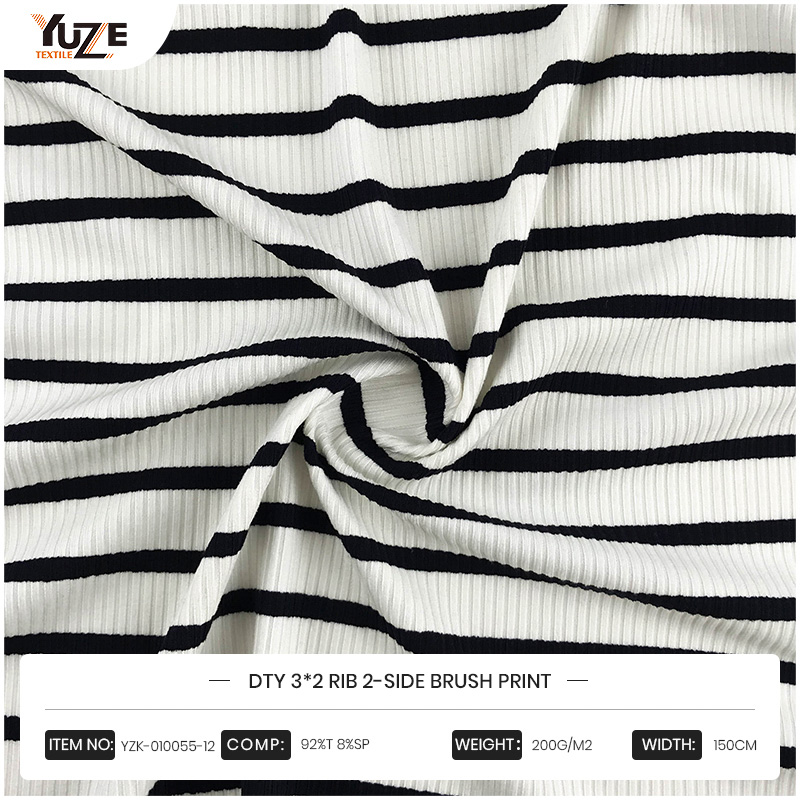
Rib is built by alternating knit and purl wales, which creates vertical ridges and much greater crosswise stretch. A 1x1 rib stretches a great deal and recovers well, making it the standard trim for cuffs, collars and waistbands. A 2x2 or 4x2 rib is denser and more stable, often used as a self-fabric body rather than a trim. Heavier ribbed knits in wool blends or acrylic blends are used for winter tops and cardigans, where the ridge structure adds visual interest without printing or jacquard work.
Two technical points separate good knit suppliers from average ones. Spirality is the tendency of a circular-knit tube to twist after washing, and it shows up as a garment that hangs crooked at the side seam; it is controlled by yarn twist, machine settings and relaxation. Pilling on knitwear is controlled by fiber length, yarn quality and finishing. Both should be tested after the same home-laundry cycle the consumer will use, not after a single laboratory wash.
12. Fleece and French Terry
Fleece and French terry are both knitted fabrics with an engineered back. French terry has a looped back that is left largely intact, giving a fabric that is warm but still drapes and breathes reasonably well. Fleece takes the same knit and brushes or naps the loops into a raised pile, which traps more air and delivers greater warmth at a similar or lower weight. A typical French terry sits between 220 and 280 gsm; a brushed fleece for outerwear can run from 280 to 350 gsm or more.
The family is wider than most buyers expect. Sherpa is a deep-pile fleece with a wool-like surface. Coral fleece is extremely soft and light, common in loungewear and bedding. Dralon and similar acrylic blends give a soft hand with good color depth. Bonded fleece takes the construction further by laminating a fleece to a shell fabric, creating a single composite with wind resistance and a cleaner inside face, which is standard in outerwear and performance jackets.
The failure mode is pilling. Brushed surfaces expose fiber ends, and if the yarn uses short, weak staple fibers, those ends ball up under friction from a seat belt, a bag strap or repeated washing. Anti-pilling finishes and better fiber selection both help, and both cost money. For bonded constructions, add a second concern: the adhesive and lamination process determines whether the layers stay together after washing and dry cleaning, and a cheap bond can delaminate at the edges after a few cycles. If a program is intended for repeated wear and laundering, test the bond, not just the fleece.
How to Compare Fabric Types Like a Buyer
Fabric names are a starting point for conversation; specifications are what protect a purchase order. The checklist below covers the points that most often decide whether a shipment is accepted or claimed against.
- Fiber content in writing, verified. Ask for a fiber composition test, not just a declaration. Blends are frequently overstated in one direction, and silk, wool, linen and recycled content are the categories where the gap between the claim and the lab report is largest.
- Weight and tolerance. State GSM with a tolerance, typically plus or minus 5 percent, and state whether the measurement is taken on the greige or the finished fabric. The same roll can pass or fail depending on which one the contract names.
- Shrinkage after three washes. One wash tells you very little. Repeat the specified home-laundry cycle three times and measure lengthwise and crosswise, because the second and third cycles often reveal the real behavior.
- Colorfastness across three conditions. Rubbing, washing and light exposure are separate tests. A fabric that passes washing can still fail crocking, which is where dark satin and heavy pigment prints typically break down.
- Pilling and abrasion. Relevant for every brushed or pile fabric, and for any knit that will see friction from bags, seat belts or upholstery. Set a minimum rating and test against it.
- Stretch and recovery. Record the stretch percentage and the recovery percentage after a defined extension time. For stretch wovens and knits, recovery is the number that predicts whether the garment will bag out.
- Spirality and torque. For circular knits, check whether the fabric twists after washing, especially on lighter single jersey. A twisted body panel cannot be corrected at the sewing stage.
- Hand-feel standard. Softness is subjective but not unmeasurable. Keep a sealed bulk standard and approve each lot against it in the same lighting, because a fabric can pass every lab test and still feel wrong to the customer.
- Dye-lot consistency. Confirm how many lots the order will run across and whether each lot will be shipped separately. Mixed lots inside one carton are a common cause of visible panel shading in finished garments.
- Delivery and MOQ reality. Confirm minimum order quantity per color, lead time from deposit, and whether sampling time is included. A cheap quote with a 90-day lead time can cost more than a higher quote that keeps the retail calendar intact.
Two points deserve extra emphasis because they are frequently handled too casually. First, specify the test method, not just the requirement: a shrinkage limit means nothing without a stated wash cycle and temperature. Second, put the tolerance in the purchase order. A verbal agreement that a fabric "should be about 180 gsm" is not enforceable, and disputes over a few grams per square meter are among the most common and most avoidable arguments in fabric trading.
Matching Fabric Type to the Garment
Once the fiber and construction are clear, the end use usually decides itself. The mapping below reflects how these twelve types are normally deployed in women's fashion, which remains the largest volume category for mid-weight woven and knitted fabrics.
- Cotton and cotton blends: shirts, blouses, summer dresses, childrenswear. Poplin and lawn for structure; double crepe and jacquard for texture.
- Linen and linen-look: summer dresses, relaxed trousers, unstructured jackets. Blends with rayon for drape or elastane for comfort.
- Rayon and viscose: dresses, blouses, skirts and linings. Challis and poplin for drape, moss crepe for texture, jersey for soft knits.
- Silk: occasion wear, bridal, premium linings. Charmeuse for shine, crepe de chine for a matte surface.
- Wool and wool blends: suiting, coats, knitwear. Fine merino against the skin, coarser counts for outer layers.
- Polyester: the broadest category, from printed fashion wovens to activewear and linings. Choose yarn type and finish to match the target hand.
- Nylon: swimwear, technical outerwear, lace and mesh where abrasion resistance and fine filament count both matter.
- Elastane blends: yoga and activewear, ponti roma dresses and trousers, rib trims, fitted tops and bodycon styles.
- Crepe: travel-friendly dresses, blouses, wide-leg trousers and occasion pieces where wrinkle resistance is valuable.
- Satin: evening wear, linings, printed fashion statements. Keep construction details smooth to protect the surface.
- Single jersey and rib: T-shirts, dresses, bodysuits and every form of trim. Specify yarn count, weight and recovery.
- Fleece and French terry: hoodies, joggers, loungewear, outerwear shells. Consider bonded versions where wind resistance is needed.
A garment program usually combines several of these types, and the combination is where cost is managed. A single dress might use a printed satin shell, a rayon crepe lining, a hidden elastane mesh for fit and a rib trim at the neckline. Each element carries its own risk profile, and the cheapest element is often the one that causes the return.
Twelve names, one practical lesson: a fabric is a specification, not a label. Fiber decides comfort and care, construction decides stretch, drape and durability, and finishing decides how the cloth looks and how long that look survives. When a supplier can speak clearly about all three layers, the conversation shifts from negotiating a price to solving a garment problem, which is where the real savings appear.
This is also where sample work earns its cost. Before a bulk commitment, ask for a swatch of the exact base cloth with the intended finish, wash it three times, measure it, and compare it against the sealed standard in daylight rather than under office lighting. A yard of fabric and a week of patience routinely prevent a container of claims.
YUZE TEXTILE, based in Shaoxing near the China Textile City market in Keqiao, works as a fabric manufacturer and exporter covering woven fabrics, knitted fabrics and post-processing such as embroidery, embossing, creasing and bonding, with an in-house design team supporting custom development. For buyers who want to compare constructions side by side, requesting samples and a fabric analysis for a specific end use is the fastest route from a swatch on a desk to a specification that holds up in production.



.jpg)
