.png)
 English
 Español
Ask a garment factory purchasing manager which fabric category causes the most confusion during sourcing, and the honest answer is usually non woven. The term describes a material by what it is not, which leaves designers, importers and production teams with only a vague idea of what they are actually buying. A non woven fabric can feel like paper, behave like felt, filter like a membrane, or hold up like a rugged technical textile. This guide explains what non woven fabric really means, how it is produced, what it is used for, why most garments still depend on woven and knitted constructions, and how you can identify it quickly at the sampling stage.
What Does Non Woven Fabric Mean? A Clear Definition
When textile professionals say non woven, they mean a flat, porous sheet made directly from individual fibres or filaments that have been bonded together. There is no stage in which the fibres are spun into yarn, and no machine that interlocks threads the way a loom or a knitting machine does. The fabric is formed in a continuous flow: fibres or filaments are laid into a loose web, and that web is locked together by heat, by chemical binders, by mechanical entanglement, or by a combination of these methods.
EDANA, the European industry association for nonwovens, and INDA, its North American counterpart, define a nonwoven as an engineered fibrous assembly, primarily planar, excluding weaving, knitting and paper making. That definition repays close reading. Engineered signals that the material is designed for a specific job rather than made as a generic textile. Fibrous assembly confirms that it is built from fibres, unlike a plastic film. Primarily planar means it is a flat sheet, which is the form buyers actually work with. Excluding weaving, knitting and paper making removes the three neighbouring technologies that people most often confuse with nonwovens.
So the shortest useful answer to the question what does non woven fabric mean is this: it is a sheet of fibres bonded together directly, without first spinning those fibres into yarn and without weaving or knitting them. It is not a half-finished fabric and not an intermediate stage between fibre and cloth. It is a finished textile in its own right, and it can be engineered to perform in ways that woven and knitted fabrics cannot easily match, such as forming a barrier that blocks droplets while still allowing air to pass through.
Where the Term Came From and Why It Causes Confusion
The word nonwoven became common in the middle of the twentieth century, when manufacturers began industrial production of fabrics that were neither woven nor knitted. Felt, which people had made for centuries by matting wool fibres with moisture, heat and pressure, was an early example, and it is still a nonwoven material by the modern definition. What changed after the 1940s was scale: machines began turning out bonded fibre webs at speeds of several hundred metres per minute, and the industry needed a name for the whole family.
The name was never elegant. Calling a product non woven tells you only what it is not, much as calling a car a horseless carriage did in the early automobile era. As a result, the category is widely misunderstood. In everyday textile trading, spunbond polypropylene bags, meltblown mask media, wetlaid tea bag material, needle-punched carpet backing and fusible garment interfacing are all lumped together as non woven, even though they share almost nothing except the absence of interlaced yarns.
For a buyer, the practical consequence is that the term alone cannot tell you weight, hand feel, strength, washability or price. You need the production process and fibre content. That is why this guide moves beyond the name and into the way non woven fabric is actually made.
How Is Non Woven Fabric Made?
All nonwoven production follows the same two-stage logic: form a web of fibres, then bond the web into a sheet. The processes chosen at each stage create the enormous variety of nonwoven materials on the market.
Stage One: Forming the Fibre Web
Three families of web-forming technology dominate the industry. In drylaid production, staple fibres are carded into a thin sheet or blown by air into a random web. Carding arranges the fibres into a parallel or lightly entangled structure; airlaying produces a bulkier, more random structure that suits wipes and absorbent cores. Wetlaid production suspends short fibres in water and drains the water through a screen to deposit a sheet, much like papermaking, but it uses textile fibres and engineered bonding so the result behaves as a fabric rather than as paper. Spunlaid production starts with polymer granules, melts them, extrudes the melt through spinnerets into continuous filaments, and lays those filaments onto a moving belt. Spunbond and meltblown are both spunlaid processes, and they are often combined in one line to produce the SMS materials used in medical protective clothing.
Stage Two: Bonding the Web
The loose web has almost no strength; bonding gives it structural integrity. The three main approaches are summarised below.
| Bonding method | How it works | Where you find it |
|---|---|---|
| Thermal bonding | The web passes between heated rollers or through a hot-air oven; thermoplastic fibres or powders melt at contact points and fuse the web together. | Spunbond bags, hygiene products, garment interfacing. |
| Chemical bonding | A liquid binder such as latex or acrylic is sprayed, saturated or printed onto the web, then dried and cured. | Wipes, apparel interlinings, filter media. |
| Mechanical bonding | Barbs or water jets entangle the fibres. Needle punching uses thousands of barbed needles; spunlace uses very high pressure water jets. | Geotextiles, automotive fabrics, medical dressings, cosmetic wipes. |
Each bonding method changes the hand feel and performance. Thermal bonding produces crisp, firm materials with low absorbency. Chemical bonding can soften or stiffen a web depending on the binder, and can add water or flame resistance. Mechanical bonding gives the softest, most textile-like hand, which is why spunlace fabrics dominate cosmetic wipes and medical dressings.
Main Types of Non Woven Fabric You Will Encounter
Spunbond Polypropylene
The workhorse of the nonwoven world. Polypropylene granules are melted and extruded into continuous filaments, laid into a web and thermally bonded. Spunbond is light, strong, air-permeable and resistant to moisture. You meet it in reusable shopping bags, furniture dust covers, the outer layers of surgical masks, diaper backsheets and protective aprons. It is also the product most people picture when they hear the term non woven.
Meltblown
Meltblown production uses the same polymer family but forces the melt through finer spinnerets with high velocity air, producing ultra-fine fibres with a very large surface area. The resulting web is excellent at capturing particles, which is why meltblown is the essential filtration layer in surgical masks and N95-style respirators. It is also used for oil spill sorbents, thermal insulation and battery separators.
Spunlace
Spunlace, sometimes called hydroentangled fabric, is made by entangling drylaid fibres with thousands of ultra-fine, high-pressure water jets. No heat or chemical binder is needed. The result is a soft, drapable, strong sheet that resembles woven or knitted cloth more closely than any other nonwoven does, which is why spunlace dominates wet wipes, facial cleansing cloths, medical dressings and some disposable garment components.
Needle-Punched Nonwoven
Needle punching drives barbed needles through a fibre web, forcing fibres from the surface into the body of the sheet and locking them together mechanically. The process can produce very thick, dense, felt-like materials. Needle-punched fabrics are used under roads, in drainage systems, as carpet backing, in car boot liners and in acoustic insulation. They are also the main base for geotextile production.
Wetlaid Nonwoven
Wetlaid production is chosen when the end product must be uniform and strong when wet. Tea bags, coffee pods, some filter media and certain medical packaging materials are made this way. The process resembles papermaking, but the fibres are longer and the bonding is engineered, so the sheet keeps its integrity when saturated.
Stitchbonded Nonwoven
Stitchbonding is a bridge between nonwoven and knit. A fibre web is reinforced by stitching a fine yarn through it, creating a fabric that drapes somewhat like a knit but is produced at nonwoven speeds and cost. Stitchbonded fabrics appear in shoe linings, upholstery, heat-protective clothing and some technical apparel.
Key Properties and Performance of Nonwoven Fabrics
Nonwoven is best understood as an engineered material rather than as a traditional textile. The manufacturer chooses the fibre, the web structure, the bonding method and any finishing treatment to hit a specific set of performance targets. That is why two nonwovens with the same weight can behave completely differently: one may be stiff and papery, the other soft and towel-like.
| Property | What to expect from nonwoven | How it compares with woven or knitted |
|---|---|---|
| Tensile strength | Low to moderate; stronger along the machine direction. | Woven is usually stronger for the same weight. |
| Stretch | Very low unless elastomeric fibres are added. | Knitted fabrics stretch far more. |
| Drape and hand | Medium to stiff; spunlace drapes best. | Woven and knitted offer a much wider range. |
| Breathability | High in spunbond, variable in meltblown. | Comparable to many open-weave wovens. |
| Water resistance | Can be engineered to be high with binders or finishes. | Similar to coated woven fabrics. |
| Wash durability | Weak in most thermally bonded products. | Woven and knitted survive repeated laundering. |
| Abrasion resistance | Moderate; depends on bonding quality. | Woven is generally better. |
| Cost per metre | Low, thanks to very high production speeds. | Woven and knitted cost more to produce. |
| Design flexibility | Limited to colour, print and embossed texture. | Woven and knit allow unlimited structural variety. |
One detail matters for production planning: nonwovens are directional. Machine direction and cross direction strength, stretch and elongation can differ noticeably. When parts are cut at different angles from the roll, they may behave differently on the sewing line. Experienced buyers of nonwoven materials design their patterns around this anisotropy, or choose a spunlace product when a more uniform hand is required.
Finishing widens the performance range. Nonwovens can be treated with water-repellent finishes, flame retardants, antimicrobial agents and softeners. They can be printed, embossed, flocked or laminated. The point is that nearly every property of a nonwoven is put there deliberately during engineering, not inherited from the fibre alone.
What Is Non Woven Fabric Used For?
Nonwoven materials appear in almost every industry. For an apparel importer, the most familiar uses are in single-use protective clothing, mask components, interfacing, packaging and hygiene products, but the biggest volumes are outside fashion.
- Medical and healthcare: surgical masks, isolation gowns, drapes, wound dressings, wipes and sterilisation wrap.
- Hygiene: diapers, feminine sanitary products, adult incontinence pads and flushable wipes.
- Filtration: cabin air filters, HVAC media, industrial liquid filtration and vacuum bags.
- Automotive: boot liners, headliners, carpet backing, acoustic insulation and seat comfort layers.
- Construction: roofing underlayment, house wrap, pipe wrap and insulation facings.
- Geotextiles: road underlayment, drainage, erosion control and landfill liners.
- Agriculture: crop covers, weed barriers and capillary mats.
- Apparel: fusible and non-fusible interfacing, shoulder pads, waistband stiffeners, shoe and bag linings and disposable coveralls.
- Home textiles: mattress components, pillow wraps, cleaning cloths, dryer sheets and furniture dust covers.
The unifying pattern is that a nonwoven is chosen when a flat sheet of engineered fibres can do the job at lower cost, or with better barrier or filtration performance, than a woven or knitted fabric. In apparel, that usually means a supporting or disposable role rather than the visible outer layer.
From the buyer's perspective, the same physical material can serve very different markets. A spunbond roll supplied at 25 grams per square metre may become a dust cover in one factory and a shopping bag in another, simply by changing the cutting and sewing pattern. What remains constant is the engineering principle: the fabric was made from polymer granules in a single continuous line, which is why tolerances such as basis weight uniformity and roll width consistency are the specifications that matter most when purchasing nonwoven materials.
Non Woven vs Woven vs Knitted: The Differences That Matter
For anyone sourcing fabric for garments, the comparison between the three fabric families matters more than the definition of nonwoven itself. The three look similar on a hanger, but they are built differently, behave differently on the cutting table, and perform differently in daily wear.
Structure
Woven fabric is made from two sets of yarns, warp and weft, interlaced at right angles on a loom. It has a defined grainline, a bias direction, and a stable structure that resists deformation. Knitted fabric is made from one continuous yarn formed into interlocking loops; it has natural elasticity and can be engineered to stretch in one or two directions. Nonwoven fabric is made directly from fibres, with no yarns and no loops. It is a bonded web with no grainline in the weaving or knitting sense. That single structural difference cascades into almost every performance difference. If you want the full production picture, the way knitted and woven fabrics are produced differently explains why the two yarn-based families behave so distinctly.
Strength and Durability
Yarns give woven and knitted fabrics their mechanical backbone. The strength of a woven fabric comes from the interlacing of tightly packed yarns; the durability of a knit comes from the distribution of stress across many loops. A nonwoven relies on bond points scattered across the sheet, which is why it tears progressively along a line rather than raveling or splitting cleanly. Woven fabrics excel in tensile strength and dimensional stability. Knitted fabrics excel in stretch and recovery. Nonwovens excel in cheap, fast, functional sheet production.
Stretch and Recovery
For athletic wear, base layers and anything that must move with the body, knitted construction is hard to beat. Woven fabrics can stretch if elastic yarns are added, but their recovery is limited. Most nonwovens barely stretch, and those that contain elastomeric fibres have poor recovery over repeated use. A buyer who needs a fabric that snaps back after a full day of movement should be looking at a knit, not a nonwoven.
Drape, Hand and Breathability
Fashion fabrics need to fall, fold and follow the body. Woven satins drape in smooth liquid folds; light knitted jerseys skim the body; and both transmit air and moisture. A nonwoven tends to have a characteristic flatness. It folds in stiff creases and does not conform well to curved surfaces. Spunlace products are the closest to cloth, but even they lack the rich, complex hand of a woven crepe, a rayon challis or a fine single jersey. That is why the visible outer layers of garments are overwhelmingly woven or knitted.
Care and Laundering
Most nonwovens are not designed for repeated washing. Thermally bonded polypropylene distorts and shrinks, wetlaid sheets lose their structure, and some needle-punched products shed fibres. Woven and knitted fabrics made from properly processed viscose, polyester, cotton or blends can withstand dozens of laundering cycles. If the end user expects to wash the garment, the outer fabric needs yarn-based construction. Nonwoven fusible interfacing survives washing because it is stabilised inside the garment, but as a visible outer surface it will not hold up.
Cost and Availability
Nonwoven production runs at several hundred metres per minute, while woven and knitted production is slower and needs more labour and energy per metre. That speed, plus the absence of a yarn-spinning step, gives nonwoven its cost advantage. Bulk rolls of nonwoven are often roughly half the price of equivalent-weight woven rolls. But the comparison only matters if the end use can tolerate a shorter lifecycle and simpler hand feel.
| Point of comparison | Nonwoven | Woven | Knitted |
|---|---|---|---|
| Basic structure | Bonded fibre web | Interlaced warp and weft yarns | Interlooped continuous yarn |
| Typical raw materials | Polypropylene, polyester, rayon, wood pulp | Cotton, rayon, polyester, silk, wool | Cotton, rayon, polyester, spandex blends |
| Stretch | Very low | Low, unless elastic yarns are used | Generally high |
| Strength | Moderate and directional | High and stable | Moderate and extensible |
| Drape | Poor to fair | Wide range | Good, body-skimming |
| Ravel resistance | High, but tears easily | Low, ravels at cut edges | High, but runs if a loop breaks |
| Wash durability | Low to moderate | Good | Good |
| Role in apparel | Interfacing, disposables, support layers | Outer fabrics, linings, shirts, dresses | Tops, dresses, activewear, sweaters |
| Relative cost | Low | Medium to high | Medium to high |
The practical rule for garment sourcing is simple: nonwoven is chosen for function and price, woven for stability and finish, and knitted for stretch and comfort. Choosing by end use prevents most of the sampling failures that come from treating the three families as interchangeable.
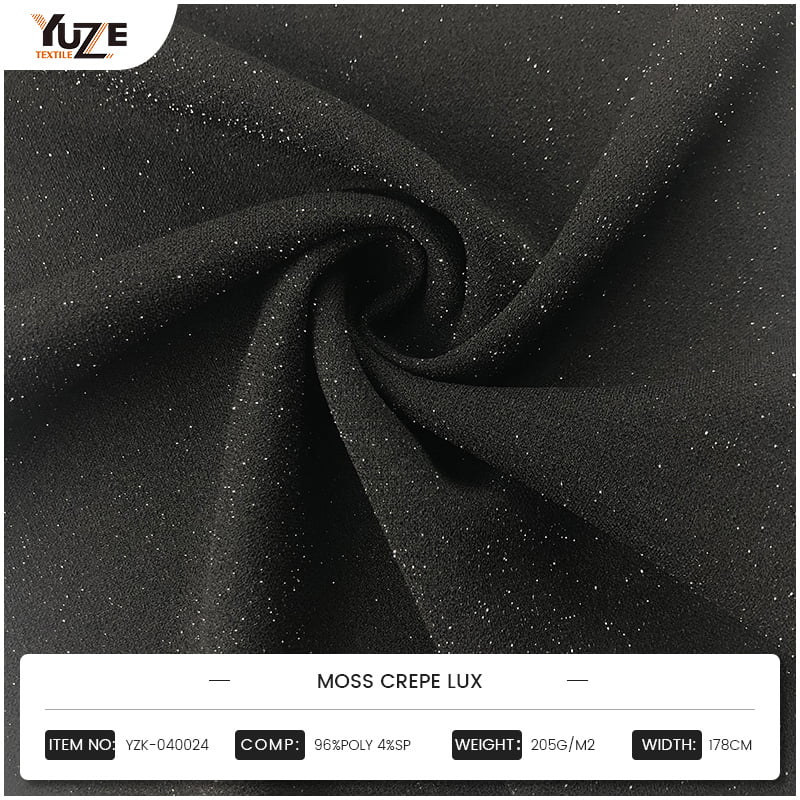 Moss Crepe Lux Polyester-Spandex Woven FabricThis lightweight crepe woven fabric, composed of 96% polyester and 4% spandex, offers drape and flexibility. It serves as a useful point of comparison when evaluating nonwoven alternatives for structured garment components.View Product →
What Does Non Woven Fabric Mean for Garment Production?
Apparel factories encounter nonwoven materials most often in three roles. The first and most important is fusible interfacing. Collars, cuffs, plackets, waistbands and pocket openings are nearly always stabilised with a nonwoven fabric coated with heat-activated adhesive. The interfacing adds structure without adding a visible layer. Nonwoven interfacing is popular because it has no grainline, so it does not pull in any direction and can be laid out for cutting with no concern for bias distortion.
The second role is disposable and protective wear. Welding aprons, cleanroom coveralls, medical isolation gowns, chemical protective suits and food-industry over-sleeves are typically made from SMS or spunbond nonwoven. In these products, the engineering of the nonwoven is exactly what the customer pays for: barrier, breathability, liquid repellency and disposability.
The third role is internal support: shoulder pads, cup pads, collar rolls, hat stiffeners, bag linings and shoe components. These small pieces are often die-cut from needled or thermally bonded nonwoven and stitched or glued into place.
For the main outer fabric of a garment, however, nonwoven rarely appears, for the reasons already covered: drape, seam strength, wash durability and aesthetics. A woven rayon satin falls in smooth folds and survives repeated cleaning; a nonwoven sheet of the same weight would crack, pill and distort. When a buyer specifies a fabric for a dress, blouse, jacket or pair of trousers, the starting point should be a woven or knitted construction.
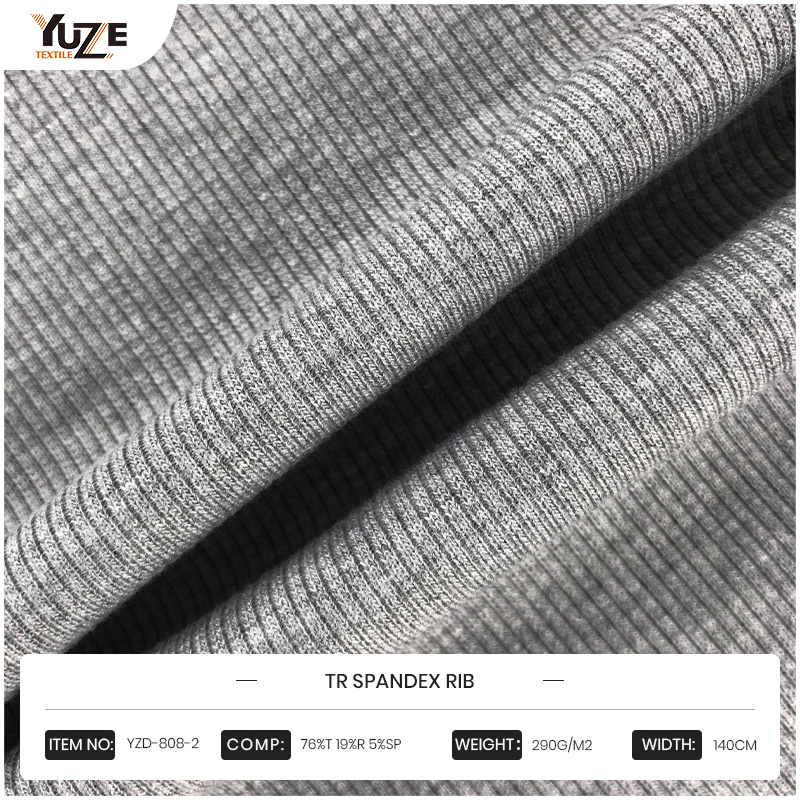
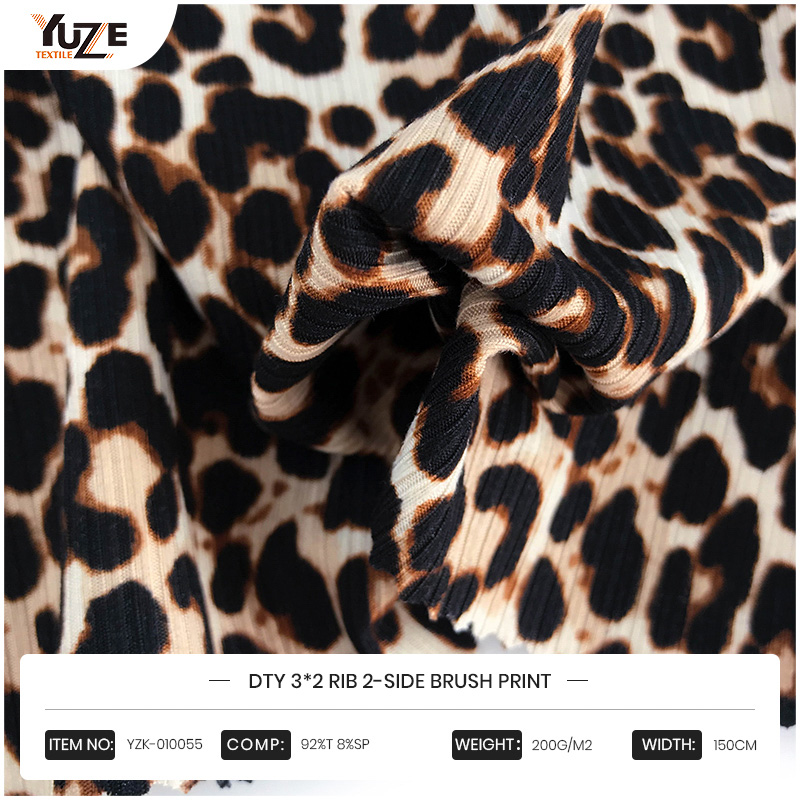
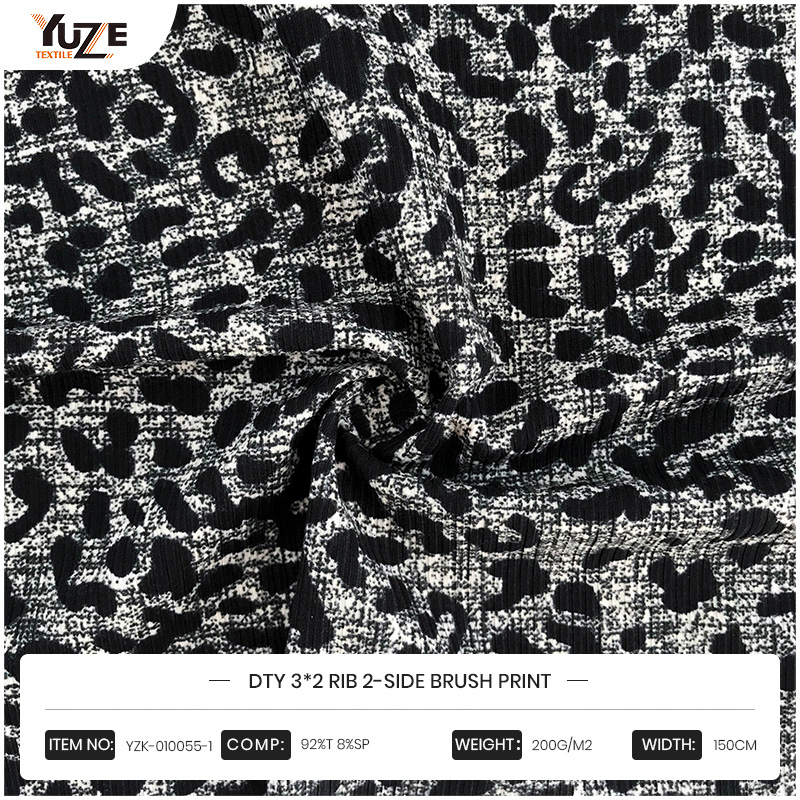
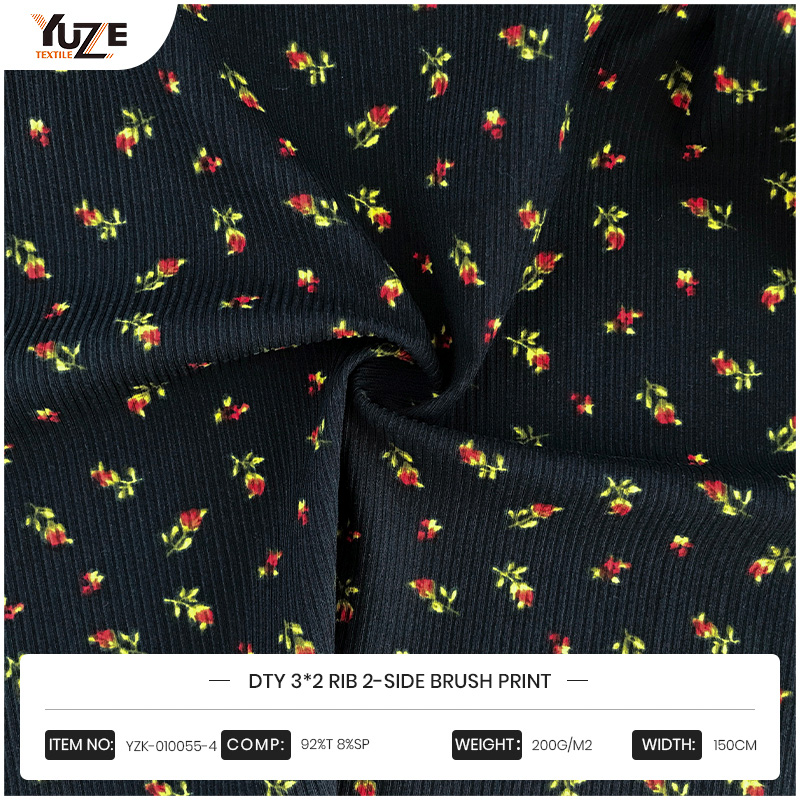
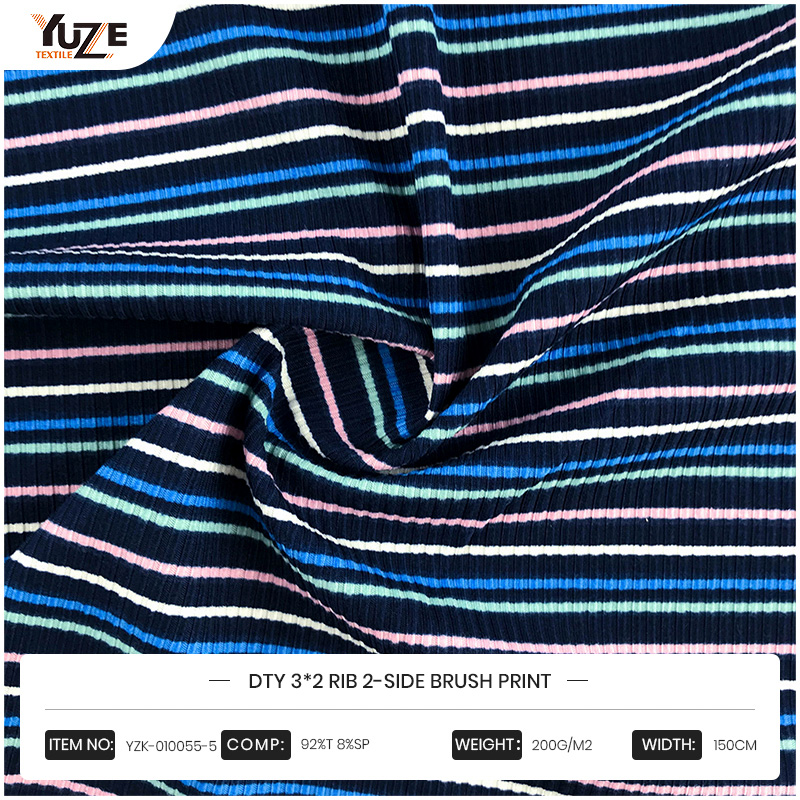
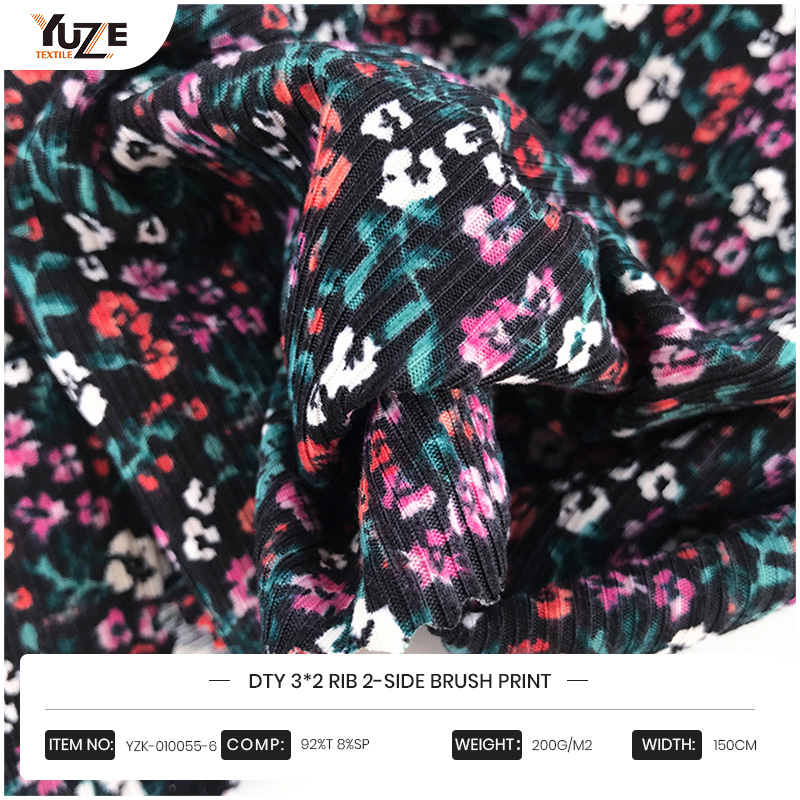
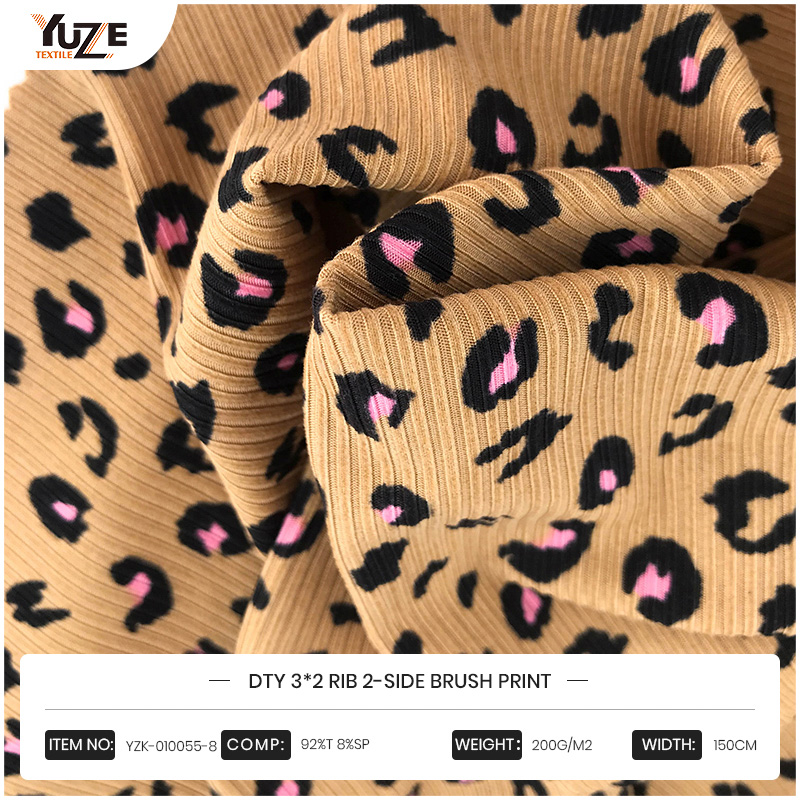
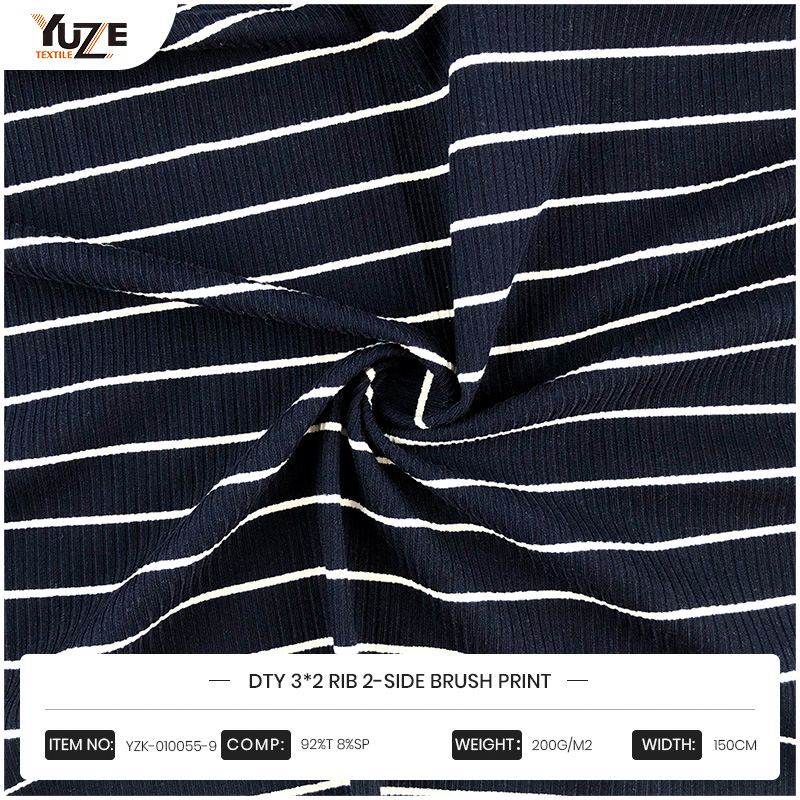
At Shaoxing YUZE Textile, our woven and knitted ranges cover the categories fashion buyers actually specify: rayon challis and poplin for blouses and dresses, polyester satins for evening wear, ribs and single jerseys for knitwear, jacquard knits for textured tops, and bonded fleece for autumn and winter. We frequently explain to customers that nonwoven has its own proper applications, but garments that must feel like cloth, wash repeatedly and hold their shape require yarn-based fabric. If you are comparing nonwoven with woven or knitted for a garment project, start with the end use and work backwards to the structure.
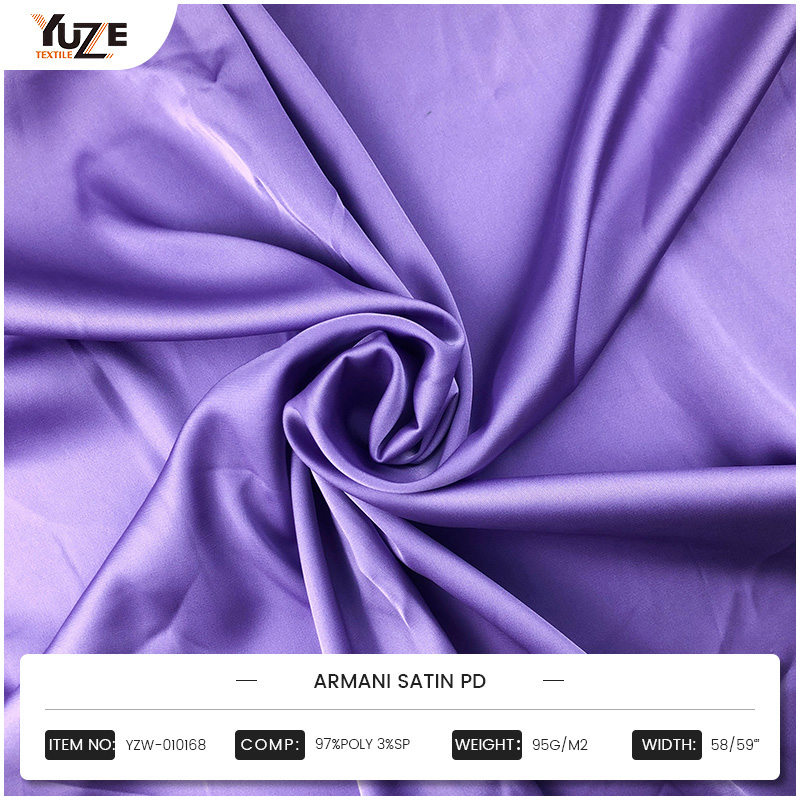 Armanisatin PD Lightweight Satin Woven FabricA sheer, fluid satin made of 97% polyester and 3% spandex at 95 g/m², ideal for blouses and dresses. Its smooth surface and gentle stretch make it a strong candidate when woven stability and softness are required.View Product →
How to Identify Non Woven Fabric at the Sample Stage
Before sending a sample to the laboratory, you can usually identify a nonwoven in under a minute using simple handling tests.
- Check the cut edge. Pull gently at a corner with a needle. A woven fabric will release yarns that ravel away from the edge. A knitted fabric will show loops that pull out in chains. A nonwoven will not ravel at all; its edge tears like thick paper or sheds a few loose fibres, but no yarn will appear.
- Look for a grainline. Hold the fabric up to the light and rotate it. A woven shows a regular grid of warp and weft. A knit shows vertical columns and horizontal rows of loops. A nonwoven has no repeating pattern; it looks random or faintly cloudy.
- Stretch lengthwise and crosswise. Woven cotton has minimal stretch on the grain and slight give on the bias. Knits stretch easily in at least one direction. Most nonwovens resist stretch in both directions and feel boardy.
- Tear the fabric. Make a small nick and tear with both hands. Woven fabric tears in a fairly straight line along a yarn direction. A knit resists tearing and may run. A nonwoven tears unevenly, often with a fuzzy edge, and the tear may curve when bonding is irregular.
- Snip off a few fibres and apply a flame. Polypropylene nonwoven melts into a hard bead and shrinks away from the flame. Polyester and nylon behave differently from cellulosic fibres. The test should always be done with tweezers and a fireproof surface, never near a roll store.
These five checks take less time than reading the full specification sheet, and they can prevent a costly mistake when a supplier's non woven material does not match your expectation of a fabric that behaves like cloth.
Common Misconceptions About Non Woven Fabric
Because the category is defined by exclusion, it attracts more than its share of myths. Here are the misconceptions that cause the most trouble in trade conversations.
- Non woven is a cheap version of woven. No. It is a different product category with a different set of jobs. A spunbond bag and a poplin shirt fabric are not competing products.
- All nonwoven fabrics are single-use. No. Geotextiles and automotive nonwovens are designed to last for decades. Disposability is a design choice, not a defining property.
- Non woven means felt. Felt is one type of nonwoven, made by matting fibres with heat, moisture and pressure. Most industrial nonwovens are made by entirely different processes.
- Non woven is paper. Wetlaid nonwoven shares its forming method with papermaking, but it uses textile fibres and engineered bonding. A good spunlace wipe stays strong when wet; paper does not.
- Non woven fabric is waterproof. Not automatically. Many nonwovens are highly porous. Water resistance is an engineered property added when the application needs it.
- If a fabric looks like cloth it must be woven or knitted. Some spunlace and stitchbond products are designed to imitate the look of woven or knitted cloth. Always check the cut edge before assuming a structure.
Non Woven vs Bonded Fabric: Do Not Confuse the Two
The word bonded causes real confusion in apparel sourcing because it has two different meanings. In the nonwoven industry, bonding refers to joining a loose fibre web into a sheet, whether by heat, chemicals or mechanical entanglement. In the garment and outerwear industry, bonded fabric usually means two finished textile layers laminated together with adhesive, often with a functional membrane in between.
A bonded outerwear fabric typically combines a woven face fabric with a knitted fleece backing, or a knit face with a tricot backing. The finished material keeps its woven or knitted identity; it is the layers that are bonded, not loose fibres. Nonwoven fabric, by contrast, begins and ends as a fibre web.
The two categories do sometimes meet: some nonwovens serve as the middle layer in a bonded laminate. But a supplier offering bonded sherpa fleece or bonded French terry is offering a laminated textile, not a nonwoven, and the performance expectations are completely different. For autumn and winter knitwear, bonded constructions such as sherpa-bonded fleece are popular because they combine body weight, insulation and a soft hand in a single cutting layer.
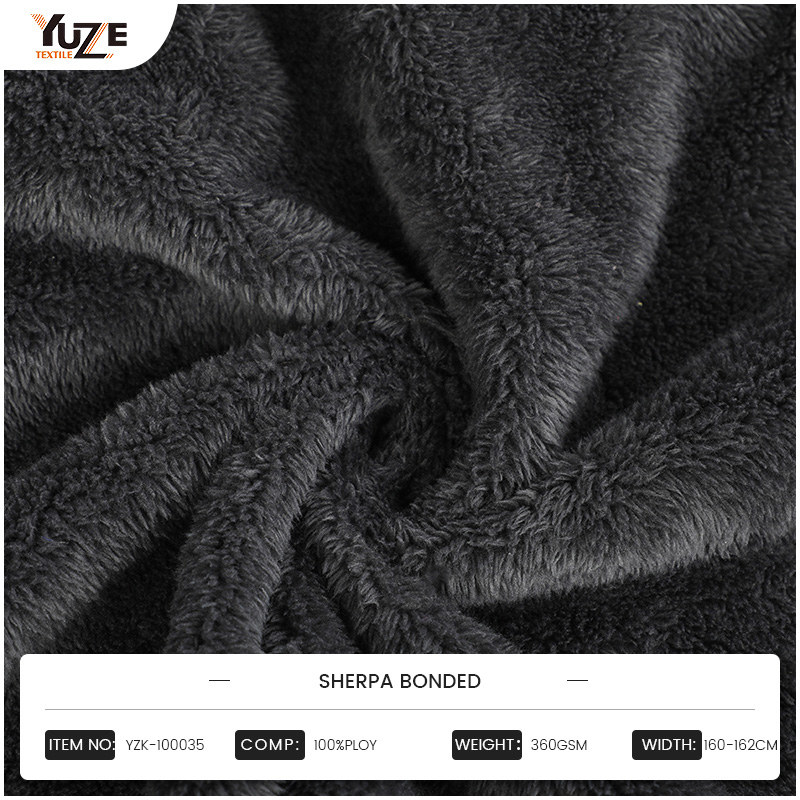 Sherpa Bonded Polyester Fleece FabricThis bonded fleece, fully composed of polyester at 360 gsm, delivers warmth and body in a single cutting layer. It represents the laminated textile category that contrasts with nonwoven constructions discussed in the surrounding guidance.View Product →
How to Choose the Right Fabric Family for Your Order
When you specify a fabric, the first question is not fibre or colour. It is which structure the garment needs. Work through the decision in this order.
- Define the end use. A single-use protective coverall points to nonwoven. A dress that will be worn and dry-cleaned for years points to woven or knitted.
- Define the mechanical demands. High stretch with recovery means knitted. High dimensional stability and crispness means woven. If neither is required, nonwoven may be sufficient, but check drape and wash tolerance.
- Define the hand feeling with physical samples. A nonwoven can be printed to look like a woven, but it will not feel like one in the hand or on the body.
- Define the cost ceiling. Nonwoven is usually cheaper per metre, but a cheaper fabric that fails the end-use requirements is the most expensive choice in the end.
- Ask the production team as well as the sales desk about strength, edge behaviour and laundering. A reliable manufacturer will tell you when the chosen structure is wrong for the application.
Do not assume that a fabric labelled non woven is lower grade. It may be exactly the right solution for the job. But do not assume it can replace a woven or knitted fabric in a garment that needs drape, stretch or wash durability. Those properties come from yarn-based construction, and no amount of fibre bonding can fully replace them.
Basis weight is one of the first specifications to check. Nonwoven fabrics are usually quoted in grams per square metre with a tolerance, commonly plus or minus five percent. For woven and knitted fabrics, buyers also confirm thread count, yarn count and finished width. Understanding which specification belongs to which structure prevents arguments at the inspection stage.
Final Thoughts: What Does Non Woven Fabric Mean for You?
For a buyer, the most useful definition of nonwoven is practical rather than formal. Non woven fabric is a sheet of fibres bonded directly together by heat, chemicals or mechanical entanglement, made in one continuous process without spinning yarn and without weaving or knitting. It is an engineered, functional material with genuine strengths: production speed, low cost, barrier performance, filtration and design flexibility. It also has real limits: drape, stretch, wash durability and tear strength that yarn-based fabrics handle far better.
Understanding these boundaries matters in day-to-day trade. When a supplier says non woven, ask for the specific process, whether spunbond, meltblown, spunlace, needle punch or wetlaid, and confirm the fibre content. When a designer asks for a fabric that feels like cloth, washes like cloth and drapes like cloth, choose a woven or knitted fabric and start the development there.
YUZE Textile is a professional woven and knitted fabric manufacturer and exporter based in Shaoxing, Zhejiang, close to the China Textile City, with its own design team, free sampling and strict piece-by-piece inspection before packing. If your next order turns on the difference between nonwoven and woven, or between a knitted jersey and a woven crepe, our team can provide samples and technical analysis before you commit. Browse our woven and knitted fabric collections to compare the structures side by side.



.jpg)
