.png)
English
The highest quality cotton fabric is not a single product you can name off a list. It is a convergence of four things: extra-long-staple cotton fibre, combed and ring-spun yarn, a construction that m...
A woven fabric is a textile made by interlacing two sets of yarns at right angles: the warp runs lengthwise, and the weft crosses it from side to side on a loom. This structure gives woven cloth its ...
A buyer sits in a fabric selection meeting with two navy swatches under the same lamp. Both measure 150 gsm on the scale. Both feel soft against the thumb. Both are quoted for the same dress program....
Ask a garment factory purchasing manager which fabric category causes the most confusion during sourcing, and the honest answer is usually non woven. The term describes a material by what it is not, ...
Ask a simple question – is woven fabric stretchable? – and you will get two different answers depending on who answers it. A textile engineer will say no, because a conventional woven fabric is built...
Woven fabric is a type of cloth produced by interlacing two sets of yarns at right angles: the warp, which runs lengthwise along the loom, and the weft, which travels crosswise from one edge to the o...
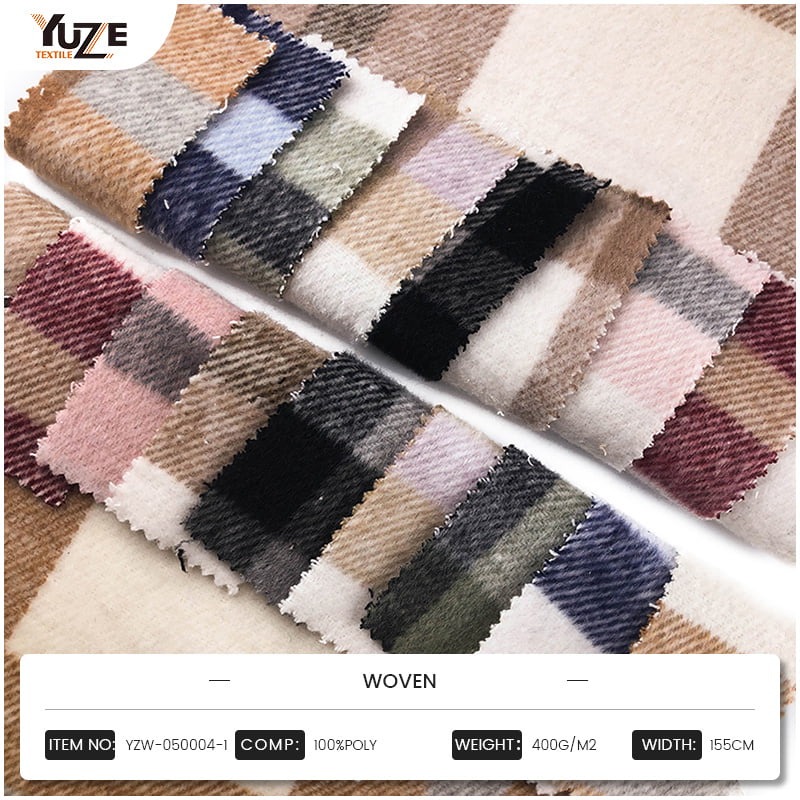
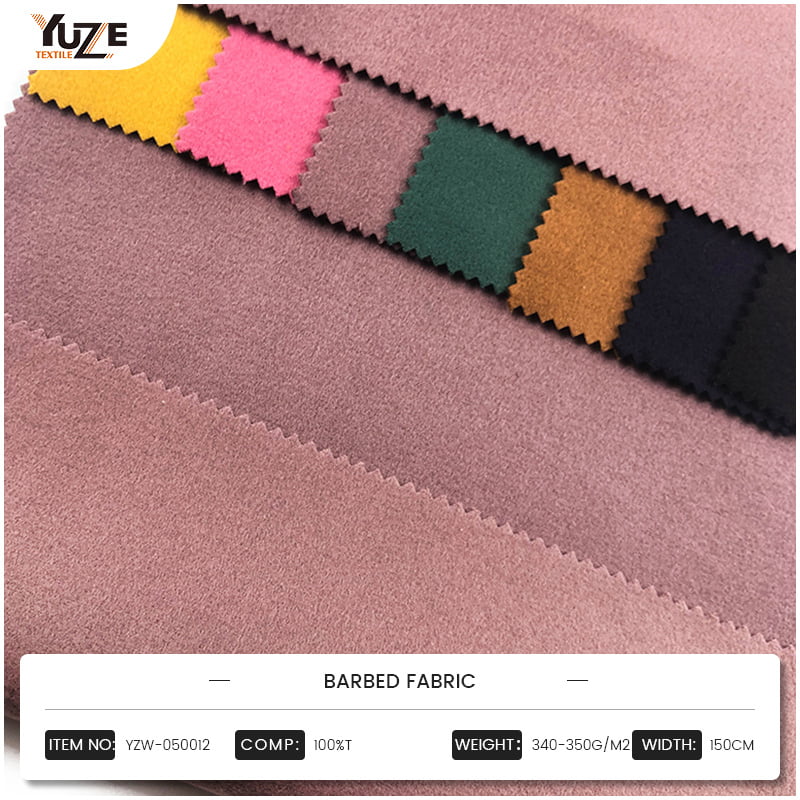
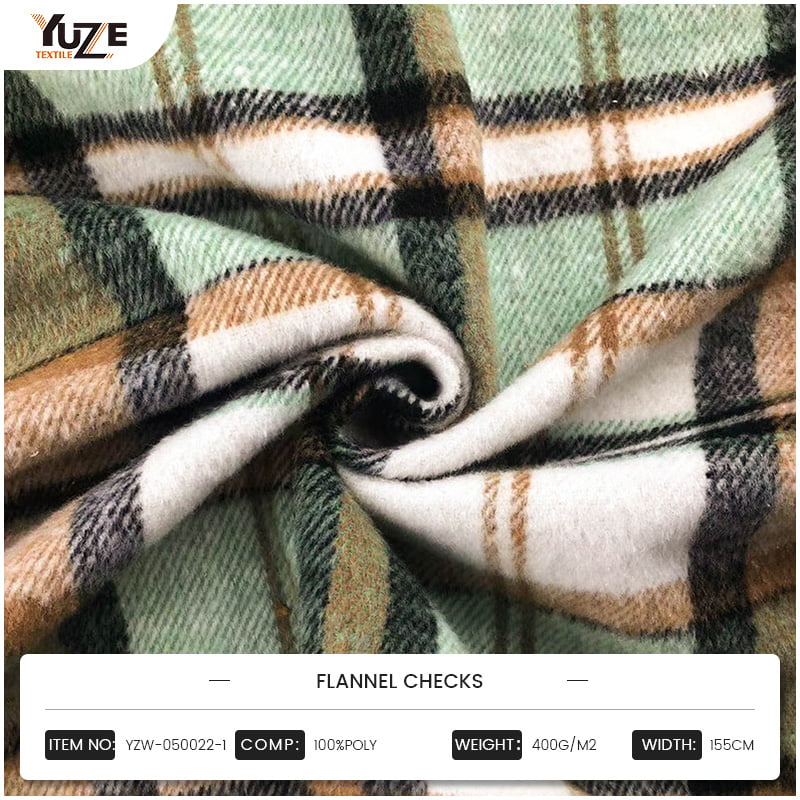
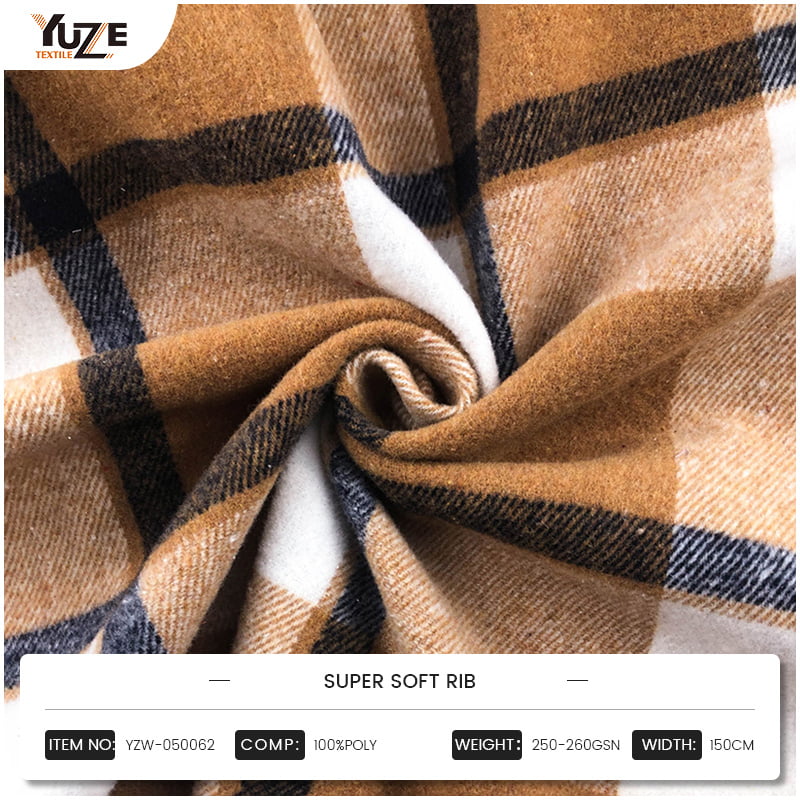
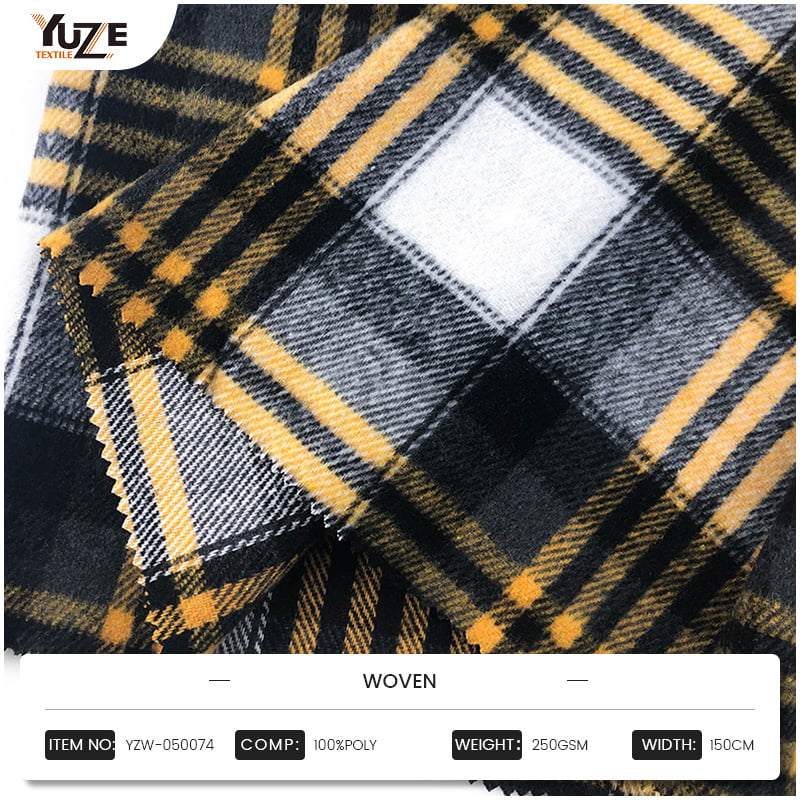
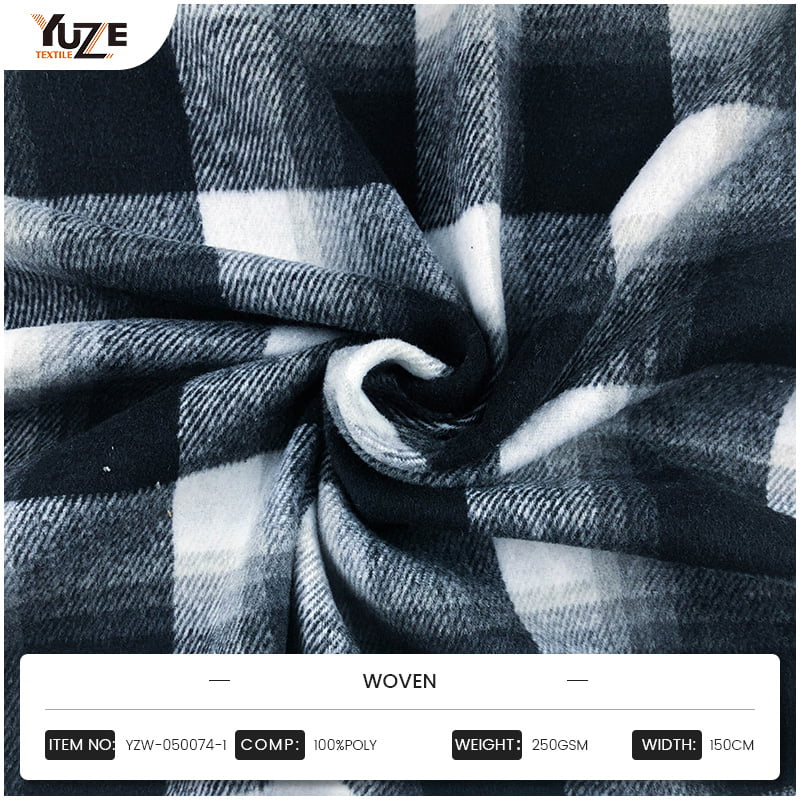
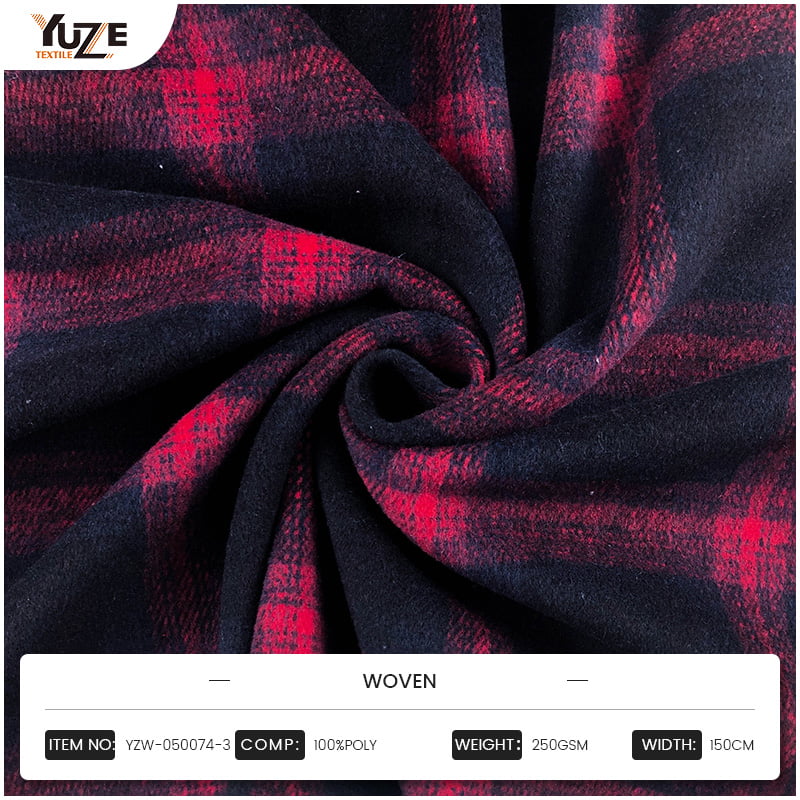
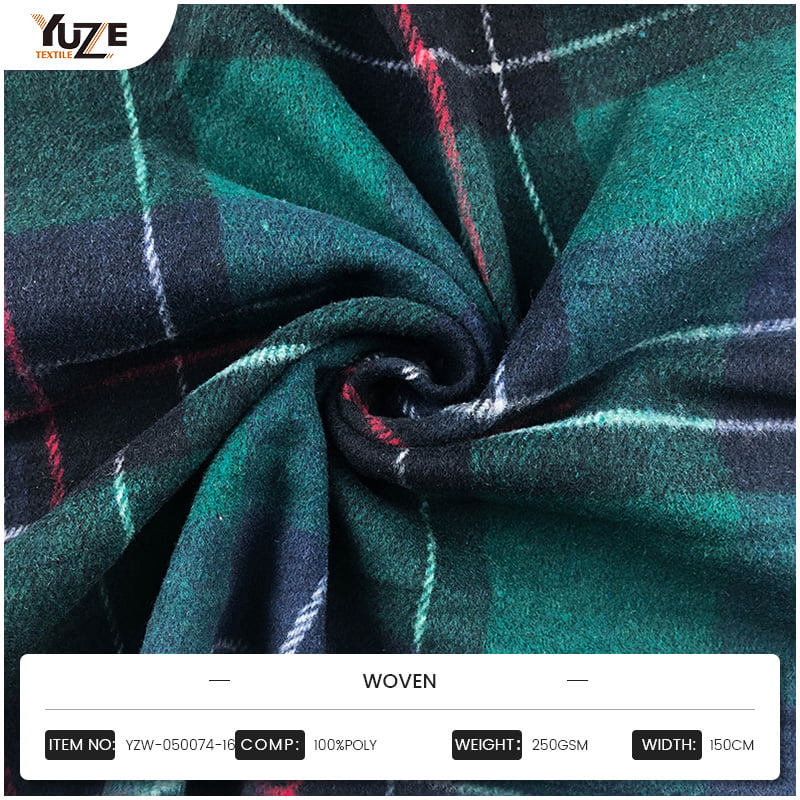
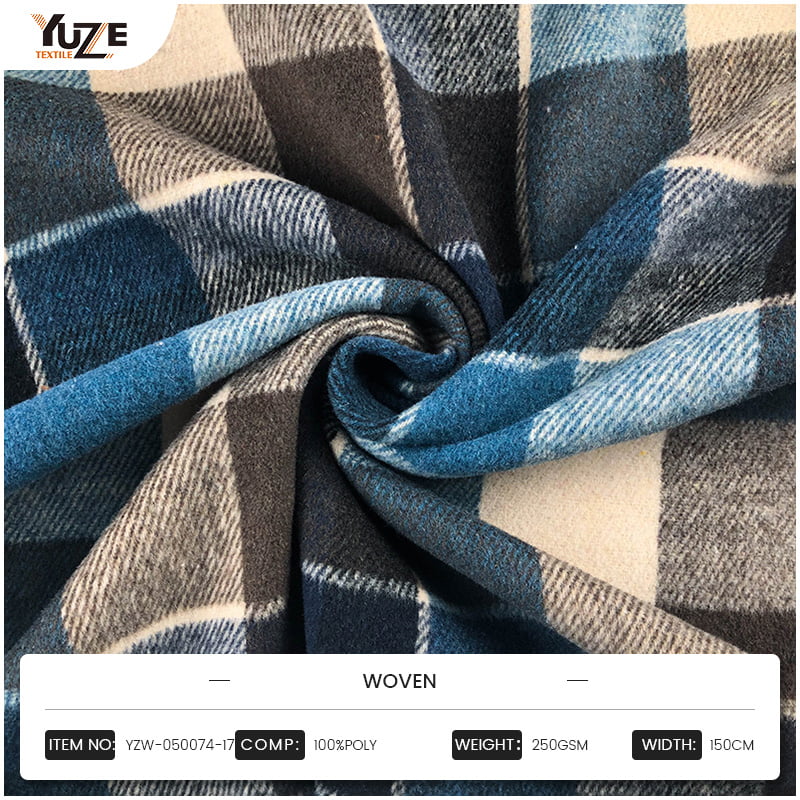
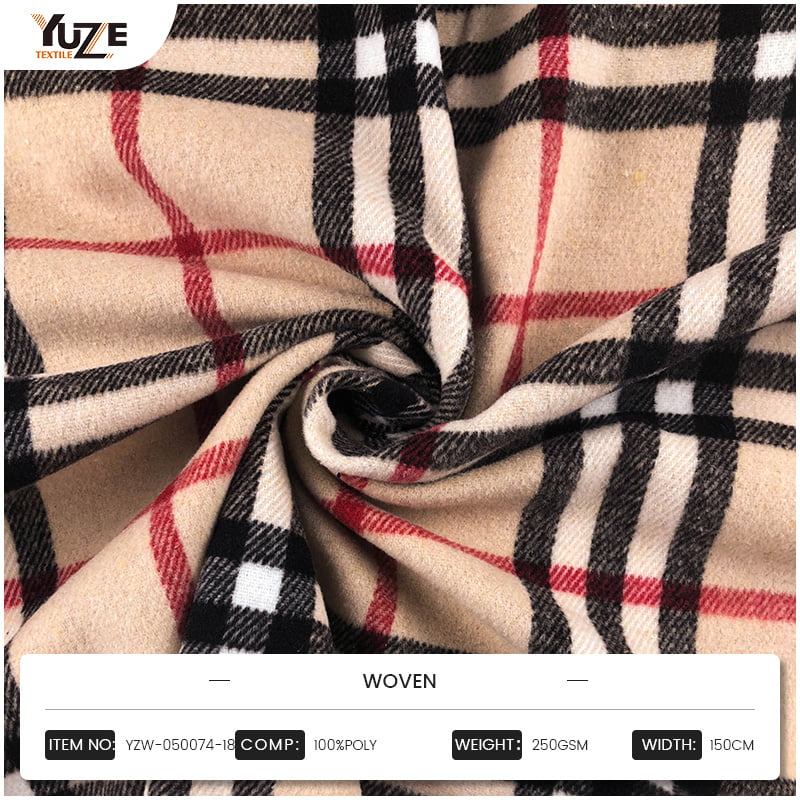
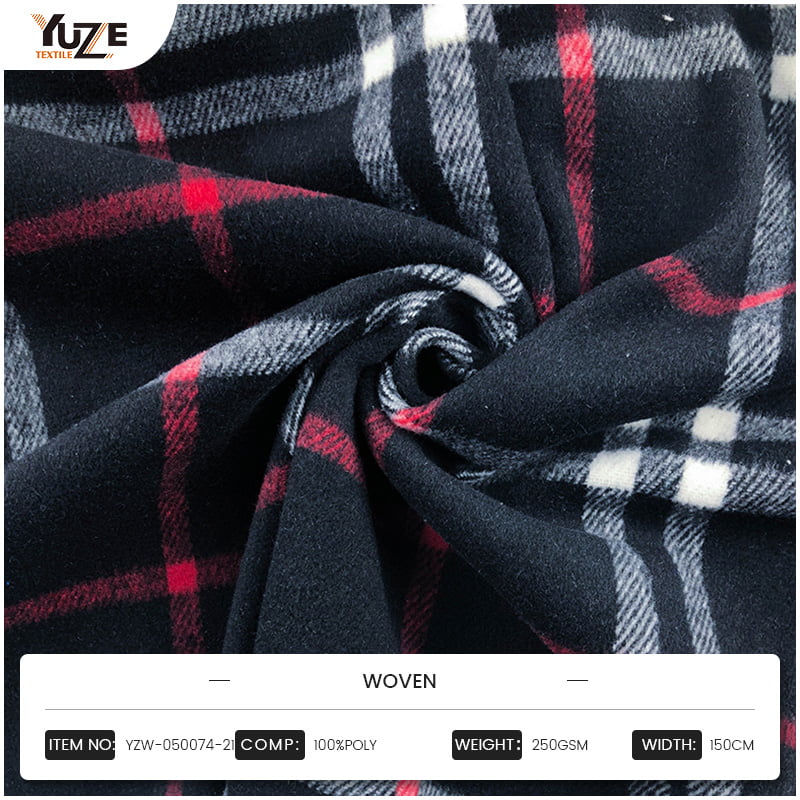
Flannel is a woven cotton or blended fabric that has been brushed. It is widely used in clothing, home textiles, industry and other fields because of its softness, warmth and skin-friendly characteristics. Its weaving basis is usually a plain or twill structure, using natural cotton fiber, polyester-cotton blended or wool and other materials. After special finishing processes such as raising and brushing, the cloth surface forms a layer of uniform and dense fluff, which has good thermal insulation and touch comfort.
Flannel Woven Fabrics are of various types and can be roughly divided into the following categories according to raw materials and uses:
Pure cotton flannel: woven with 100% cotton fiber, soft and breathable, natural and environmentally friendly, it is the most common type of flannel, widely used in pajamas, baby clothes, bedding and other intimate products.
Polyester-cotton blended flannel: Blending polyester and cotton in proportion improves the strength, wrinkle resistance and cost control of the fabric, and is suitable for making durable products such as work clothes, uniforms, curtains, etc.
Wool Flannel: Made of fine wool as the main material, the fabric has a delicate surface, a crisp texture, and excellent warmth retention. It is commonly used in autumn and winter coats such as suits, windbreakers, and high-end uniforms.
Double-faced Flannel: Both sides are brushed, and the feel is more abundant. It is widely used in blankets, sheets, blankets, home clothes, and other products that need to enhance warmth retention and heaviness.
Hand feel: Flannel Woven Fabric is known for its soft and delicate feel. It feels warm and comfortable to the touch, and will not cause irritation when it is close to the skin. Its soft fleece layer provides the wearer with an excellent skin-friendly experience, especially suitable for making pajamas, baby clothes and other close-fitting clothing.
Warmth retention: The brushed structure on the surface of the fabric can form a fine air retention layer, which enhances the thermal insulation performance, thereby significantly improving the warmth retention effect. This structural design makes flannel an ideal choice for clothing and home textiles in autumn and winter.
Moisture absorption and breathability: Especially flannel made of pure cotton fiber, which has good moisture absorption and breathability, can effectively regulate the humidity of the body surface, and bring a dry and non-stuffy wearing experience. It is very suitable for seasons with large temperature differences or scenes that need to be worn close to the body for a long time.
Durability: Polyester-cotton blended Flannel Woven Fabrics not only improve the overall strength, but also enhance wrinkle resistance and washability, extending the service life of the product. This type of fabric is more suitable for clothing and household items that are frequently worn and washed on a daily basis.
Dyeing performance: Flannel Woven Fabrics have excellent dyeing properties and can easily present a variety of color styles such as bright, soft or retro. Printing has strong adaptability and can be widely used in products such as shirts, bedding, blankets, etc. with rich patterns to meet diverse design needs.
Wrinkle resistance: In terms of wrinkle resistance, blended flannel is better than pure cotton material. Although flannel is not a completely iron-free fabric, its fluff structure conceals the creases to a certain extent, making the overall appearance naturally fluffy and visually wrinkle-resistant.
Environmental protection: Flannel made of natural cotton or wool as the main raw material has good biodegradability, which is in line with the current green environmental protection concept of sustainable development. It is not easy to generate static electricity and is skin-friendly, which also makes it an important material in the environmentally friendly home and baby products market.
Flannel Woven Fabric has become a representative product with both aesthetic and practical value in autumn and winter fabrics because of its comfort and functionality.
1. Yarn preparation
According to the fabric positioning, ring-spun cotton yarn, air-spun yarn or blended yarn are selected, and sizing treatment is performed to enhance the weaving strength.
2. Machine-woven cloth
Based on plain and twill weaves, the warp and weft density and yarn count are controlled to ensure the tissue fastness and surface finish of the cloth.
3. Napping treatment
After desizing, scouring and bleaching, the cloth enters the napping process, and a steel needle brush or beaver hair roller is used to pull out the cloth surface fibers to form a short and uniform fluff layer.
4. Shearing and shaping
The length of the fluff is trimmed through the shearing process to make the velvet surface neat, flat and dense, and then heat-set to ensure that the fabric size is stable and not deformed.
5. Dyeing and printing
Select reactive dyes, disperse dyes or printing treatments according to product requirements to give the fabric rich colors or pattern styles.
6. Finishing and inspection
Finally, soft finishing, carbon brush treatment and other processes to improve the feel are carried out, and the finished product is inspected and packaged for delivery.
1. Clothing
Pyjamas and home clothes: soft and comfortable, suitable for close-fitting wear;
Shirts and jackets: wool flannel is mostly used for men's business jackets or high-end uniforms;
Children's clothing and baby clothes: good skin-friendliness, breathable and warm, and are commonly selected fabrics for maternal and child products.
2. Home textiles
Bed sheets, quilt covers, blankets: double-sided flannel feels thick and has good warmth retention;
Cushions and sofa covers: rich patterns, warm touch, and improve the comfort of the space.
3. Industrial and special clothing
Workwear and protective gear lining: It has a certain thickness and cushioning performance, and is often used for the lining of winter protective clothing.

If you are interested in any of our products or would like to discuss custom orders, please do not hesitate to contact us.
 +86-13867507849
 +86-13867507849
 +86-13867507849
 Room 1003, 1st Building,JixiangBuilding,Huashe, Keqiao, ShaoxingZhejiang, China
Scan code Attention to follow us

.jpg)
Copyright © SHAOXING YUZE TEXTILE CO., LTD All Rights Reserved.
 English
 Español
 +86-13867507849