.png)
 English
 Español
A woven fabric is a textile made by interlacing two sets of yarns at right angles: the warp runs lengthwise, and the weft crosses it from side to side on a loom. This structure gives woven cloth its stability, low stretch, and clean cutting behavior, which is why it remains the first choice for shirts, trousers, dresses, and jackets.
How a Woven Fabric Is Constructed
Warp yarns are wound onto a beam and threaded through the loom under tension. The weft yarn is then inserted over and under the warp in a repeating pattern. The exact pattern creates the weave: plain, twill, satin, jacquard or a derived structure. Modern industrial looms use air jets, water jets, or rapier carriers to insert the weft at high speed while keeping tension even. Yarn count, thread density and the finishing sequence all influence the final hand, so the same base weave can be engineered for a crisp poplin or a fluid drape.
Because warp yarns are held under tension, woven cloth tends to be more dimensionally stable along its length than across its width. The warp and weft can also be different yarns: a cotton warp with a rayon weft, for example, can change the way the fabric takes dye and how it drapes. This flexibility matters when developing a signature texture for a seasonal line.
Woven vs. Knitted: What the Construction Means
In a knitted fabric, loops of one continuous yarn interlock with each other; in a woven fabric, crossing warp and weft yarns lock against each other. That is why woven cloth has little stretch and holds its shape better, while knits are the natural choice when elasticity is required. The two families also feel different on the skin. Most woven fabrics are crisp and breathable; most knits are softer and more conforming. Dresses with structure, such as tailored shirts, work better in woven fabric, while stretch tops are better in knit.
| Property | Woven fabric | Knitted fabric |
|---|---|---|
| Stretch | Low stretch; limited give | Usually higher elasticity |
| Dimensional stability | Strong; holds shape | Can relax or distort |
| Edge behavior | Frays when cut unless finished | Resists fraying but can curl |
| Typical uses | Shirts, trousers, dresses, jackets | T-shirts, loungewear, sportswear |
Because the two structures fail in different ways, a manufacturer must check seam slippage and edge finishing on woven fabrics, and loop distortion and growth on knits. For more detail on the production side, read how knitted and woven fabrics are produced differently.
The Main Weave Structures You Should Know
Weave structure is the blueprint of a woven fabric. It determines whether the surface stands flat, runs diagonally, shines, or carries a texture.
Plain Weave
Plain weave passes each weft yarn alternately over and under each warp yarn. It creates a firm, balanced cloth used for poplin, chiffon, organza and many shirting fabrics. Plain weave breathes well and holds creases, which is why it is a default choice for classic shirts and summer dresses. Thread count and yarn fineness decide whether the fabric feels crisp or soft.
.jpg) Cotton Poplin Fabric with Spandex for ShirtingA lightweight cotton poplin blend with 3% spandex, weighing 139 gsm at 57/58 inches wide. Its plain weave structure makes it a practical choice for crisp shirts and summer dresses.View Product →
Cotton Poplin Fabric with Spandex for ShirtingA lightweight cotton poplin blend with 3% spandex, weighing 139 gsm at 57/58 inches wide. Its plain weave structure makes it a practical choice for crisp shirts and summer dresses.View Product →
Twill Weave
Twill weave forms a diagonal line by skipping the weft over two or more warp yarns in a staggered pattern. Denim, gabardine and stretch bottom weights use twill. It is stronger and more wrinkle-resistant than plain weave, and the diagonal face hides stains and creases. The angle of the diagonal can be made steeper or flatter by changing the skip sequence, giving designers a way to vary the structure without changing the yarn.
Satin and Sateen Weave
Satin weave floats warp yarns over several weft yarns, creating a smooth, lustrous face; sateen reverses the structure. These weaves give a dressy look but are more prone to snagging. Polyester satin is widely used for linings, blouses and evening dresses because of its even shine and fluid drape. Long floats also mean that satin can slip at seams, so a lining or careful seam finishing is often needed.
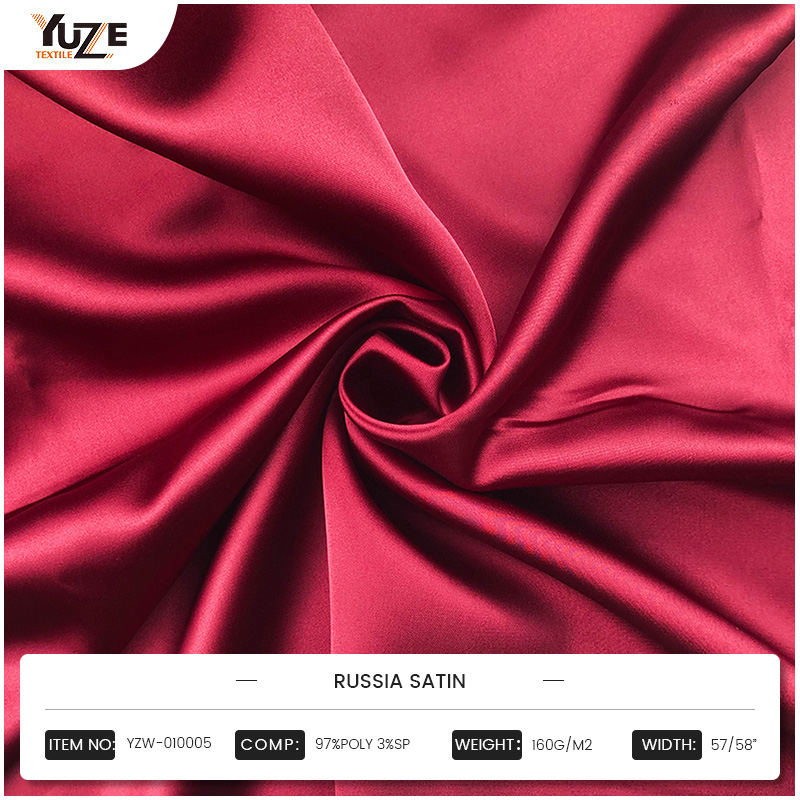 Polyester Satin Fabric with Spandex for Evening WearA smooth, lustrous satin weave in 97% polyester with 3% spandex, weighing 160 g/m². Its fluid drape and even shine suit linings, blouses, and evening dresses, though seam care is advised.View Product →
Other Weaves Worth Knowing
Jacquard weaving controls each warp yarn independently, so it can produce large patterns and logos. Pile weaves such as velvet and corduroy have an extra yarn standing up from the surface. Crepe-effect weaves use highly twisted yarns to create a pebbled surface that hides wrinkles. These structures are common in premium fashion because they add depth without printing.
Woven Fiber Choices: Matching the Yarn to the Garment
Fiber gives a woven fabric its hand, moisture behavior and care properties. Cotton wovens are breathable and easy to print, so they dominate casual shirting. Polyester wovens add strength, wrinkle resistance and quick drying. Rayon (viscose) wovens produce a smooth, fluid drape that suits blouses and dresses, but they wrinkle more easily. Wool wovens bring warmth and resilience to suiting. Flannel wovens have a brushed surface that adds softness for cold-weather garments.
The best choice depends on the end use and washing instructions. A dressy woven program often starts with a rayon poplin, while a crisp shirt can be made from a high-density cotton poplin. For activewear and daily wear, polyester–cotton or polyester–rayon blends are a practical way to keep the drape while reducing wrinkles and drying time.
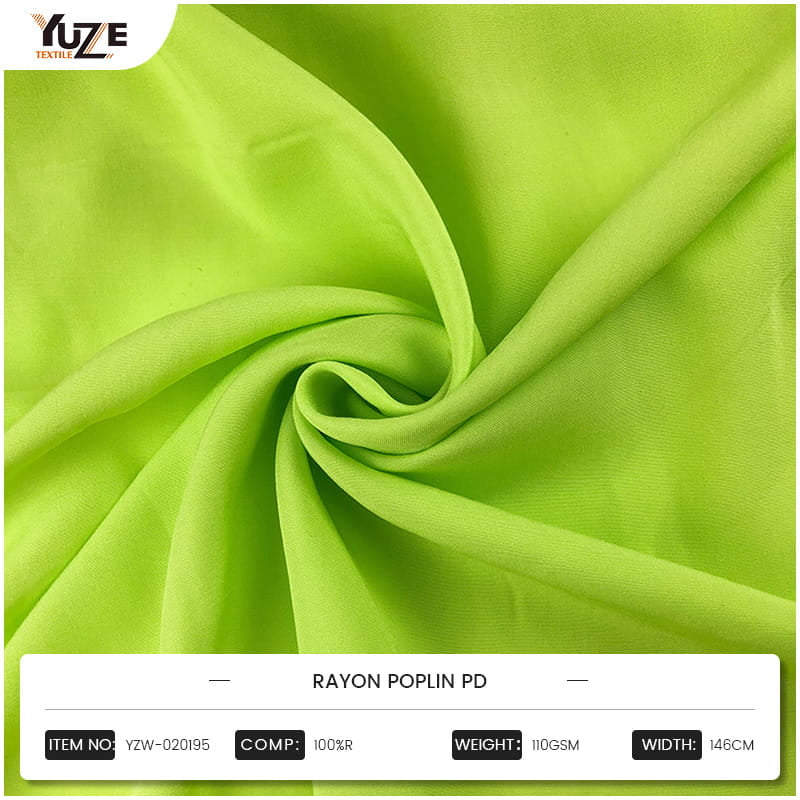 Rayon Poplin Fabric with Plain Weave StructureA 100% rayon poplin at 110 gsm and 146 cm width. Its plain weave offers breathability and a soft hand, making it a versatile option for dressy woven programs and daily wear.View Product →
Key Performance Factors in Woven Fabric Selection
After the weave and fiber are clear, a technical buyer checks four measurable factors before approving bulk production:
- Thread density: A tighter warp-and-weft construction gives a smoother surface and better dimensional stability.
- Fabric weight: Lightweight wovens of 70–120 gsm suit linings and summer blouses; 120–200 gsm covers shirts and light jackets; heavier cloth is used for trousers and suiting.
- Shrinkage and finish: Pre-shrinking, resin, and anti-wrinkle finishes change how the fabric behaves in cutting and washing. Ask the mill for shrinkage data.
- Colorfastness: Test resistance to light, perspiration, and washing, especially for bright shades on cotton and rayon.
- Fraying behavior: Woven fabrics fray at cut edges. Plan for seam overlocking, bias binding, or another edge finish in production.
These checks are the reason a fabric mill provides samples, technical datasheets, and inspection reports before shipping.
Sourcing Woven Fabric: What You Should Ask a Mill
From our view as a woven fabric manufacturer and exporter near China's Textile City in Shaoxing, the most successful orders start with realistic communication. When you contact a mill, describe the end garment, the desired hand, and the acceptable tolerance for shrinkage or color variation. A small swatch can look beautiful but sew very differently on a production line, so request a cutting sample rather than a lab dip alone.
If possible, ask for a quarter-yard sample in the actual color and finish. Mills with in-house design teams and finishing workshops can usually respond quickly to small adjustments, such as adding a softening agent or changing the degree of brushing. At Yuze Textile, we inspect every piece before packing and keep a large inventory of woven designs for ladies' wear. If you are new to a woven program, start with a proven structure such as poplin or twill in a cotton, rayon, or polyester blend. Ask about the mill's finished fabric width, weight range, and custom finishing options. Many mills have minimum order quantities and sample policies; clarify these early so you can plan the development phase. The goal is to find a supplier that will support you through production, not simply send samples.
Woven fabric starts with two yarn systems crossing at right angles. That simple geometry produces cloth that holds its shape, cuts cleanly, and supports an enormous range of textures and applications. To choose well, study the weave structure, the fiber, and the finishing together, and verify the fabric with samples and data before committing to bulk.



.jpg)
