English
 Español
A buyer comparing two cotton poplin samples notices one feels smoother and stronger, yet both are labeled 100% cotton. The difference often comes down to fiber length, spinning method, and finishing—not thread count. The highest quality cotton fabric is usually made from extra-long staple (ELS) cotton, combed and ring-spun, with controlled finishing. Jacquard is a different story: it is not a fiber but a fabric structure with patterns woven or knitted into the cloth. This guide explains both terms with practical sourcing criteria.
What Is the Highest Quality Cotton Fabric?
Quality starts at the fiber. Cotton is graded by staple length, uniformity, strength, micronaire, and maturity. Extra-long staple cotton, typically 1-3/8 inches or longer, produces finer and stronger yarns. Supima, Pima, and Egyptian cottons are common ELS types, but the name alone does not guarantee quality. A well-combed long-staple cotton can outperform a poorly processed ELS cotton. The highest quality cotton fabric therefore combines long-staple fiber, consistent spinning, appropriate weave density, and careful finishing.
| Quality factor | Why it matters | What to check |
|---|---|---|
| Fiber length (staple) | Longer fibers produce smoother, stronger yarns with less pilling. | Staple length data; ELS or long-staple designation. |
| Uniformity | Even fiber length improves spinning consistency and fabric appearance. | Uniformity index or mill spinning records. |
| Strength | Stronger fibers resist tearing and abrasion in garment use. | Fiber strength or yarn tenacity test results. |
| Micronaire | Fineness and maturity affect hand feel and dye uptake. | Micronaire range suitable for the target yarn count. |
| Spinning method | Combed and compact yarns are cleaner and stronger than carded yarns. | Combed, compact, or ring-spun specification. |
| Yarn count | Finer yarns create lighter, smoother fabrics but may be less durable. | Ne or Nm count matched to end use. |
| Weave | Poplin, twill, and jacquard create different texture and drape. | Weave structure, density, and pattern repeat. |
| Finishing | Enzyme wash, mercerizing, and shrinkage control affect feel and stability. | Shrinkage, colorfastness, and hand feel tests. |
Thread count is often misused. A 200-thread-count poplin made from fine combed yarns can feel better than a 400-thread-count fabric from short, weak fibers. Density and yarn diameter work together; over-specifying thread count can force mills to use thinner yarns that pill or tear. For buyers, the better question is: what fiber, yarn, and finishing combination suits the garment?
High-quality cotton fabrics to know
- Cotton poplin: crisp, smooth surface, excellent for shirts and blouses.
- Cotton jacquard: patterned texture woven into the cloth, suited to dresses and statement pieces.
- Cotton double crepe: soft hand feel and gentle drape for fluid garments.
- Cotton uragiri: double-layer structure with stability and a substantial handle.
A supplier with a broad cotton woven range can usually offer these constructions in multiple yarn counts and finishes. For example, a cotton poplin base can be finished for softness, shrinkage control, or a crisp shirt handle without changing the fiber content.
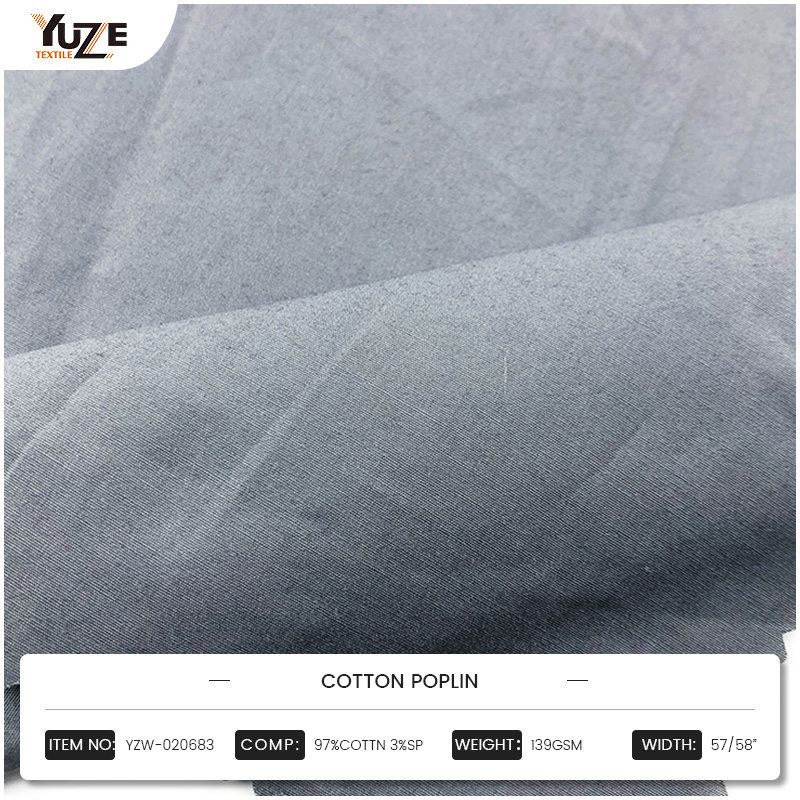 Custom Cotton Poplin with SpandexA 97% cotton, 3% spandex poplin at 139 GSM and 57/58-inch width, suited to buyers comparing cotton woven base fabrics and finishes.View Product →
Cotton jacquard adds surface interest without printing. The pattern is created during weaving, so it remains visible after washing and does not crack like a printed surface. The trade-off is higher loom cost and slower production, which buyers should expect in the price and lead time.
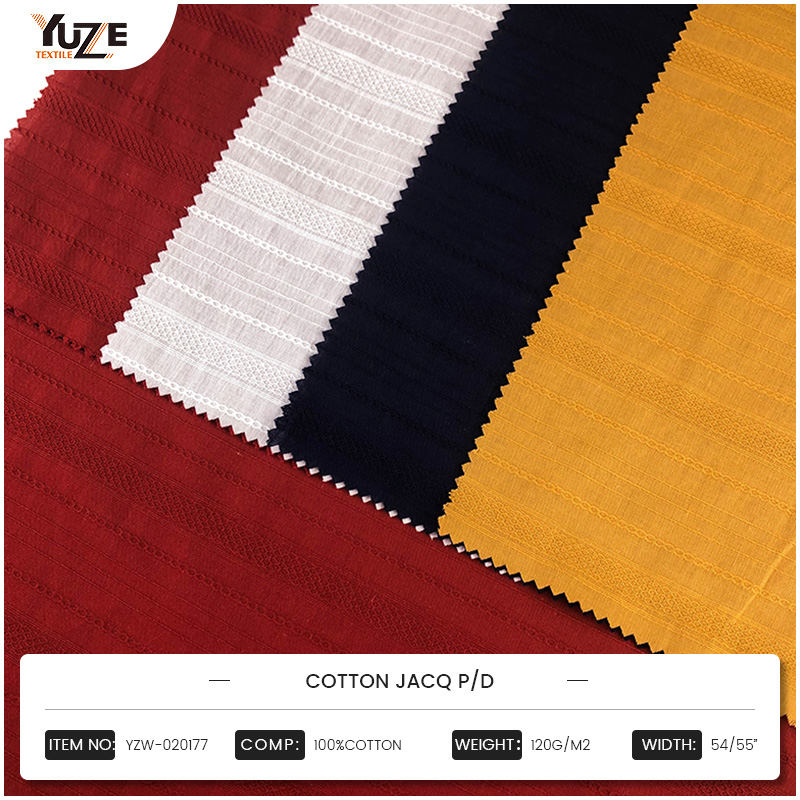 100% Cotton Jacquard Woven FabricA 120 g/m², 54/55-inch-wide cotton jacquard in the cotton woven range, relevant for buyers seeking patterned fabric without printed surface effects.View Product →
When sourcing high-quality cotton, ask for fiber origin, staple length, spinning method, yarn count, fabric density, shrinkage test data, and colorfastness results. For organic cotton, request GOTS or equivalent certification. Avoid vague “high quality” claims; specify measurable criteria and test methods.
What Type of Fabric Is Jacquard?
Jacquard is a fabric construction where a jacquard mechanism controls individual warp yarns to create complex patterns. The pattern is part of the weave, not printed on top. It can be woven or knitted. Woven jacquard often uses cotton, polyester, rayon, or blends. Knitted jacquard is common in single jersey, rib, and double knit. The term does not describe fiber content; it describes how the fabric is made.
| Jacquard type | Construction | Typical characteristics | Common use |
|---|---|---|---|
| Woven jacquard | Warp and weft yarns interlaced with pattern control. | Stable structure, clear pattern, moderate to high cost. | Dresses, blouses, skirts, home textiles. |
| Single jersey jacquard | Knitted loops with patterned needle selection. | Stretch, soft hand feel, lighter weight. | T-shirts, tops, casual dresses. |
| Double knit jacquard | Two needle beds create a thicker, stable knit. | Good shape retention, less curling, patterned surface. | Outerwear, structured dresses, jackets. |
| Warp knit jacquard | Warp yarns looped with pattern control. | Dense, low stretch, dimensional stability. | Activewear, lingerie, technical textiles. |
Jacquard offers pattern durability and visual depth. Because the design is structural, it does not fade or crack like a print. The disadvantages are higher cost, slower production, limited pattern repeat size, and potential shrinkage variation across the pattern. Quality depends on yarn quality, pattern repeat accuracy, thread density, backing, and finishing.
For a deeper look at how material choice affects jacquard quality, see this article on jacquard fabric materials and their quality impact.
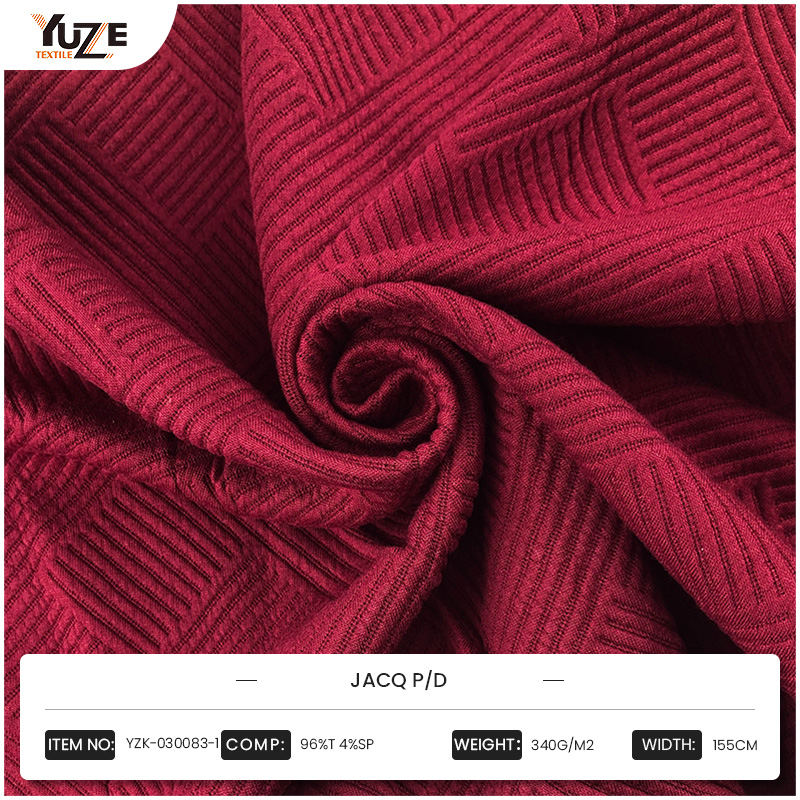 Knitted Jacquard Fabric with Polyester and SpandexA 96% polyester, 4% spandex knitted jacquard at 340 g/m² and 155 cm width, positioned for garment buyers checking stretch and pattern performance.View Product →
Jacquard can be engineered with a border or allover pattern. Buyers should specify repeat size, color placement, backing (if any), and shrinkage tolerance. For knitted jacquard, confirm recovery and pattern distortion after washing. For woven jacquard, confirm yarn content and pattern definition after dyeing or printing.
Sourcing Both Cotton and Jacquard Fabrics Without Surprises
Buyers should define the end use first. For cotton, specify staple length, spinning method, yarn count, weave, shrinkage tolerance, and colorfastness. For jacquard, specify construction, fiber content, pattern repeat, backing, weight, and shrinkage. Always test a sample for hand feel, drape, and recovery before approving bulk.
Common procurement risks include fiber substitution, shrinkage beyond tolerance, colorfastness failure, pattern distortion in jacquard after washing, inconsistent hand feel between lots, and minimum order quantity or lead time mismatch. A supplier that offers free samples and free analysis can reduce sampling risk, but the buyer still needs to set test standards and approve the reference sample.
- Request a production-representative sample, not a laboratory hand sample.
- Confirm fiber content and yarn count with test reports where possible.
- Set shrinkage and colorfastness tolerances in writing.
- For jacquard, check pattern repeat and distortion after wash.
- Agree on inspection method, AQL, and packing requirements before bulk.
Strict inspection before packing helps catch visible defects, but it does not replace fiber and performance testing. Buyers should treat quality claims as specifications to verify, not marketing language.
Highest quality cotton fabric comes from long-staple, well-spun yarns and controlled finishing; jacquard is a patterned woven or knitted structure, not a fiber. Buyers who evaluate fiber, construction, and finishing—and who test against clear tolerances—avoid most quality surprises. Request samples, confirm test methods, and specify what matters for the end garment.