English
 Español
An embroidery unit receives a tech pack for a 9 cm floral motif on a soft rayon blouse. The fabric looks beautiful in the sketch, but the first sample puckers around the petals. The buyer asks a simple question: what kind of fabric do you use for embroidery? The honest answer is that there is no single embroidery cloth. There is a base fabric that fits the stitch package, the garment silhouette and the wash care. A cotton poplin shirt, a polyester satin dress, a linen jacket and a stretch rib top can all carry embroidery, but they need different stabilizers, needle sizes and stitch densities. The practical starting point is to choose the embroidery first, then confirm the cloth can support it in bulk.
Match the Fabric to the Stitch Package
Embroidery is not a surface print. Each stitch puts needle penetration and thread tension into the cloth. A dense 12,000-stitch motif on a lightweight challis behaves differently from a 2,000-stitch monogram on cotton poplin. For production, ask four questions before choosing the base: What is the stitch count and density? Is the motif flat, 3D, applique, sequin or chenille? Will it be hand-guided or machine embroidered? And what will the garment look like after washing?
On stable woven fabrics, the main risks are needle holes, puckering and shading around dense areas. A medium-weight cotton poplin or twill usually carries a crisp logo well. On stretch knits, the risk shifts to recovery: the embroidery area can wave or crack if the base stretches more than the backing can control. If a knit stretches more than about 20% in width, plan a cut-away stabilizer and test recovery after three wash cycles. On pile fabrics, the risk is sinkage: loops and tufts can swallow small lettering unless a water-soluble topping is used. For a deeper look at machine and hand methods, this guide to embroidery methods used for fabrics is useful.
Also check shrinkage. Many bulk apparel programs set wash shrinkage at 3% or less in both directions after the agreed care cycle; embroidery can amplify puckering if the base shrinks differently from the backing. Colorfastness matters too. Crocking, wash and light tests should be run on the actual dye lot, because the thread may be more stable than a garment-dyed fabric.
Reliable Base Fabrics and Their Best Uses
For crisp shirting, uniforms and structured dresses, cotton poplin, cotton twill and cotton double crepe are dependable. They hold fine lettering and flat motifs with limited distortion. The trade-off is that tight constructions can show needle holes if the stitch density is too high or the needle is too large. A 75/11 sharp needle and a 40/2 or 50/2 cotton thread are common starting points.
For fluid women’s dresses and blouses, rayon challis, rayon poplin and viscose blends are widely used because they drape softly. They need lighter backing and gentler handling; heavy coverage can make the panel stiff. Polyester satin and CEY fabrics offer a smooth, lustrous surface for decorative embroidery, but the sheen reveals tension marks and underlay shadows. Reduce density, use a fine needle and test the backing on the face side before bulk.
For a lustrous polyester base, YUZE’s 180D CEY embroidery option shows how a satin-face cloth can be paired with machine embroidery for decorative women’s wear.
 180D CEY Polyester Embroidery Fabric YZW-030004Lustrous polyester embroidery base at 150 g/m2 and 150 cm width, offered for custom orders and decorative women’s wear inquiries.View Product →
Linen and linen-look fabrics are excellent for summer dresses, jackets and home textiles, but slubs can distort small lettering. Pre-test the wash and avoid very tight stitch spacing on lightweight linen blends. A linen-look air-jet embroidery quality gives a natural surface with a controlled embroidery ground.
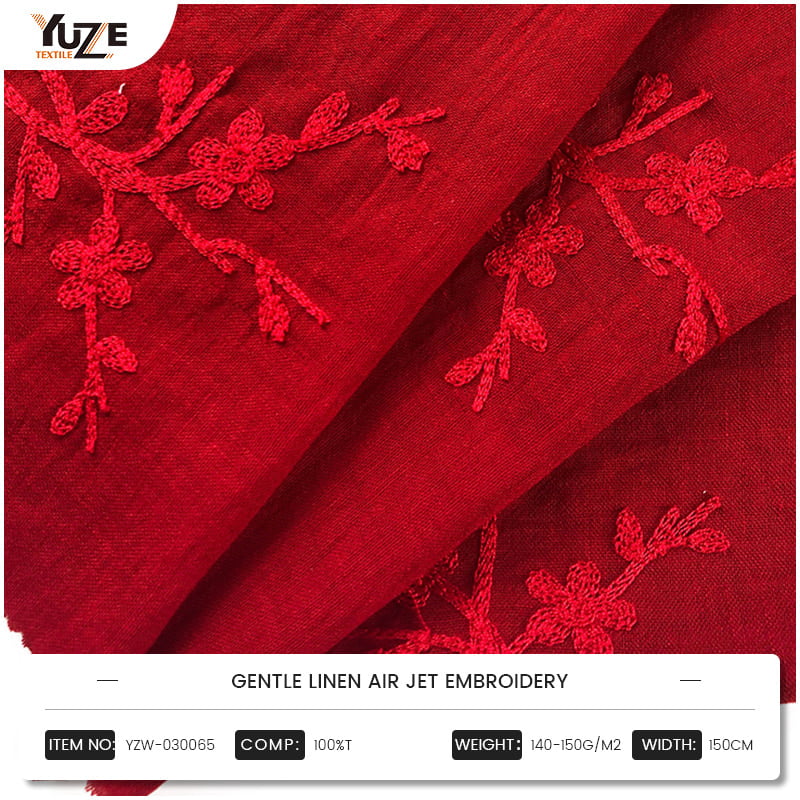 Gentle Linen Air Jet Embroidery YZW-030065Linen-look air-jet embroidery with 100%T composition, 140–150 g/m2 weight, 150 cm width, and custom inquiry availability.View Product →
Soft cotton jersey and interlock can be embroidered for T-shirts, childrenswear and soft separates, provided the backing controls stretch without creating a stiff patch. Baby cotton embroidery is a practical example of a soft cotton base developed for delicate garments and small-scale motifs.
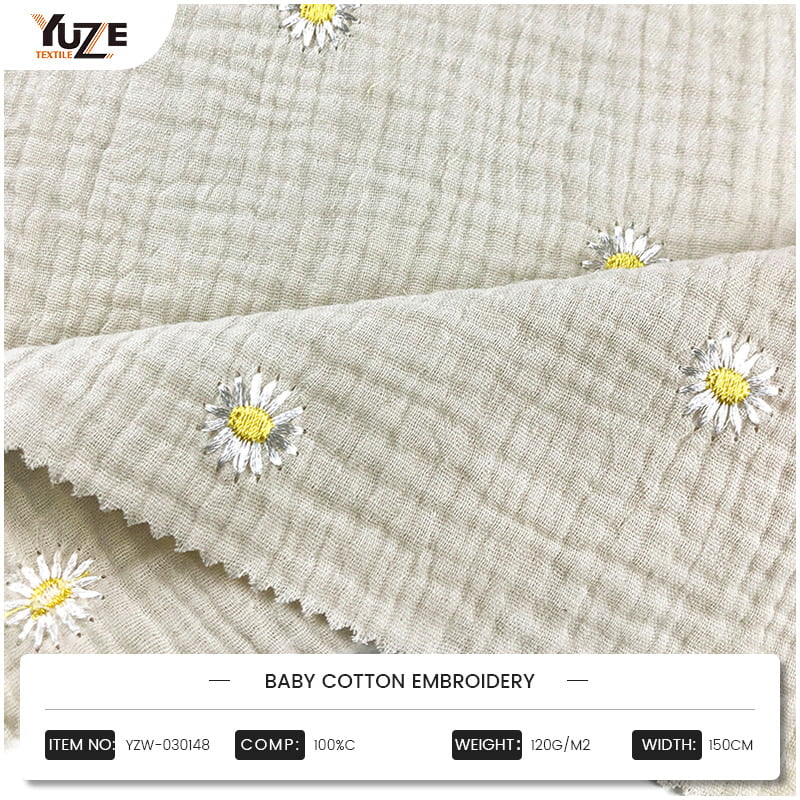 Baby Cotton Embroidery Fabric YZW-030148Soft 100% cotton embroidery base at 120 g/m2 and 150 cm width, suited to delicate garments and small-scale motifs.View Product →
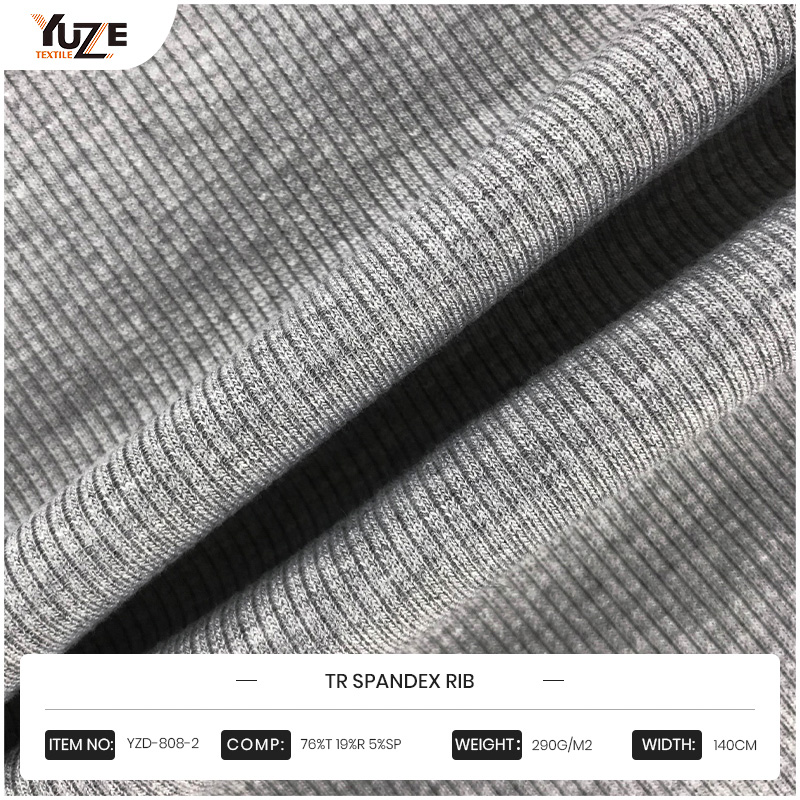
Pile fabrics such as velvet, fleece, French terry and sherpa need topping to keep stitches on the surface. Tulle, organza and other sheers need a water-soluble stabilizer and low density; otherwise the backing becomes visible through the cloth. Rib knit is possible, but high recovery means the embroidery area must be tested for cracking and grin-through.
A Practical Comparison Table
| Base fabric | Good for | Embroidery watchouts | Typical thread or needle start point |
|---|---|---|---|
| Cotton poplin or twill | Shirts, uniforms, structured dresses | Stable and low stretch; needle holes can show if density is too high | 40/2 or 50/2 cotton; 75/11 sharp |
| Linen or linen-look | Summer dresses, jackets, home textiles | Slubs can distort small lettering; pre-test wash shrinkage | 60/2 linen or 40/2 cotton |
| Rayon challis or poplin | Blouses, dresses, soft shirts | Fluid and prone to puckering; use lightweight cut-away backing | 60/2 cotton or 40 wt rayon |
| Polyester satin or CEY | Eveningwear, decorative panels | Sheen shows tension marks; reduce density and underlay | 40 wt polyester or rayon |
| Cotton jersey or interlock | T-shirts, childrenswear, soft separates | Stretch needs stabilizer; avoid heavy coverage on lightweight knits | 40 wt polyester; ballpoint for knits |
| Rib knit | Cuffs, bodices, stretch tops | High recovery; dense embroidery can crack after washing | 40 wt polyester with stretch backing |
| Velvet, fleece or French terry | Outerwear, homewear, accessories | Pile swallows stitches; use water-soluble topping | 40 wt rayon or polyester |
| Tulle or organza | Bridal, evening, overlays | Sheer; backing can show; keep density low | 60/2 cotton or fine 40 wt polyester |
Specify by Performance, Not by Hand Feel Alone
A fabric that feels perfect in the showroom may fail on the embroidery machine. Bulk approval should be based on a sew-out on the actual dye lot, not a flat sketch or a small swatch. Ask for a 20 cm by 20 cm stitch trial at production density, then check five points: pucker around the motif, visible needle holes, backing shadow from the face, shrinkage after the agreed wash cycle, and hand feel at the embroidery edge.
For stretch styles, add a recovery check. Stretch the embroidered panel to the garment’s expected wear extension, release it, and inspect for waving or cracked stitches. For pile styles, brush or steam the surface after removing topping and confirm that the motif edge is clean. For sheer styles, place the panel against a light box and check whether the stabilizer reads through the cloth.
YUZE TEXTILE works as a fabric manufacturer and exporter with woven and knitted bases plus post-process embroidery, and its service model includes free samples, free analysis and custom order discussion. That is useful at the development stage: the mill can review the base construction, embroidery density and finishing route together rather than treating the cloth and the decoration as separate purchases.
Common Mistakes That Cause Rejects
- Choosing the base fabric by color only, without checking stitch density and backing compatibility.
- Using tear-away stabilizer on a stretch knit, then blaming the embroidery for wavy edges.
- Putting heavy coverage on lightweight rayon or chiffon without reducing density.
- Skipping topping on velvet, fleece or terry, so small letters disappear into the pile.
- Approving a sample before wash testing, then finding shrinkage or color migration in bulk.
- Assuming all cotton behaves the same; poplin, jersey and double crepe need different handling.
- Using a needle that is too large for the cloth, leaving permanent holes around the motif.
A Short Buying Checklist
- Confirm the embroidery method, stitch count and motif size before selecting the base cloth.
- Match fabric weight to the garment: light challis for drape, poplin for structure, satin for sheen.
- Check stretch recovery if the base is a knit, rib or elastic blend.
- Ask for a production-density sew-out on the actual dye lot.
- Test wash shrinkage, colorfastness and needle holes after the agreed care cycle.
- Confirm backing type, topping and trimming method with the embroidery factory.
- Review the face side for backing shadow, puckering and tension marks.
- Keep a sealed sample of the approved base, thread and backing for bulk reference.
The answer to “what kind of fabric do you use for embroidery?” is therefore a production decision, not a single fiber name. Cotton poplin gives crisp structure, linen gives natural texture, rayon gives drape, polyester satin gives sheen, and stable knits give comfort, but each needs the right stabilizer, needle and stitch plan. Start with the embroidery, test the actual base cloth, and choose a mill that can evaluate the fabric and the decoration together. That approach reduces sample rounds, protects the garment’s hand feel and keeps the embroidered panel consistent from first sample to bulk delivery.