English
 Español
A merchandiser pulls a roll of brushed plaid shirting off the table, folds a cut edge between thumb and forefinger, and asks the question that starts a dozen arguments a week: knit or woven? The test takes ten seconds. The yarns fray, the edge stays flat, and the answer is woven. Flannel, in every construction that legitimately carries the name, is a woven fabric: warp and weft yarns interlaced on a loom and then brushed on one or both faces so the surface lifts into a soft nap. The stretchy, curling, loop-based fabrics that also travel under the flannel name in retail catalogues are knits, and they behave nothing like the real thing once they reach a cutting table.
That gap between the technical definition and the market's vocabulary is where money gets lost. A buyer who specifies "flannel" without specifying structure can receive a brushed knit fleece, approve the hand feel in a showroom, and then discover at the sewing floor that the fabric grows twelve percent crosswise under the needle and skews after the first wash. What follows separates the two structures properly, gives you the shop-floor tests that identify either one in minutes, and translates the difference into the clauses worth writing on a purchase order.
The short answer: flannel is woven, and the label is only sometimes honest
Three attributes define flannel, and only one of them concerns fibre. The fabric is woven, most often in plain weave or twill, with a yarn set loose enough that a brush can lift individual fibres without tearing the cloth. It is then napped, meaning the surface has been mechanically raised, historically with teasels and today with wire-covered raising rollers or, in some finishing routes, abrasive paper. And it is normally built from a fibre that brushes cleanly: wool in the original version, cotton for most of the last century, polyester at the volume end of the market.
Wool flannel is the ancestor. Welsh weavers were selling a soft, fulled, lightly raised woollen cloth by the sixteenth century, and the same logic still governs worsted and woollen flannels used in tailoring today: a relatively loose weave, a milling or fulling step that contracts and felts the surface, then raising to create the characteristic fuzzy handle. If you have handled a grey two-by-two twill flannel trouser cloth, you have handled the direct descendant of that cloth, and you have also handled a fabric that is unambiguously woven.
Cotton flannelette arrived as the cheaper alternative and quietly took over the name. It is a lighter woven cloth, usually plain weave, brushed on one side in the cheapest qualities and on both sides in better ones, and it became the standard material for winter pyjamas, shirtings and bedding. When a retailer advertises flannel sheets or a flannel shirt at a mainstream price, the overwhelming majority of the time the substrate is a woven cotton or cotton-rich cloth with a brushed face.
The confusion enters through the back door of marketing. Fleece jackets, brushed rib knits, sweatshirt terry and even printed single jersey have all been described as flannel at some point, because "flannel" has become a shorthand for "soft, brushed, warm, often plaid". In Australia and New Zealand the same word family drifted even further, where a flannelette is a cotton face cloth. None of that changes the technical answer. If the cloth was built on a loom from interlaced warp and weft, it can be flannel. If it was built on a knitting machine from interlocking loops, it is a brushed knit wearing a borrowed name.
What actually makes a fabric flannel: weave first, nap second, fibre third
Buyers who understand the sequence of operations find it much easier to predict how a flannel will behave in bulk. The three variables stack in a fixed order, and each one moves a different set of performance numbers.
The weave: plain and twill do most of the work
Plain weave flannel uses a simple one-over-one interlacing, which gives a stable, relatively flat cloth that accepts an even brush across the surface. Twill flannel, usually a two-by-one or two-by-two construction, carries diagonal lines that survive the napping process as a faint directionality, and it drapes with more weight and body. Both are woven. Both have a selvedge on each edge, both have warp yarns running the length and weft yarns running across, and both will fray when cut. Set density matters more than the pattern: a flannel woven too tightly will not raise a nap, and one woven too loosely will shed fibre and pill from the first wear.
The nap: brushing, raising, sueding, shearing
Napping is a finishing decision, and it is where most of the cost and most of the quality variation sits. Raising machines pass the cloth over rotating cylinders covered in fine wire that tease fibres out of the yarn structure. Single-sided napping gives a soft face and a smoother back, which is typical for lighter shirtings and pyjama cloth. Double napping, with the cloth run through twice on both faces, produces the plush, slightly thicker hand associated with better bedding and winter shirtings. Sueding and sanding use abrasive surfaces instead of wires and create a shorter, denser, more peachy surface. Shearing then trims the raised fibres to a uniform height, which is what separates a clean, even flannel from a cloth that looks fuzzy in patches after five washes.
Practical consequence: napping adds weight and reduces yield. A base cloth of roughly 150 g/m² can finish around 160 to 170 g/m² after double brushing, and the finisher loses a small percentage of length to trimming. If a quoted price looks unusually low for a double-brushed flannel, the nap is usually the reason.
The fibre: wool, cotton, polyester and what the blend buys you
Wool flannel brushes into a dense, warm, slightly hairy surface and holds its shape well, which is why tailoring still uses it. Cotton flannel is softer against skin, washes easily and is the default for sleepwear, shirtings and bedding, at the cost of some shrinkage and a tendency to pill in low-grade qualities. Polyester flannel brushes to a very even, very durable nap, resists wrinkling and costs less, but it traps heat and can feel clammy. Blends are the commercial middle ground: cotton-polyester for bedding that must survive industrial laundering, wool-nylon for coating, viscose blends for drape in womenswear.
| Construction | Fibre | Approximate weight | Nap | Usual end use |
|---|---|---|---|---|
| Plain weave flannelette | 100% cotton | 120–160 g/m² | Single side | Pyjamas, lightweight shirts, linings |
| Plain weave, double brushed | Cotton or cotton-rich | 150–200 g/m² | Both sides | Bedding, winter shirts, baby wraps |
| 2/1 or 2/2 twill | Cotton, cotton-polyester | 180–260 g/m² | Both sides | Overshirts, workwear, shackets |
| Woollen twill, milled | Wool or wool-rich | 280–450 g/m² | Raised after fulling | Trousers, coats, tailoring |
| Yarn-dyed check | Cotton or polyester-cotton | 140–220 g/m² | Single or double | Plaid shirts, quilt backs, craft |
Notice what is absent from that table: any row describing a loop structure. That is the whole point. Weight, fibre, colour and finish can all vary enormously and the cloth stays flannel, because the weave is the constant.
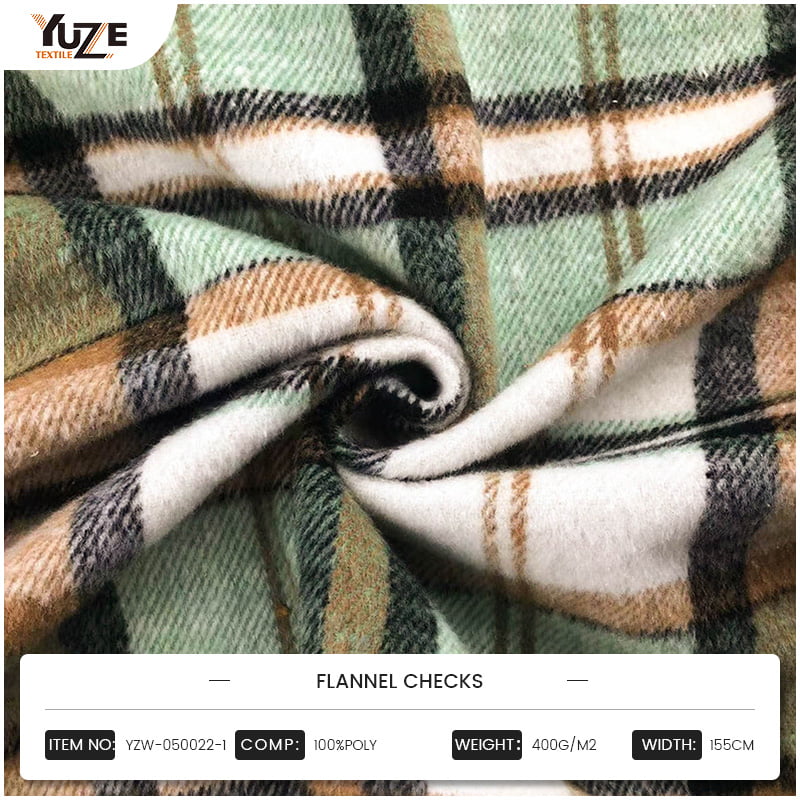 YZW-050022-1 Flannel Check Woven FabricCustom yarn-dyed check flannel in 100% polyester at 400 g/m² and 155 cm, offered for buyers seeking a woven plaid that reads as flannel.View Product →
The yarn-dyed check above is the version most buyers ask for by name, because the plaid reads as flannel to consumers even when the cloth is light enough for a spring shirt.
The knit fabrics that get sold as flannel, and how they behave differently
Every brushed knit on the market shares one trait with flannel: a raised surface. That is where the similarity ends. Knits are built from loops, which means the cloth stretches by geometry rather than by elastane, recovers elastically, curls at cut edges, and can ladder if a yarn is broken. Understanding which knit you are being offered is the difference between a successful programme and a claim.
Fleece and sherpa
Fleece is a weft-knitted fabric, usually polyester, that has been brushed or raised on one or both faces, sometimes with a pile that is cut or left looped. Sherpa takes the same route further, producing a deep, curly, wool-like pile. Both are warm, both are light for their insulation value, and both are unmistakably knit when you pick at the edge. They also pill more readily than a well-finished woven flannel, shed fibres in the wash, and can melt under a hot iron, which woven cotton flannel will not. A fleece jacket described as flannel-lined is using the word as a texture descriptor, not a structural one.
Brushed rib, hacci and other pile knits
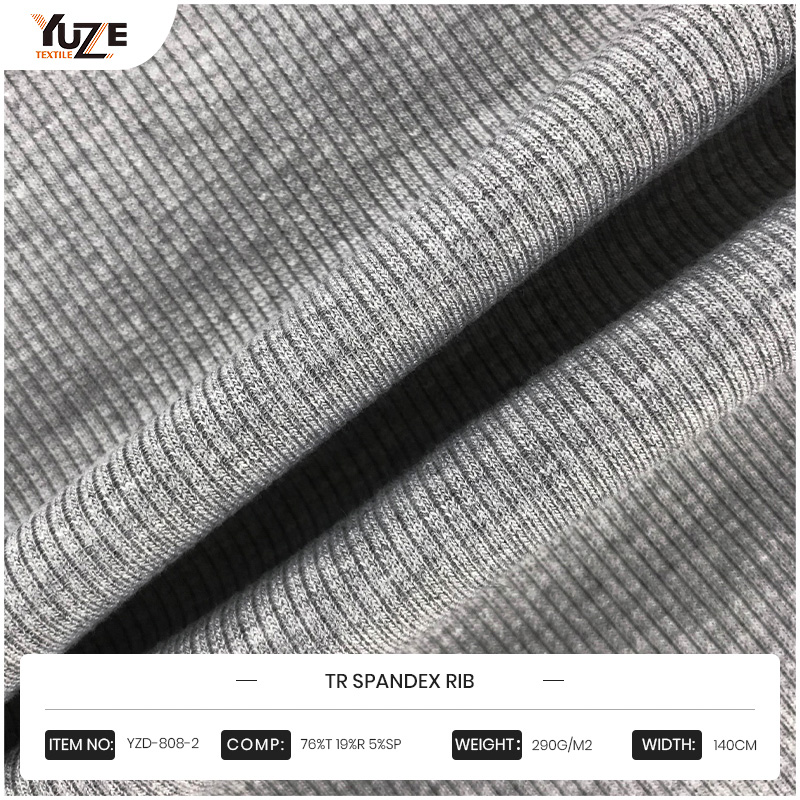
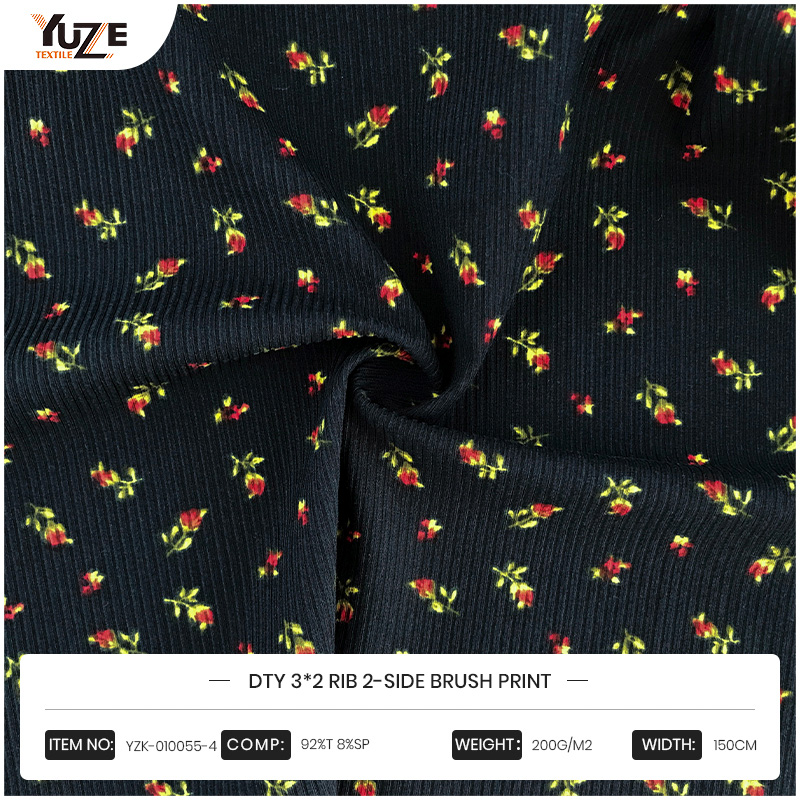
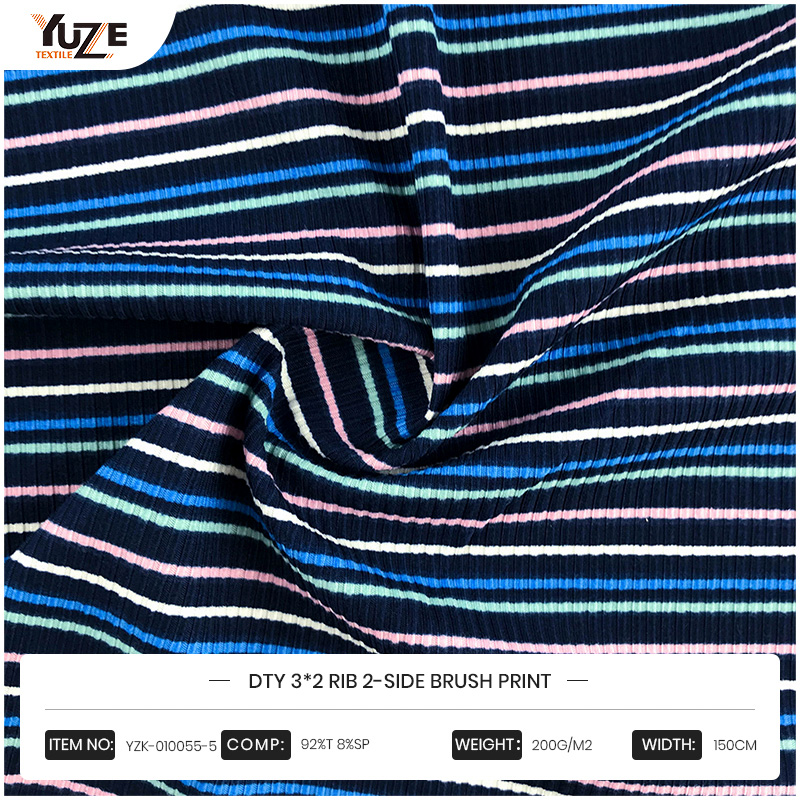
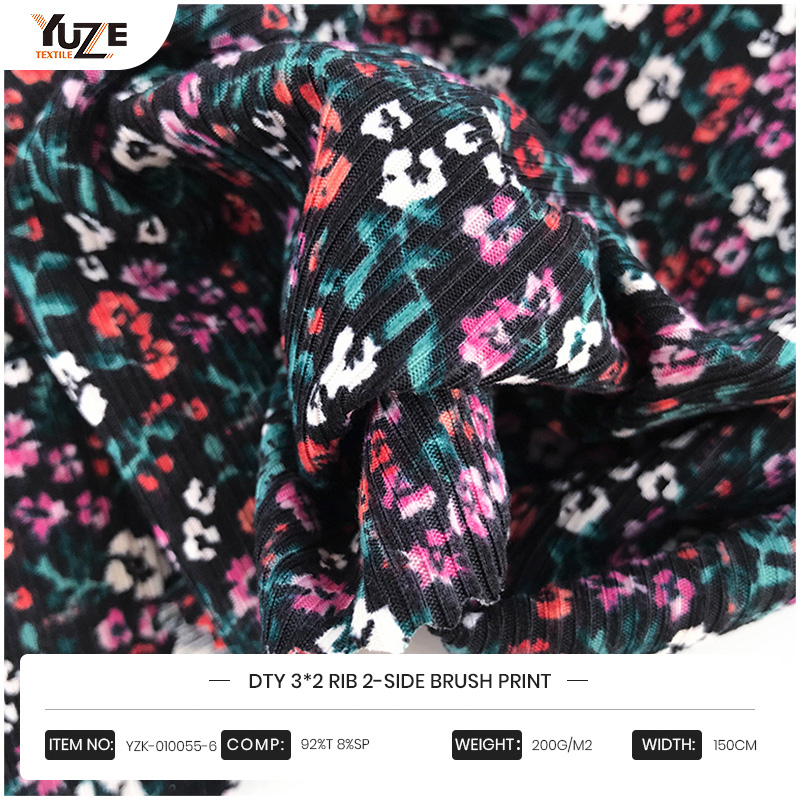
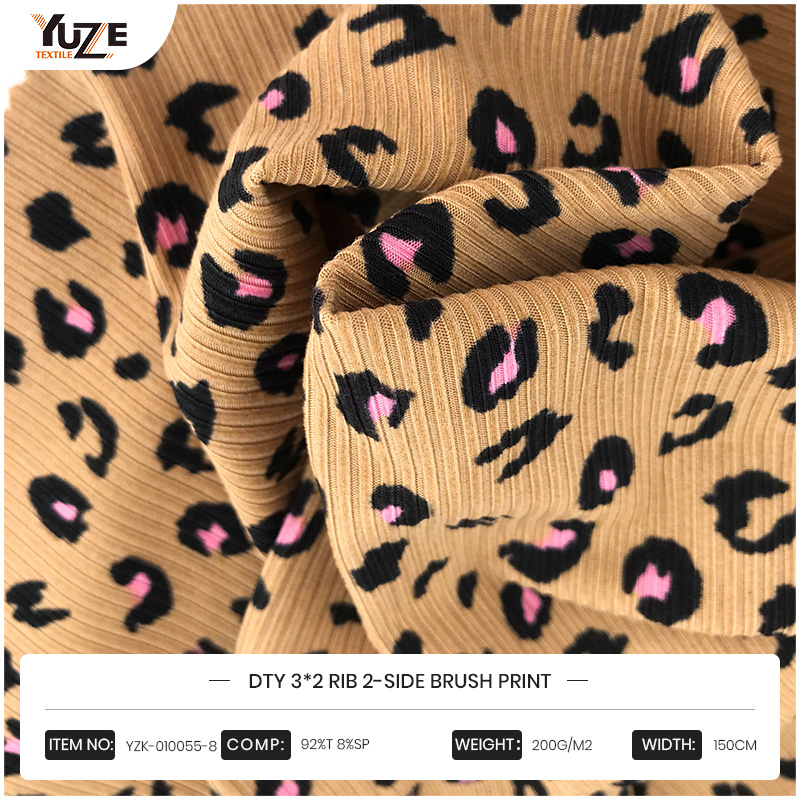
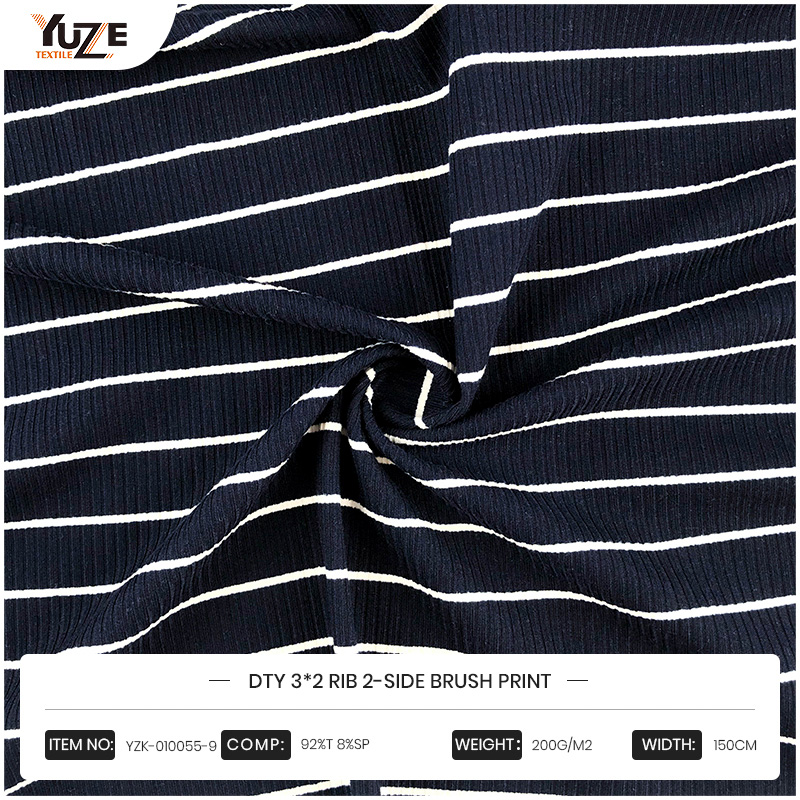
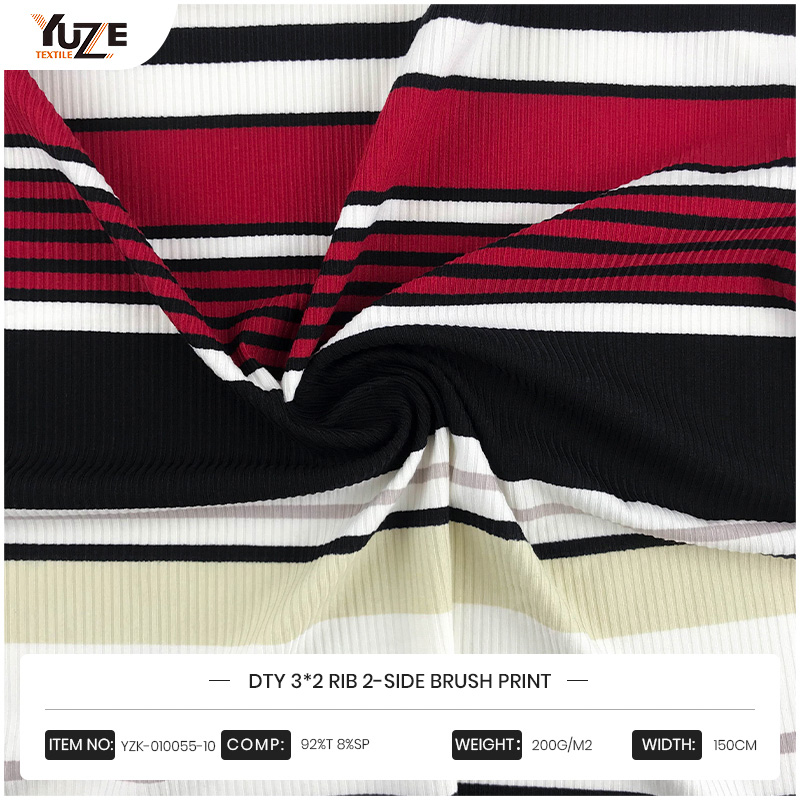
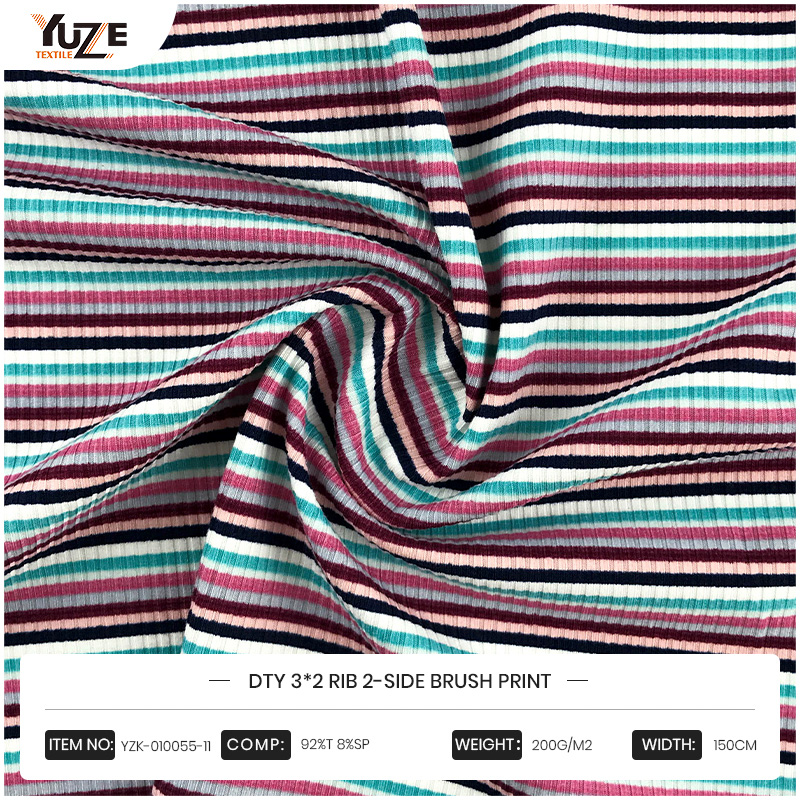
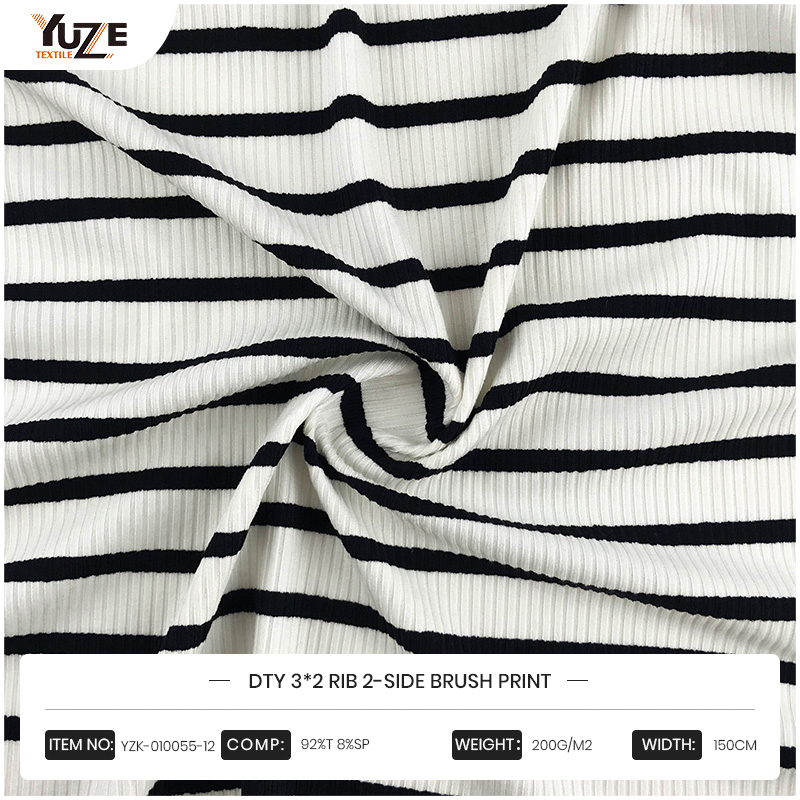
Rib knits brushed on the inside give a soft, elastic, body-hugging cloth that is popular for cuffs, loungewear and knit tops. Hacci is a loosely knitted, brushed fabric, often in angora-style or chenille blends, with a soft halo that superficially resembles flannel's fuzz. Both stretch substantially in the crosswise direction, typically well beyond what a woven flannel with two percent elastane will do. Both also require different pattern grading, different seam types and different care instructions. If a supplier offers "flannel-feel hacci", they are offering a knit with a brushed hand, and the price should be compared against other knits, not against woven flannel.
Jersey and French terry with flannel prints
The most misleading category is the printed one. A single jersey with a plaid print can look exactly like flannel in a photograph and behaves like a T-shirt in the hand. French terry with a brushed back is a legitimate cold-weather fabric, but it is a knit, with loop structure visible on the technical back and a clear tendency to curl at the cut edge. Neither is a defect; both are simply the wrong substrate if your specification calls for a woven.
 YZK-110030-1 Sherpa Fleece Knit FabricCustom polyester sherpa fleece at 230 g/m² and 175 cm for buyers comparing knit winter fabrics alongside woven flannel.View Product →
For buyers sourcing the knit side of a winter range alongside woven flannel, the sensible approach is to compare the two on the same criteria: grams per square metre for warmth, pilling grade for durability, shrinkage after three home washes for fit risk, and needle or loom gauge for surface consistency.
Five field tests that settle the question in ten minutes
You do not need a laboratory to identify structure, and most mill sales offices will happily let you perform these checks on a sample table. The order matters, because the first test alone resolves the majority of cases.
- Fray test on a raw cut edge. Rub the cut edge between finger and thumb. Woven flannel releases short, straight yarn ends and the edge stays roughly flat. A knit edge curls towards the face or back and sheds loops rather than straight fibres.
- Stretch and recovery. Pull the cloth diagonally and crosswise. A woven flannel without elastane moves very little and does not spring back. A knit stretches visibly, often double digits, and snaps back when released.
- Surface inspection under low magnification. Look for the repeating V or loop pattern of knit stitches, or the over-under grid of warp and weft. A phone camera zoomed to maximum is usually enough. If you can follow single yarns diagonally across the whole sample, you are looking at a knit.
- Edge and selvedge. Woven goods come off the loom with a firm, tightly bound selvedge on both edges and are shipped flat on a roll. Knits come off a circular machine as a tube, are slit open or sold tubular, and show soft, slightly rolled edges.
- Tear direction. Tearing a woven flannel produces a reasonably straight line along a warp or weft direction. Tearing a knit produces a jagged path, often with a run or ladder travelling away from the tear.
| Signal | Woven flannel | Brushed knit |
|---|---|---|
| Cut edge | Frays, stays flat | Curls, may ladder |
| Stretch | Minimal unless elastane added | Inherent, often 20% or more |
| Structure visible | Warp and weft grid | Loops, wales and courses |
| Selvedge | Present both edges | Absent or slit tube |
| Seam behaviour | Stable, minimal puckering | Needs stretch stitch, can wave |
If you are still uncertain after those five checks, the production method itself explains the difference in more depth in our note on how knitted and woven fabrics are produced, which is worth reading before you approve a substitute sample.
Why the distinction changes your purchase order
The knit-or-woven question is not academic housekeeping. It changes five specifications that determine whether a bulk shipment is accepted or claimed against, and each one is easy to write into a PO in a single line.
Stretch and recovery
A woven flannel with two percent elastane will recover to within a couple of percentage points of its original width; the same cloth with no elastane will simply stay where it is stretched. A knit fleece can move thirty to sixty percent crosswise depending on structure and still be within its own normal range. Specify the expected stretch percentage and the recovery figure, or you will have no basis for rejecting a roll that behaves like a knit when you ordered a woven.
Shrinkage and torque
Cotton flannel typically settles at three to five percent shrinkage in the warp direction after a home wash if it has been properly pre-shrunk, and more if it has not. Brushed knits shrink more, and they can also torque, meaning the garment leg or sleeve twists after washing because the loops release tension unevenly. Standard test: three home washes at the labelled temperature, measured against the original benchmarks, with a torque limit in the specification.
Pilling and nap durability
Brushing weakens the surface fibres, and every brushed fabric trades a little durability for softness. Set a minimum pilling grade, commonly three to four on the standard scale after a defined number of abrasion cycles, and state whether the reference is a random tumble method or a laboratory abrasion method. Woven flannels with long, loose nap are the most likely to fail this, so ask for a brushed and then sheared finish if the end use involves heavy abrasion, such as workwear or upholstery-adjacent home textiles.
Cutting room and sewing behaviour
Woven flannel cuts like a stable cloth: minimal relaxation, predictable pattern matching on checks, and clean seams with a standard stitch. Knits need relaxed cutting, a stretch stitch or overlock, and often a longer lay time so the cloth can recover from roll tension. If your factory quotes a knit on woven sewing assumptions, expect wavy seams and a higher reject rate.
Testing protocols and care labels
Care labelling follows structure. Woven cotton flannel tolerates a hot iron and a warm wash; a polyester knit fleece needs a cool iron or none at all, and a wool flannel needs dry cleaning or a wool cycle. Fibre content labelling will not save you here, because two fabrics with identical fibre percentages can require completely different care instructions based on structure alone.
 YZK-010150 1x1 Brushed Rib Knit FabricCustom piece-dyed 1x1 brushed rib in 52% rayon, 44% polyester and 4% spandex at 240 g/m² and 150 cm, for knit-specific care and sewing needs.View Product →
Brushed ribs are the clearest case in point: same brush, same soft hand, entirely different sewing and labelling requirements from a woven flannel of the same weight.
Construction options buyers actually source
Once structure is fixed, the sourcing conversation moves to finish and colour. Most flannel programmes are built from four base families, and each has a distinct cost and risk profile.
Cotton flannelette in plain weave is the workhorse for sleepwear, shirtings and bedding, priced on yarn quality and the number of brushing passes. Yarn-dyed checks cost more than piece-dyed because the colour is built into the yarn, but they hide the nap direction better when cutting and they hold their appearance across washes. Polyester-cotton flannel is chosen where industrial laundering or repeated washing is expected, such as institutional bedding and hospitality textiles. Woollen or wool-blend flannel, often a milled twill, sits at the top of the price ladder and is bought for tailoring and outerwear where drape and recovery matter more than softness against skin.
| Family | Cost position | Main risk | Typical programme |
|---|---|---|---|
| Cotton plain weave, single brushed | Low | Shrinkage, pilling at low yarn quality | Entry-level shirting, pyjamas |
| Cotton double brushed | Mid | Nap unevenness between lots | Bedding, mid-market shirts |
| Yarn-dyed check | Mid to high | Colour matching across lots | Plaid shirts, quilted jackets |
| Polyester-cotton | Low to mid | Hand feel, static | Contract bedding, uniforms |
| Woollen twill | High | Fulling variation, dry-clean dependency | Tailoring, coats |
If your programme is womenswear-led, the same woven logic applies but the weights shift lighter. Our woven flannel range is organised by base construction so you can compare brushed twills, checks and softened plain weaves on the same weight basis rather than judging them roll by roll in a showroom.
Sourcing and sample approval: what to fix before bulk
Most flannel complaints trace back to an approval that was too loose. The sample looked right, the bulk looked different, and no clause existed to describe the difference in measurable terms. Tighten the following before the first bulk order and the argument largely disappears.
- Weight tolerance. State grams per square metre with a tolerance, typically plus or minus five percent, measured on a conditioned sample rather than straight off the roll.
- Width and nap direction. Confirm usable width after finishing and whether nap runs in one direction only, which affects marker efficiency by several percent on checked goods.
- Shrinkage limit. Fix the wash method, the number of cycles and the maximum percentage in each direction, and require a bulk test report rather than a sample report.
- Colour and shade banding. Double-brushed cloth scatters light differently from single-brushed cloth, so approve the lab dip on the actual finish, not on a flat substrate.
- Inspection standard. Agree the sampling level and the defect definitions, particularly for brush marks, fibre balls and uneven nap along the selvedge.
- Confirmed sample retention. Keep a sealed reference of at least one metre, signed and dated by both sides, because memory is not a specification.
Ask also for a free sample and an analysis before committing: a supplier that can walk you through fibre content, yarn count, construction and finish on paper is usually a supplier that controls its own finishing rather than buying grey cloth on the open market.
Matching structure to end use, and the care that follows
Woven flannel suits products where the garment or article must hold a shape. Shirts, overshirts, trousers, quilted jackets, duvet covers and pyjama sets all rely on the dimensional stability of a woven cloth, and the brushed surface is a comfort bonus rather than the structural point. Knit fleece and brushed rib suit products where stretch and recovery matter: hoodies, cuffs, loungewear bottoms, activewear linings and soft accessories.
Care follows the same split. Woven cotton flannel tolerates warm washing and a medium iron, and it usually softens with each cycle, which consumers like. Brushed knits need cooler washing to limit pilling, should be dried flat or tumble-dried low to avoid torque, and will shed fibre in the first few washes. Wool flannel should be brushed rather than ironed flat, and dry cleaned in most cases. Write the care label from the structure, then verify with a wash test, rather than copying a label from a similar-looking product.
There is also a comfort argument that buyers rarely quantify. Woven flannel traps air in the raised nap but does not stretch, so it hangs in a defined silhouette. Brushed knits trap air in a lofted loop structure and stretch with the body, so they feel warmer per gram but read as casual. Choosing between them is therefore a design decision as much as a purchasing one, and it is far cheaper to make that decision at the sample stage than at the fit approval.
The question at the top of this article has a clean answer that survives every reasonable test: flannel is a woven fabric, defined by interlaced yarns and a raised, brushed surface, not by a plaid print or a soft hand. The knit fabrics that borrow the name are legitimate products in their own right, and often the better choice for a stretch garment — they are simply not the same material, and they cannot be specified, priced, sewn or labelled as though they were.
For buyers, the practical takeaway is to write structure into the specification alongside fibre and weight. One line, stating woven plain weave or twill, with a defined nap and a defined shrinkage and pilling limit, removes the entire category of dispute before the first roll is even woven. Everything else — the check, the shade, the softness against the skin — can then be negotiated on its own merits, which is where a good fabric conversation actually belongs.