.png)
 English
 Español
Ask most fabric buyers to name the weave structure behind their bestselling cotton shirting or printed rayon dresses, and the answer is almost always the same: a plain-woven fabric. Plain weave is the oldest and most widely used weave construction in the world. Every warp yarn alternates over and under every weft yarn, creating a firm, balanced and reversible cloth. It dominates because it is strong for its weight, stable enough to cut and sew efficiently, and versatile enough to span sheer chiffon, crisp poplin and heavy canvas.
Understanding a plain-woven fabric matters well beyond the classroom. For a garment brand, a designer or a sourcing team, the weave structure determines how a fabric drapes, how it wrinkles, how it takes print and embroidery, and how it behaves on the sewing line. When you know what to look for, you can avoid common problems such as excessive shrinkage, poor print definition, or fabric that is too stiff for the intended pattern.
Plain weaving has a long pedigree. Ancient Egyptian linen, early Chinese silks and the oldest preserved fabrics from North America were all made this way, and the structure remains at the core of industrial textile production because it is simple to weave, economical with yarn and predictable in performance.
How a Plain-Woven Fabric Is Made
Warp and weft on the loom
Plain weave is constructed on a loom with two sets of yarns. The warp runs the full length of the fabric, while the weft is inserted crosswise. In a plain weave, each weft yarn passes over one warp yarn and then under the next warp yarn, alternating across the full width. On the following row the pattern shifts, so the interlacing is as tight as the construction allows. The sequence repeats until the cloth is complete.
Why interlacing density matters
The frequency of interlacing is what sets plain weave apart from twill or satin constructions. Because every yarn is locked in place by its neighbours, plain-woven fabrics are firm, flat and highly resistant to yarn slippage. The trade-off is less flexibility in drape compared with structures that use longer floats, and a higher tendency to crease. For this reason, manufacturers choose the fibre, yarn count and finishing route carefully for each end-use. A balanced plain weave with roughly equal warp and weft density gives the most stable base for dyeing and printing, while deliberately unbalanced structures create ribbed surfaces such as the fine cords of poplin.
Key Properties of Plain-Woven Fabrics
Several practical properties follow directly from this dense interlacement, and each one has a direct effect on garment production. The table below summarises the properties that matter most to buyers and manufacturers.
| Property | What it means | Effect on garment use |
|---|---|---|
| High structural stability | Yarns are locked by frequent interlacing | Resists stretching and distortion; easier to cut, sew and hold shape |
| Firm, flat surface | Smooth and even texture | Excellent ground for printing, embroidery and coating |
| Reversible appearance | Both faces look nearly identical | Simplifies cutting; no need to match face and back unless specially finished |
| Breathability | Pores are open between interlaced yarns | Comfortable in warm weather; ideal for shirts and summer dresses |
| Tendency to wrinkle | Tight interlacing creases easily | Reduced with synthetic blends or anti-wrinkle resin finishes |
| Wide weight range | From very light to very heavy constructions | The same weave can give sheer organza or dense canvas |
Common Types of Plain-Woven Fabrics
The plain weave is a family of fabrics rather than a single product. The hand feel, weight and end-use depend on the fibre, yarn count, twist and finishing process. The following table lists the plain-woven types that appear most often in apparel and home textile sourcing.
| Fabric | Typical fibre | Defining feature | Typical end-use |
|---|---|---|---|
| Poplin | Cotton, rayon, polyester | Fine vertical ribs; crisp, smooth hand | Shirts, blouses, dresses |
| Chiffon | Silk, polyester | Sheer, lightweight, slightly grainy texture | Evening wear, scarves, overlays |
| Organza | Silk, polyester | Sheer but stiff; crisp body | Formal wear, trims, bridal gowns |
| Muslin | Cotton | Light to medium weight; soft hand | Design toiles, sampling, backings |
| Canvas | Cotton, linen | Heavy, dense and highly durable | Bags, shoes, tents, workwear |
| Flannel (plain weave) | Cotton, wool | Brushed surface; soft and warm | Shirts, pyjamas, casual wear |
| Crepe | Rayon, polyester, silk | Pebbled or crinkled surface | Blouses, dresses, skirts |
| Seersucker | Cotton | Puckered stripes from differential tension | Summer suits, casual separates |
Among this group, poplin and chiffon are especially active in the fashion segment that most apparel buyers work with. A rayon poplin combines the crisp surface of a classic poplin with the vivid print response of rayon, making it a favourite ground for printed blouses and shirtdresses. Polyester chiffon delivers transparency and strength at an accessible price point, while organza gives structure to gowns and decorative layers.
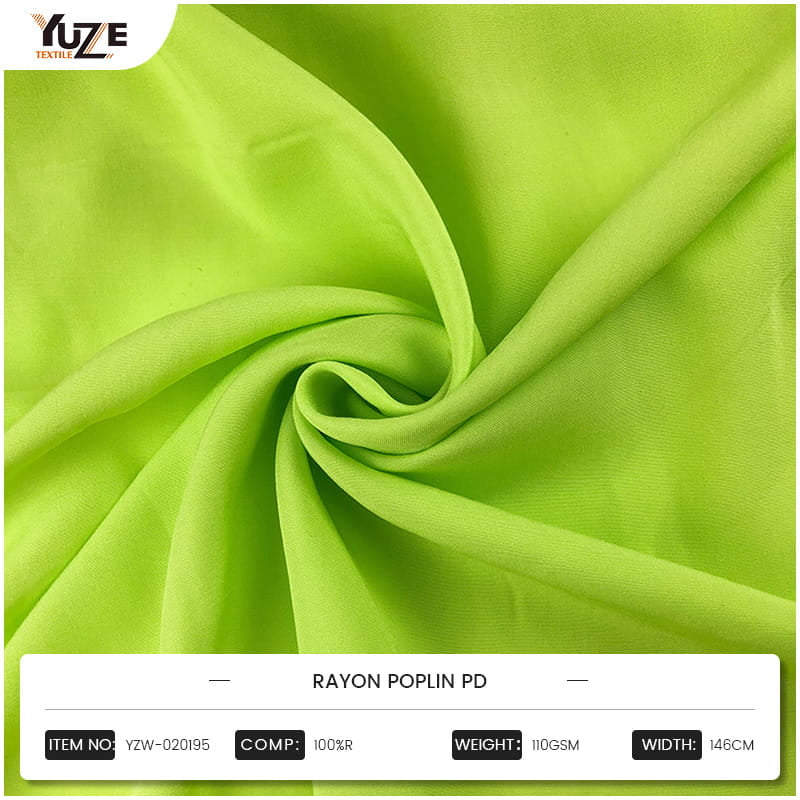 Rayon Poplin Print Fabric for Blouses and ShirtdressesThis rayon poplin offers a crisp surface and vivid print response, ideally suited for printed blouses and shirtdresses in fashion collections seeking a lightweight yet structured plain weave.View Product →
 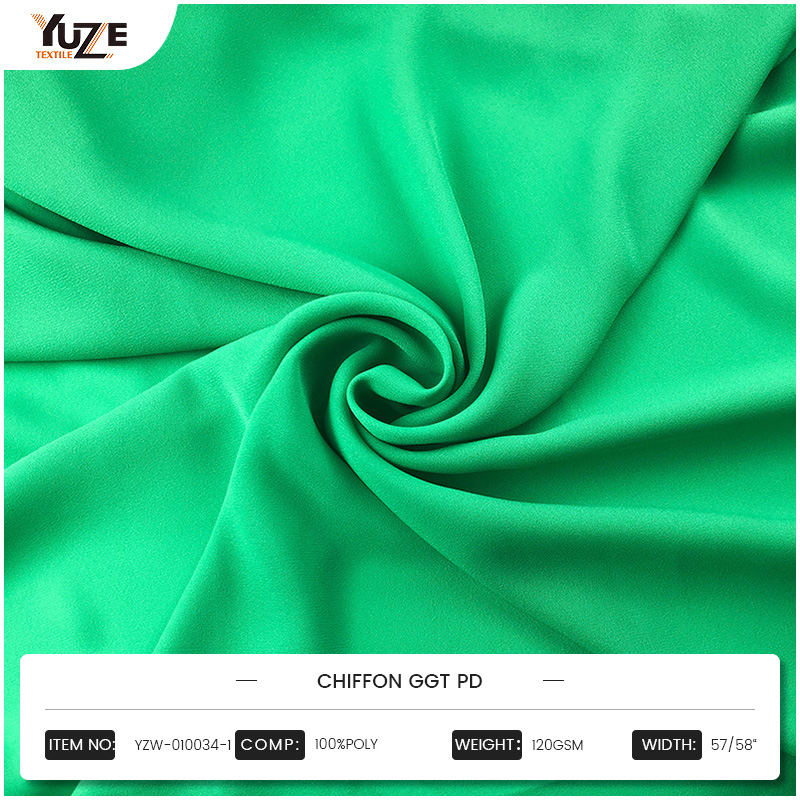 Polyester Chiffon Sheer Fabric with Soft DrapeA transparent and strong 100% polyester chiffon at 120gsm, this lightweight plain weave brings accessible elegance to flowing layers and evening wear, balancing drape with durability.View Product →
How Plain Weave Compares with Twill and Satin
Seen side by side with the other two fundamental weave families, the strengths of the plain construction become clearer. Twill and satin are built on the same warp and weft system, but they use longer floats, which changes their appearance and behaviour.
| Weave | Interlacement | Character | Typical trade-offs |
|---|---|---|---|
| Plain | Highest frequency | Firm, flat, strong, reversible | Can feel stiff; creases easily |
| Twill | Intermediate | Diagonal ribs; more drape | Slightly more slippery; hides soil well |
| Satin | Lowest frequency | Long floats; smooth and lustrous | Snags easily; less stable |
For applications that need a stable printing ground or a clean, flat surface, a plain-woven fabric is usually the safer choice. For fluid, body-conscious dresses, twill or satin may perform better. If you want a broader view of how woven constructions compare with other textile families, our overview of the advantages of woven fabrics over other textiles is a useful starting point.
What to Check When Sourcing a Plain-Woven Fabric
The performance of a plain-woven garment fabric is decided long before it reaches the cutting table. These are the checks that matter most when you evaluate a new woven fabric.
- Fibre composition and blend ratio. The fibre mix drives drape, care, price and print behaviour. Cotton gives absorbency, polyester adds strength and easy care, and rayon provides fluidity and colour brilliance.
- Yarn count and thread density. Finer yarns and balanced warp-weft densities produce a smoother, more stable fabric with sharper print definition. A fine cotton poplin shirt, for example, is typically woven from combed yarns in the 80s to 100s range.
- Finishing route. Mercerising, brushing, calendering and anti-wrinkle treatments all change the hand feel and the way the fabric behaves in the garment. Ask for a finishing spec rather than judging only by a hand feel sample.
- Dimensional stability. Shrinkage testing is non-negotiable for woven fabrics that will be washed after sewing. Compare the shrinkage of dyed, printed and finished fabrics from the same production batch.
- Colourfastness and print quality. Dyes and pigments must match the intended end-use, from swimwear to daily-wear shirting. Request lab dips, wash tests and light fastness reports before bulk production.
A capable supplier helps you verify all five before production. YUZE Textile, a woven fabric manufacturer and exporter near the China Textile City in Shaoxing, produces polyester, rayon, cotton and flannel woven fabrics for women's fashion. Its in-house design team lets buyers evaluate a wide selection of weaves and prints before committing, and its standard workflow includes free samples, free analysis and piece-by-piece inspection before packing. A partner that controls the process from weaving through dyeing, printing and finishing reduces the risk of surprises at your cutting table.
.jpg) Cotton Poplin with Stretch for Daily ShirtsThis cotton poplin, blended with 3% spandex, provides comfort and flexibility for shirting and shirtdresses. Its plain weave structure makes it a reliable choice across men's and women's wear.View Product →
Cotton Poplin with Stretch for Daily ShirtsThis cotton poplin, blended with 3% spandex, provides comfort and flexibility for shirting and shirtdresses. Its plain weave structure makes it a reliable choice across men's and women's wear.View Product →Applications Across Apparel and Home Textiles
Plain-woven fabrics are the default substrate for a remarkable number of product categories. In women's fashion, rayon poplin and cotton poplin are mainstays for blouses, shirts and shirtdresses; chiffon layers are standard in evening wear; plain-weave crepe adds surface interest to fitted dresses; and organza supports structured silhouettes. Menswear shirting across all price points leans heavily on the plain construction, from casual brushed flannel to fine combed poplin.
Outside apparel, plain weave is equally important. Home textiles such as cotton sheeting, duvet covers, table linen and curtains are valued for their even appearance and predictable care performance. The structure also appears in technical end-uses including filtration cloth, medical gauze, interlinings and packaging fabrics.
Plain weave may be the oldest weave structure in existence, but it remains the workhorse of the textile industry because it delivers predictable performance at an efficient cost. The key to successful sourcing is to choose the right fibre, yarn count and finish for the end-use, and to work with a manufacturer that controls the process from yarn to finished fabric. Time spent on specifications, testing and sampling at the beginning repays itself across the whole production run.



.jpg)
