.png)
English

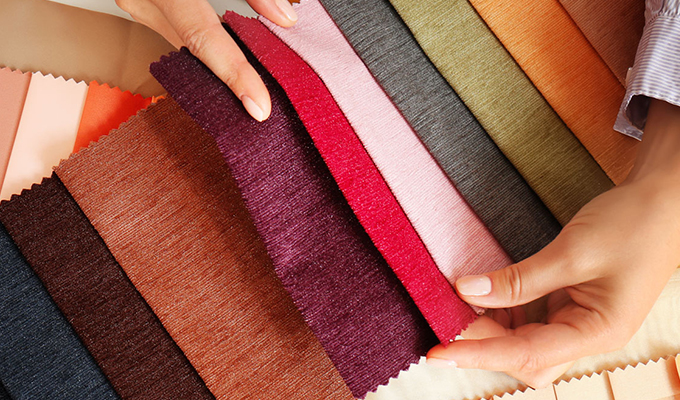
When someone asks "what does pique mean?" the answer depends on whether they are reading a novel or browsing fabric swatches. In everyday English, pique is a verb that means to excite or arouse, and ...
When a garment buyer opens a fabric specification sheet and sees a line that reads “T/R twill, 240 gsm,” the word “twill” can seem like another vague textile term. It is not the name of a fiber, and ...
Cotton woven textiles represent one of the most fundamental material categories in global apparel, home furnishings, industrial filtration, and technical textile manufacturing. The conversion of natur...
The delivery note says the roll is 58 inches wide. When you pull the fabric onto the inspection table and run the tape across the face of the goods, it reads 57 inches. Before you reach for the compl...
Two rolls of black fabric sit on a sampling table in a factory showroom. They have the same color, a similar price, and nearly identical fiber content, yet when a designer lifts a corner of each, one...
When a fabric buyer opens a brief for a wrinkle-resistant blouse, a quick-drying sports top, a soft fleece hoodie, and a structured outerwear shell, one polymer tends to appear in all four answers: p...
1. Material Selection
The production of Rib Embroidery Fabric starts with the selection of fabrics. Common fabric base materials include cotton, polyester, nylon, wool and man-made fibers. These materials have good elasticity and comfort, and can meet the needs of different styles and uses. In the production of SHAOXING YUZE TEXTILE CO.,LTD, the most commonly used base materials are polyester and man-made fibers, which are not only durable and cost-effective, but also have good dyeability and embroidery adaptability.
2. Rib weaving
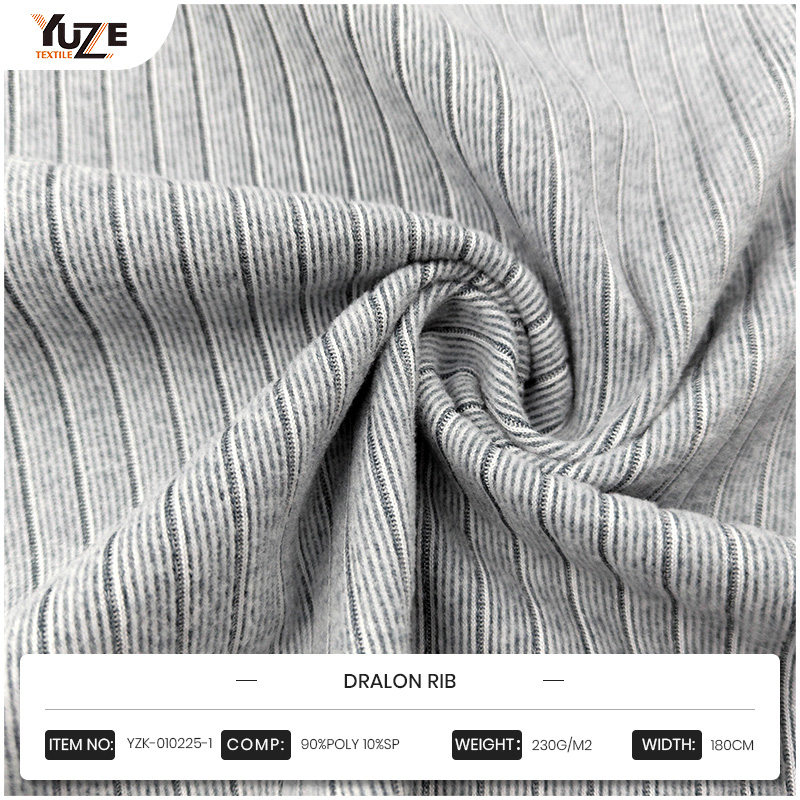
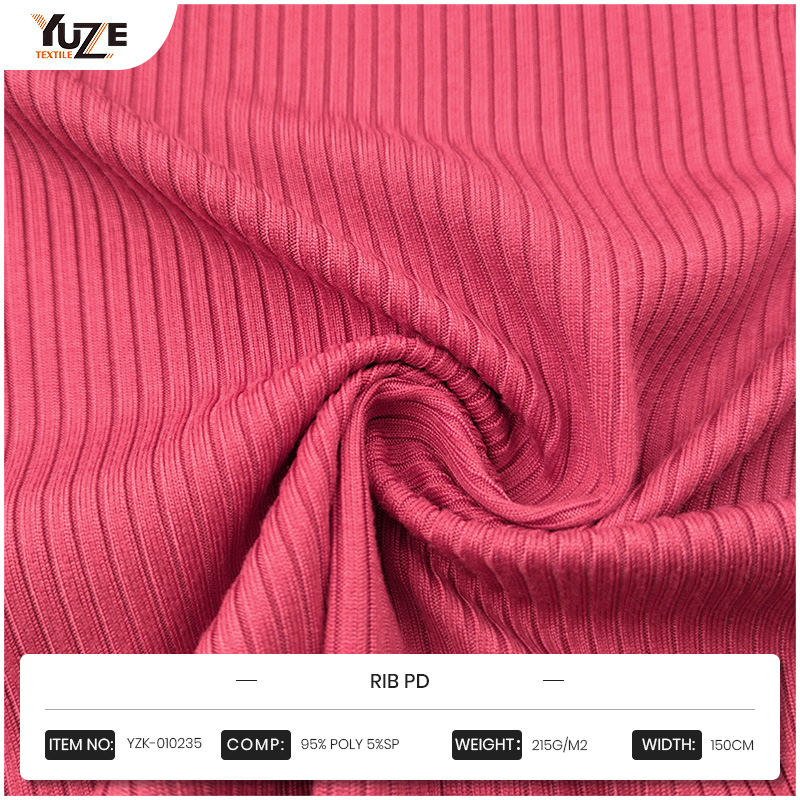
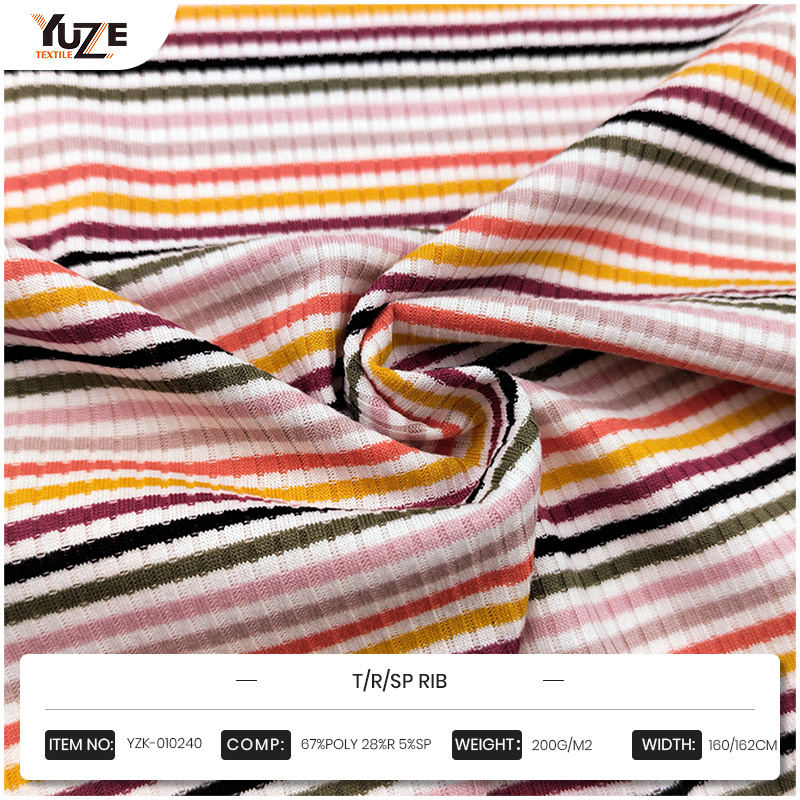
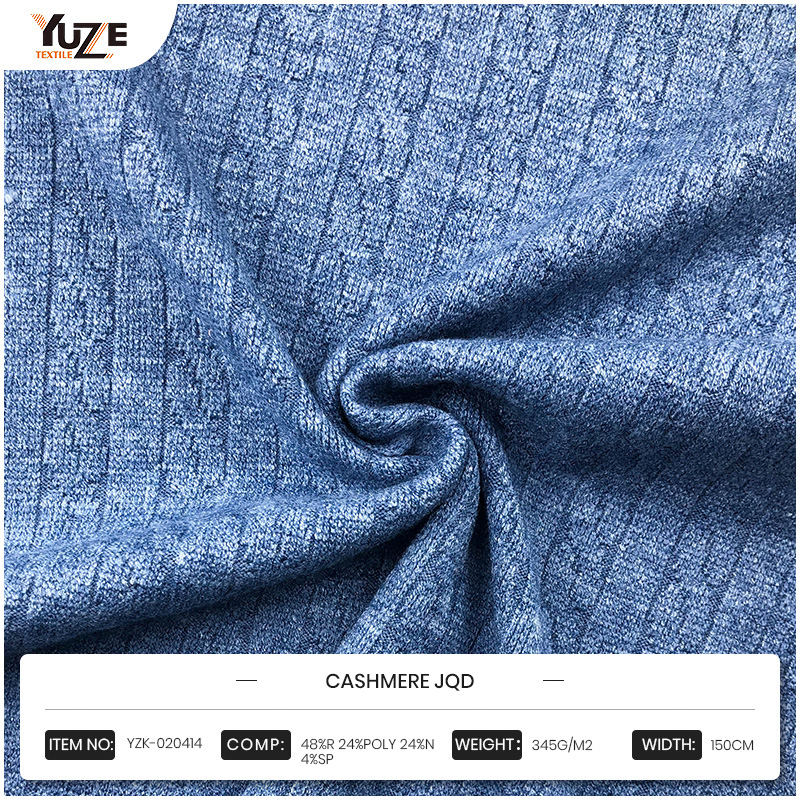
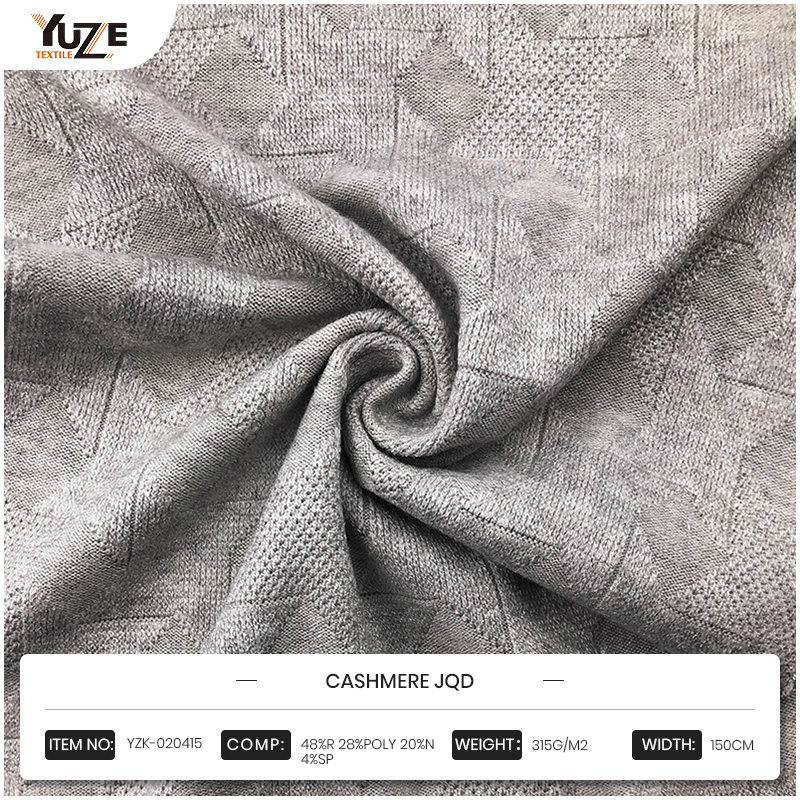
The production process of rib fabric is a highlight of Rib Embroidery Fabric. Rib fabric uses special settings of the loom to alternately weave warp and weft yarns of different thicknesses, so that the surface of the fabric presents a striped texture. According to the density and shape of the stripes, rib fabrics can be divided into single rib, double rib and multi-rib. The advantage of the rib structure is that it provides better elasticity and comfort, and the visual effect of the stripes also makes the fabric more three-dimensional and dynamic.
3. Embroidery technology
On the basis of rib fabric, the embroidery technology further enhances the artistry of the fabric. Embroidery uses a computer-controlled automated embroidery machine to embroider the design pattern on the surface of the fabric through precise control. The embroidery pattern can be a simple geometric shape or a complex flower, animal or brand logo. The advantage of the embroidery technology is its fineness and high added value, which can add a unique beauty and texture to the fabric.
4. Dyeing and printing
Dyeing and printing technology is another important link in the production of Rib Embroidery Fabric. At SHAOXING YUZE TEXTILE CO.,LTD, the company uses advanced dyeing and printing technology to achieve a variety of color effects and pattern designs. The dyeing process usually uses environmentally friendly water-based dyes or reactive dyes to ensure the durability of the color and the environmental performance of the fabric. The printing process can accurately present the pattern on the surface of the fabric through heat transfer, screen printing, etc.
5. Post-processing and quality inspection
During the production process, the fabric undergoes a series of post-processing procedures, such as shaping, softening, and shrinkage resistance, to ensure the stability and comfort of the fabric. Quality control is one of the core links of SHAOXING YUZE TEXTILE CO.,LTD. All fabrics will undergo strict quality inspection before leaving the factory to ensure that each batch of products meets international standards.

If you are interested in any of our products or would like to discuss custom orders, please do not hesitate to contact us.
 +86-13867507849
 +86-13867507849
 +86-13867507849
 Room 1003, 1st Building,JixiangBuilding,Huashe, Keqiao, ShaoxingZhejiang, China
Scan code Attention to follow us

.jpg)
Copyright © SHAOXING YUZE TEXTILE CO., LTD All Rights Reserved.
 English
 Español
 +86-13867507849